The Connoisseur’s Ledger · Event 13 · Two days

Indian Spirits Festival 2026

I went on Saturday expecting very little. On Sunday I went back with friends, and came home with a bottle, a gift and a list.

Sat 31 Oct & Sun 1 Nov 2026 · 12–7 pm The Capitol Kempinski, Singapore Presented by SPIRITED. × Verado By Harish
Days
2
Brands pouring
20+
Tastings logged
28
Photos
43
All-in spend
S$150

The weekend at a glance

Pour of the weekend
Cazulo Cashew FeniClicked on Day 1, better on Day 2
Top scores I gave
Além · Dukshiri · Rampur5/5 each, all on Day 2
Best peated whisky
Paul John Peated Select Cask55.5% · Day 1’s last pour
Bought
Rutland Square Chai Spiced RumPlus two sodas and a mini pack · S$100
Gift
A small bottle of Cashew FeniFrom Hansel Vaz, with postcards
Admission
S$50S$25 a day, bought separately

The event

About the festival

Billed by its organisers as the first festival of its kind for Indian spirits, this was a two-day, walk-around tasting in the function rooms of The Capitol Kempinski. Producers stood behind their own tables, many of them founders, and you moved between them with a Glencairn and a wristband.

Dates
Saturday 31 October and Sunday 1 November 2026
Hours
12 pm – 7 pm daily
Venue
The Capitol Kempinski Hotel Singapore
Presented by
SPIRITED. × Verado
Scale
20+ Indian brands and 60+ spirits, according to the organisers
Categories
Whisky, rum, gin, Feni, agave spirit, brandy, rice wine and non-alcoholic drinks
Admission
S$25 standard one-day pass, or S$45 for both days. 18+ only.
Stock
Split into two sets, one per day, so Sunday had its own tasting stock
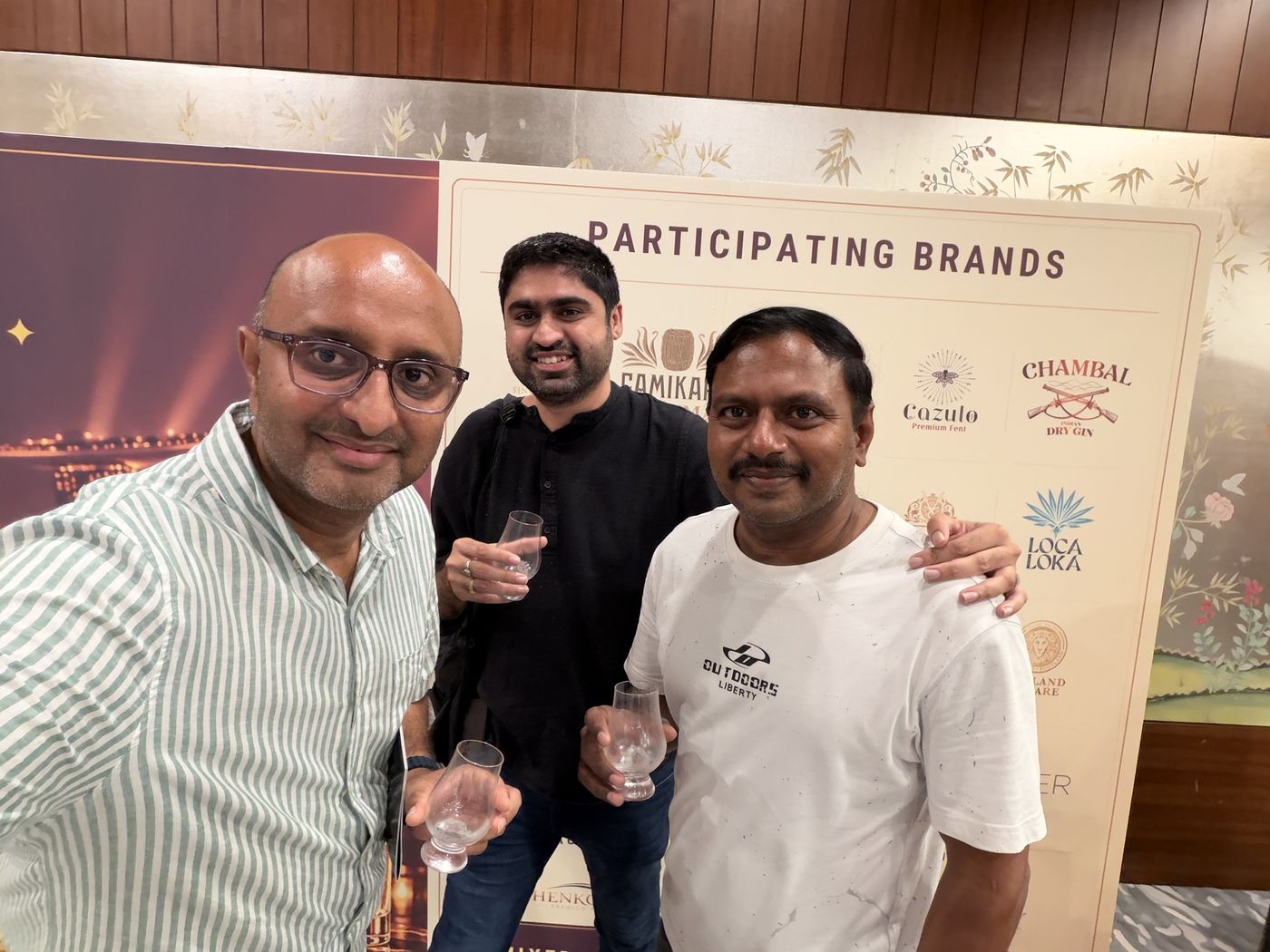
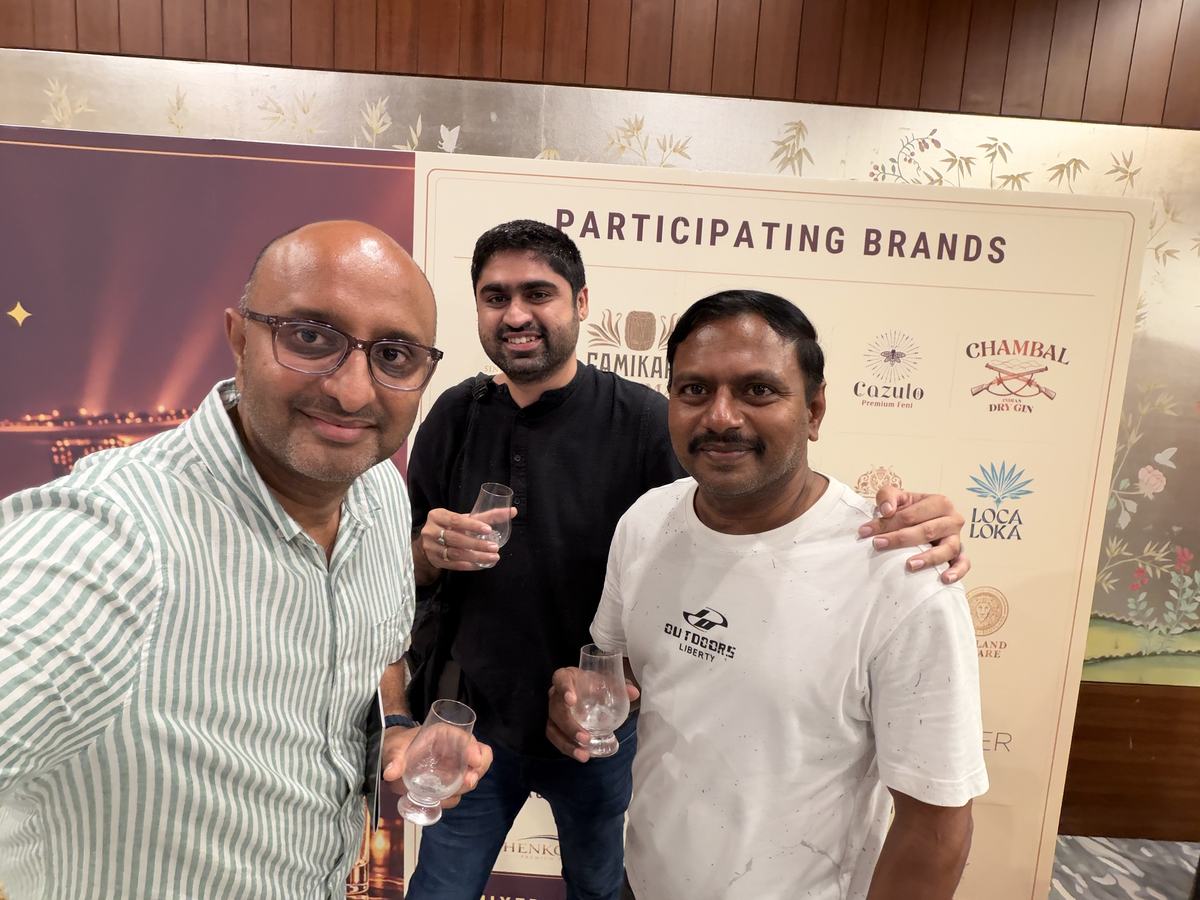
Harish with two friends in front of the 'Participating brands' board listing Camikara, Cazulo, Chambal, Loca Loka, Rutland Square and others.
Day 2, in front of the participating-brands board.

Getting there

From “who goes to that?” to two tickets

My friend Vishal sent me the link on 22 October. My honest first reaction was dismissive. An Indian spirits festival? I wasn’t sure it would have enough new to offer to be worth an afternoon.

Then I noticed Anupam was behind it. He organised the festival, and he always keeps me posted on the events he puts together; I usually turn up. He hadn’t messaged me yet, so I messaged him and asked whether it was really worth going. He said I’d beaten him to it. This was the first festival of its kind for Indian spirits, with more than 20 brands and over 60 spirits to try. His one firm recommendation was the aged Goan Feni. “Must try,” he said.

That did it. Feni is hard to find in Singapore, and some expressions are only sold in Goa. Tasting a whole range in one room was not something I wanted to miss.

I booked Sunday first, because Saturday was Halloween and we had guests coming for dinner. Then I talked Sunil and Prateek into booking, and told my wife Anusha she had to try the Feni, so she booked too. Somewhere along the way I had gone from sceptic to recruiter.

On Saturday morning I changed my mind. With that many producers, one day would feel rushed. I messaged Anupam again. He agreed both days made sense and said only about a dozen Saturday tickets were left. I bought one on the spot.

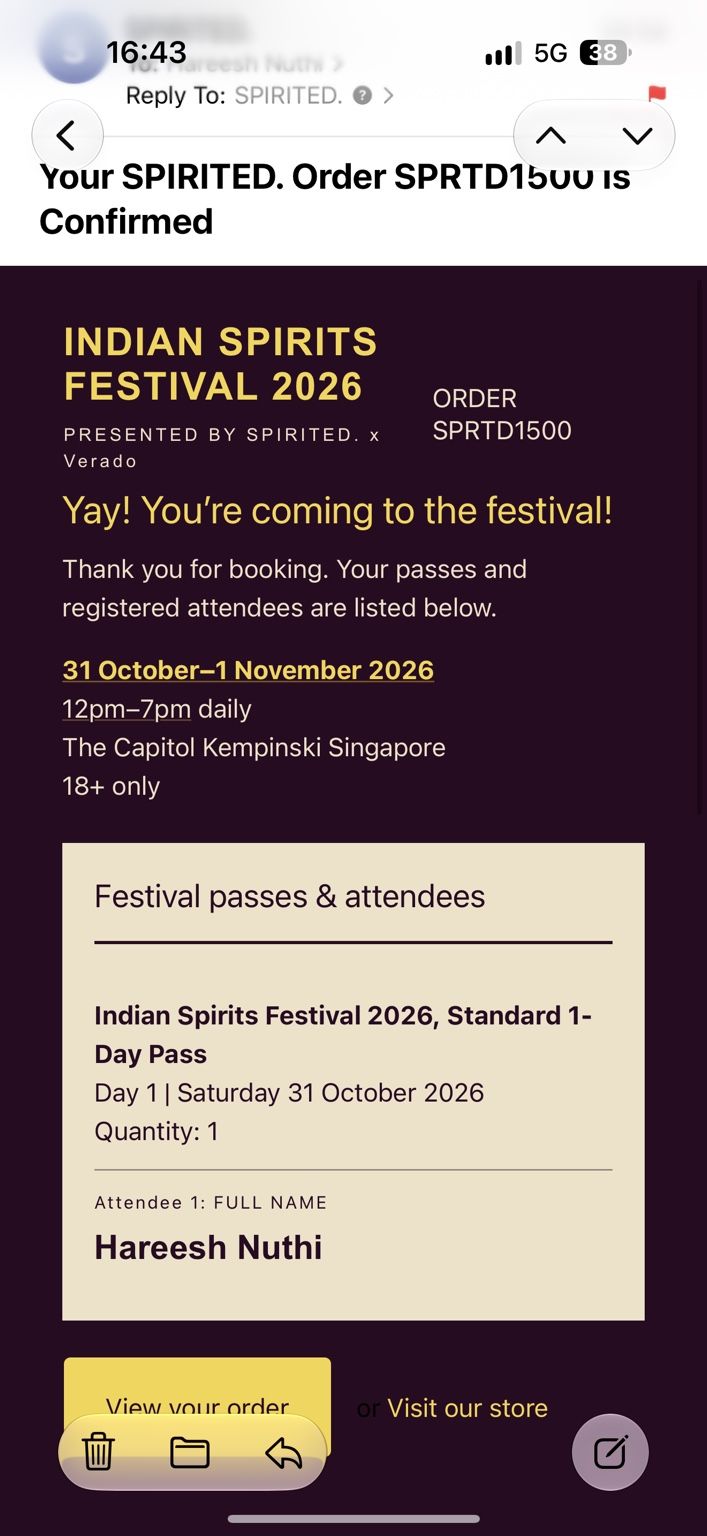
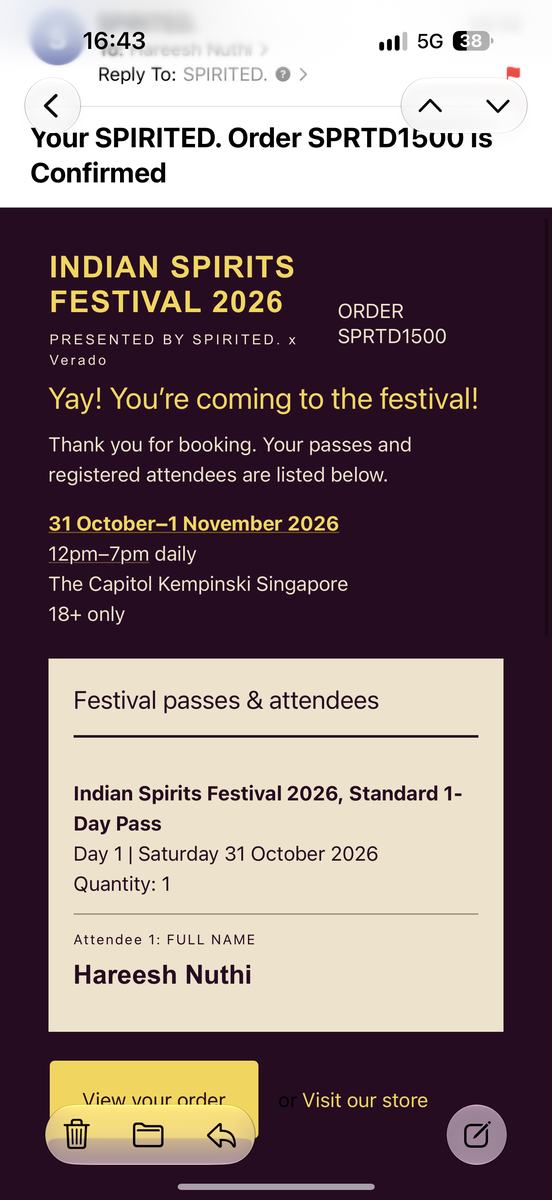
SPIRITED. order confirmation for a Standard 1-Day Pass, Day 1, Saturday 31 October 2026.
The Saturday pass, bought that morning.
  1. 22 OctVishal shares the link. I’m not convinced.
  2. NextAnupam: 20+ brands, 60+ spirits, “try the aged Feni.” I book Sunday.
  3. ThenSunil, Prateek and Anusha book Sunday too.
  4. Sat 31 Oct, a.m.Anupam confirms around a dozen Saturday tickets left. I buy one.

The arithmetic, for the record: two single-day passes at S$25 each came to S$50. The two-day bundle was S$45. Deciding late cost me five dollars. Having seen both days, it was money well spent.

Saturday 31 October

Day 1 · Alone, and still getting over a cold

I went on my own and moved from stand to stand. One thing I only noted afterwards: I was recovering from a cold, and my palate wasn’t at its best. That turned out to matter on Sunday.

The star of the weekend

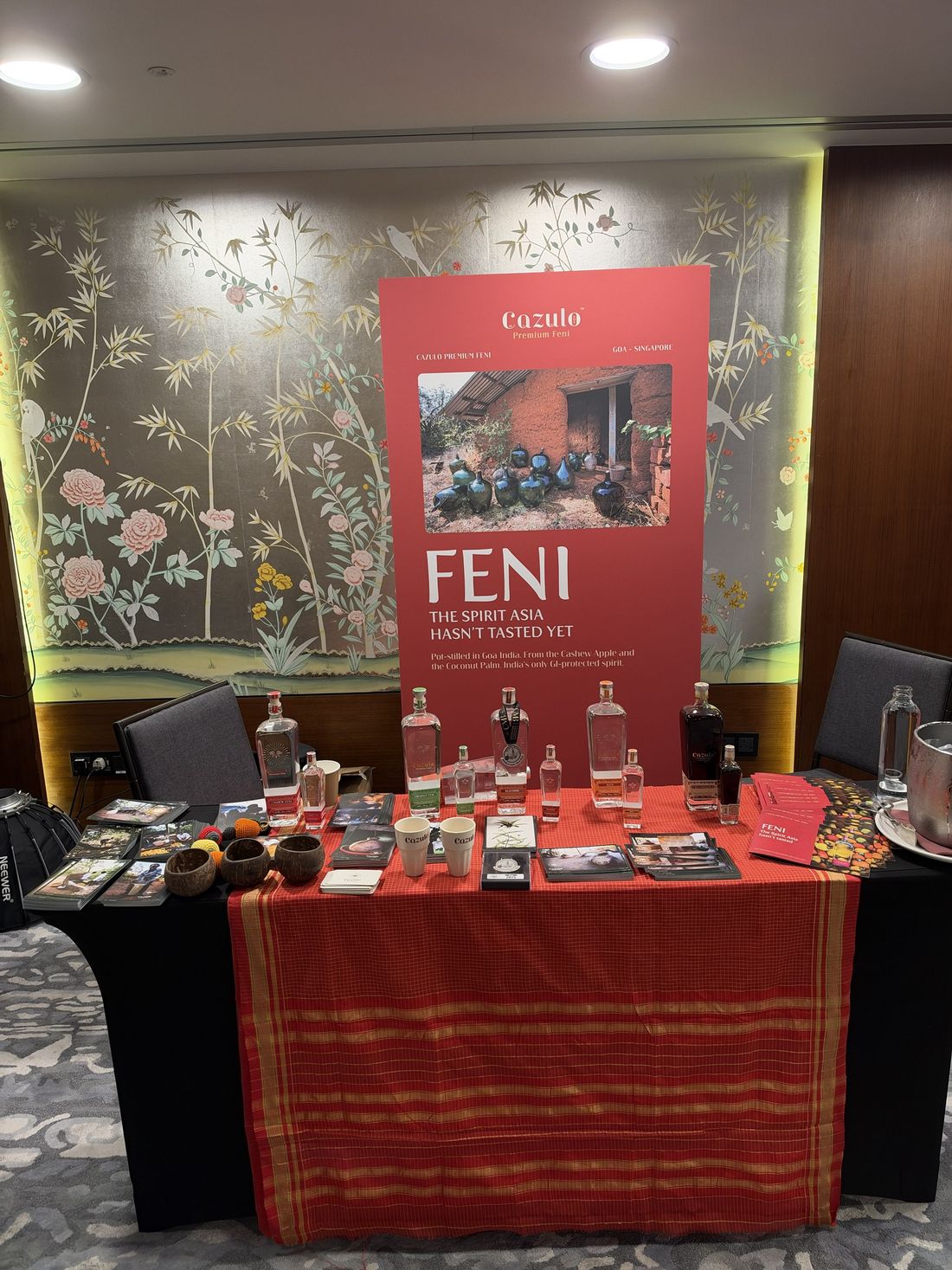
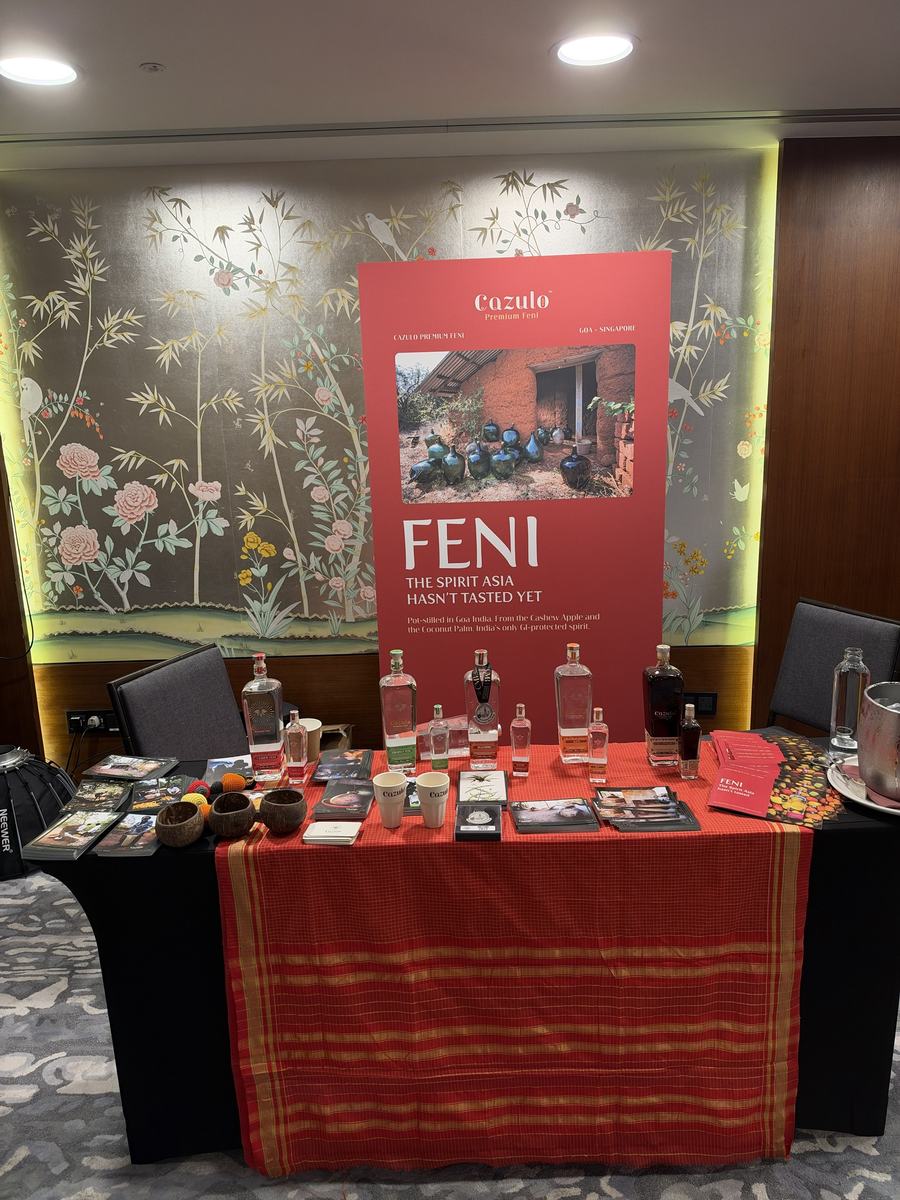
Cazulo Feni: five expressions, one house, two visits

The stand that justified the whole trip, and the first place I went back to on Sunday.

GoaThe only place it can come from
2009Protected origin (GI) since
2×Distilled in copper pots over wood fire
0Added sugar or flavourings

Figures as stated in Cazulo’s brochure.

What Feni is

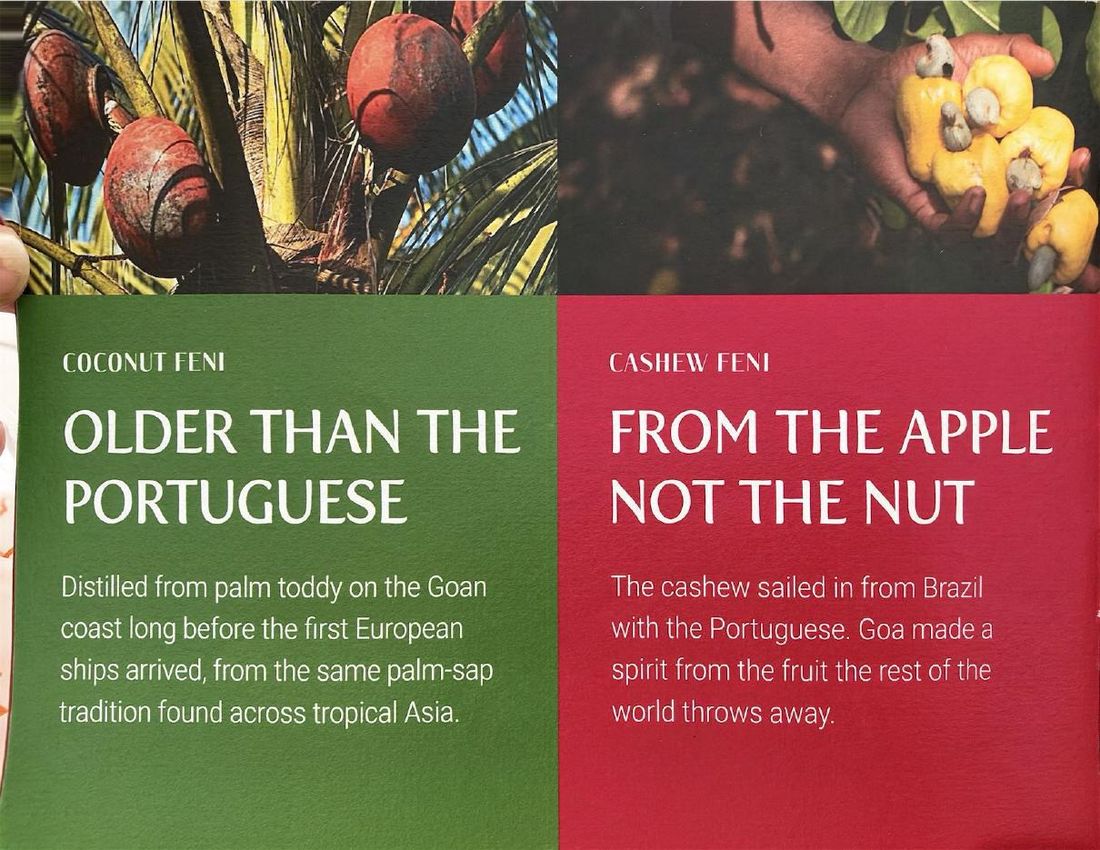
Feni is Goa’s own spirit, and the brochure calls it India’s only GI-protected spirit. It is made from two tropical harvests. Coconut Feni is distilled from palm toddy, a tradition the brochure says is older than the Portuguese arrival. Cashew Feni is made from the cashew apple, the fleshy fruit, not the nut. The cashew came to Goa from Brazil with the Portuguese, and Goa made a spirit from the part the rest of the world throws away.

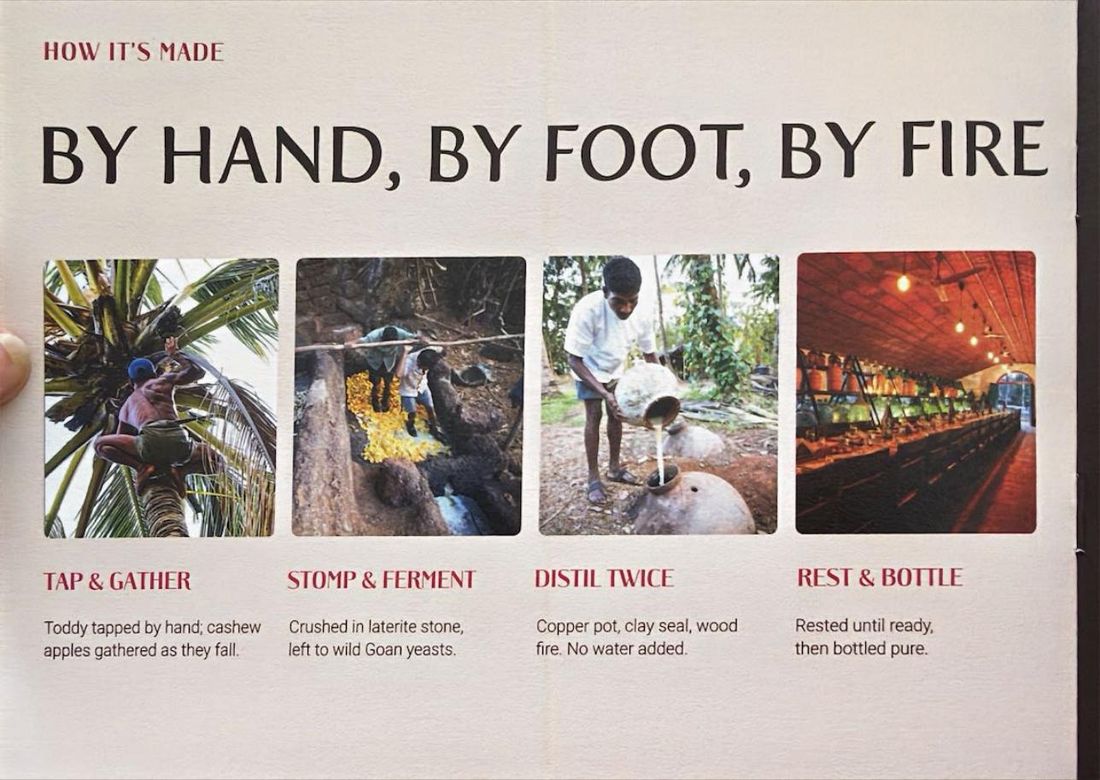
The method is old and physical. Toddy is tapped by hand and cashew apples are gathered as they fall. The fruit is crushed in laterite stone and left to ferment with wild Goan yeasts. It is distilled twice in copper pots with a clay seal over a wood fire, with no water added, then rested until ready and bottled.

Cazulo brochure spread: Coconut Feni, older than the Portuguese; Cashew Feni, from the apple not the nut.
From the Cazulo brochure: the two harvests.
Cazulo brochure page 'By hand, by foot, by fire': tap and gather, stomp and ferment, distil twice, rest and bottle.
From the brochure: how it’s made.

The maker

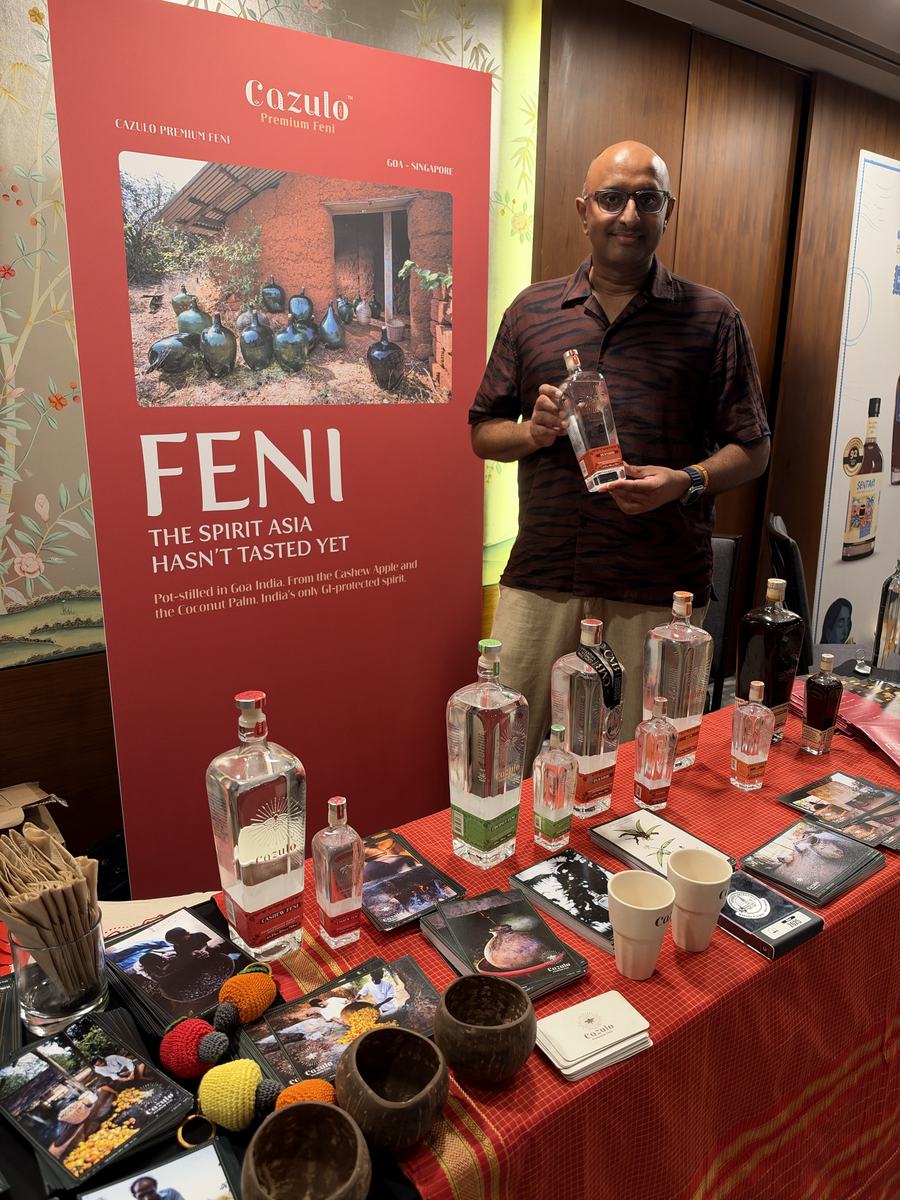
The man behind the table was Hansel Vaz, second generation of a family distillery in South Goa. He is a geologist by training and one of the best-known voices in Feni today. On Saturday he chose the order I tasted in and took the time to explain the history, the Goan terroir and how each expression is made. It was the best conversation of the day.

On Sunday he asked me which Feni I liked most. I said Cashew. He handed me a small bottle of it, along with the stand’s postcards. He had said on Saturday that he might, if any were left, and he followed through without my asking again.

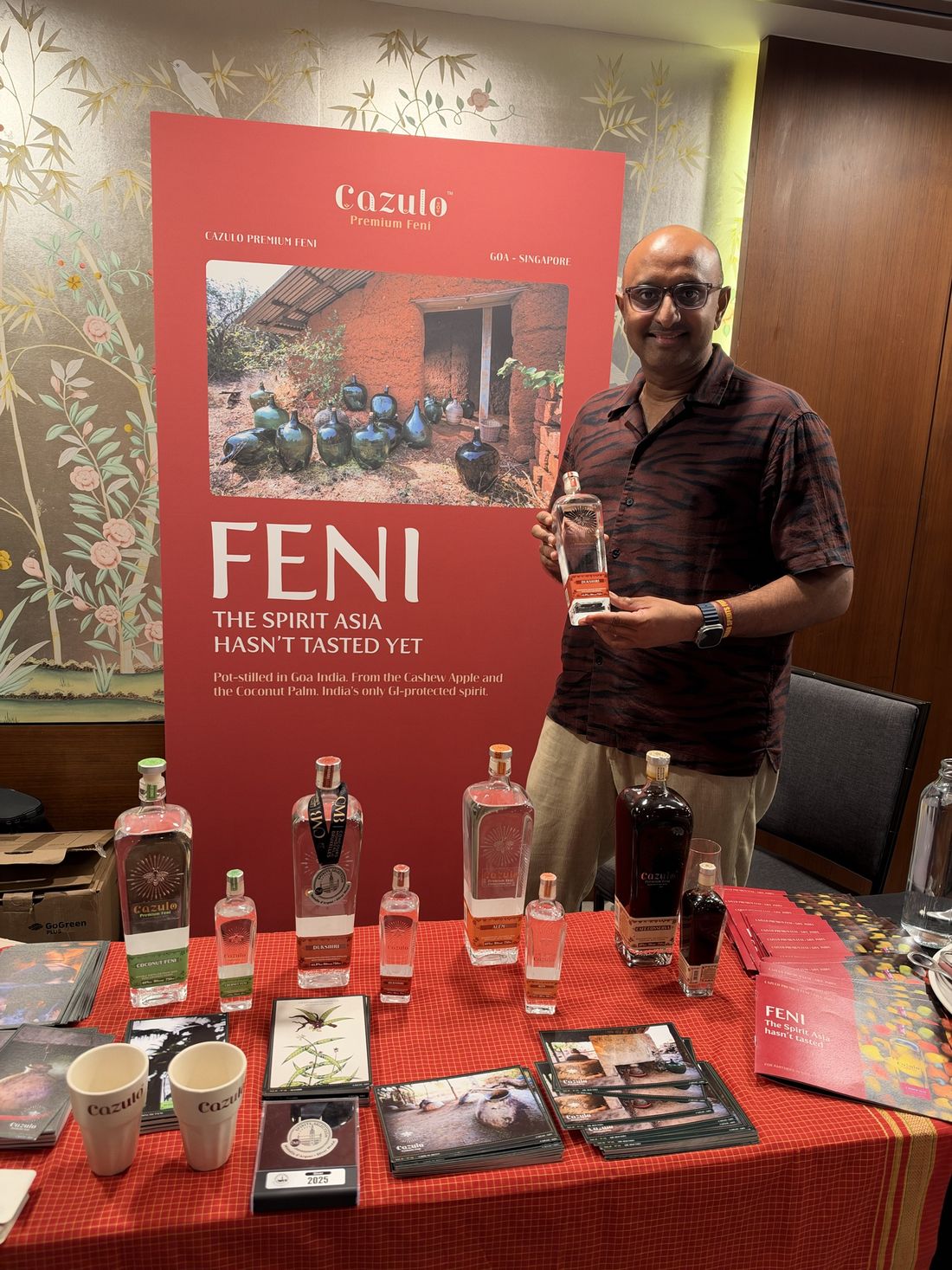
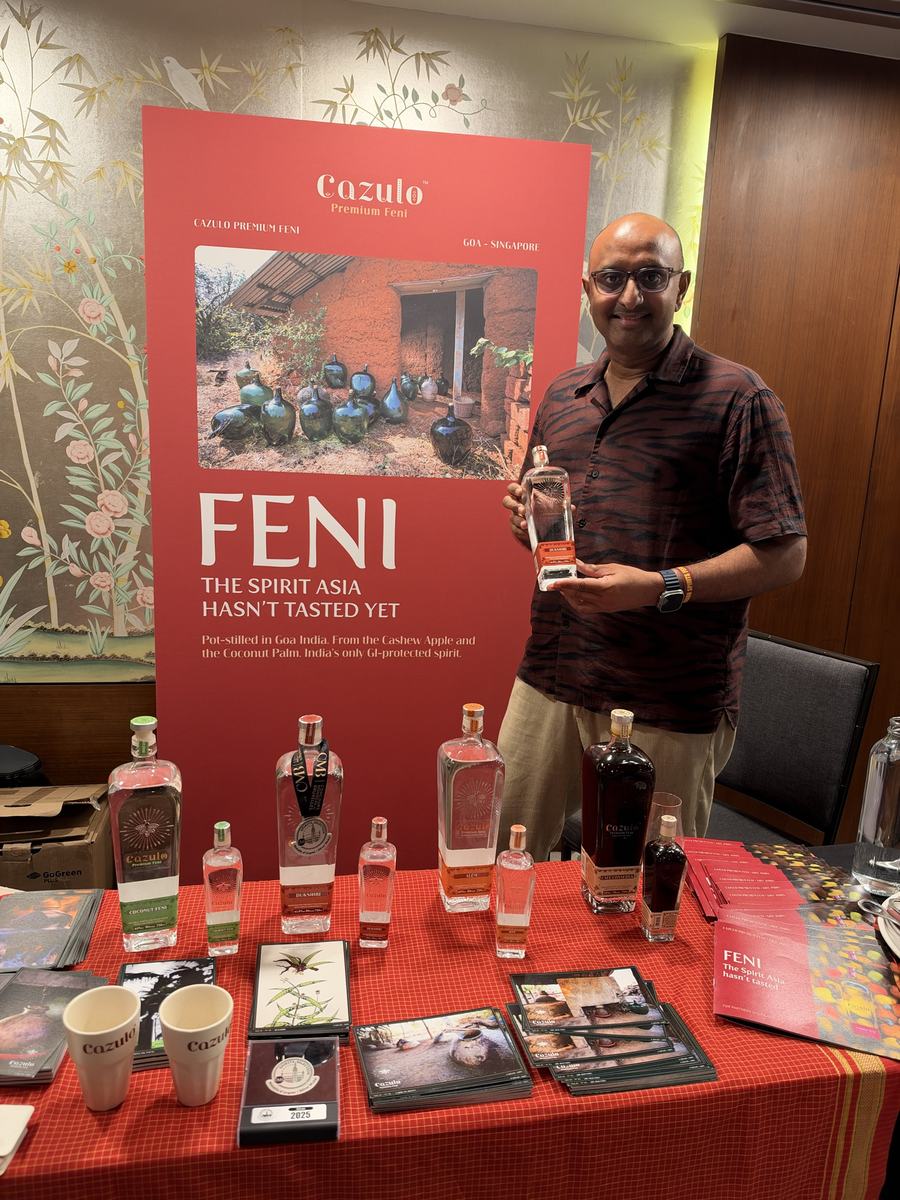
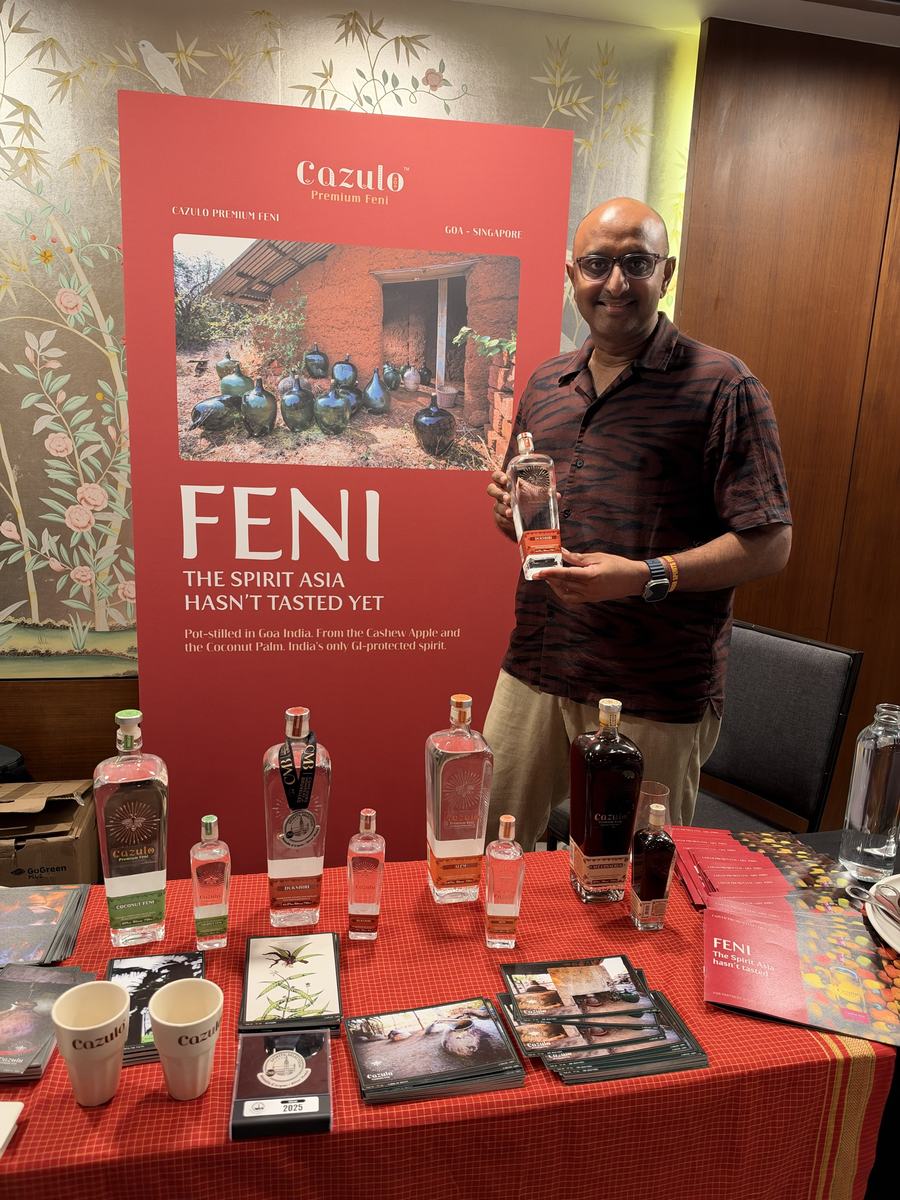
Harish standing at the Cazulo stand holding a bottle of Dukshiri, with the five-bottle range on the table in front.
Day 1 at the Cazulo table, holding the Dukshiri.
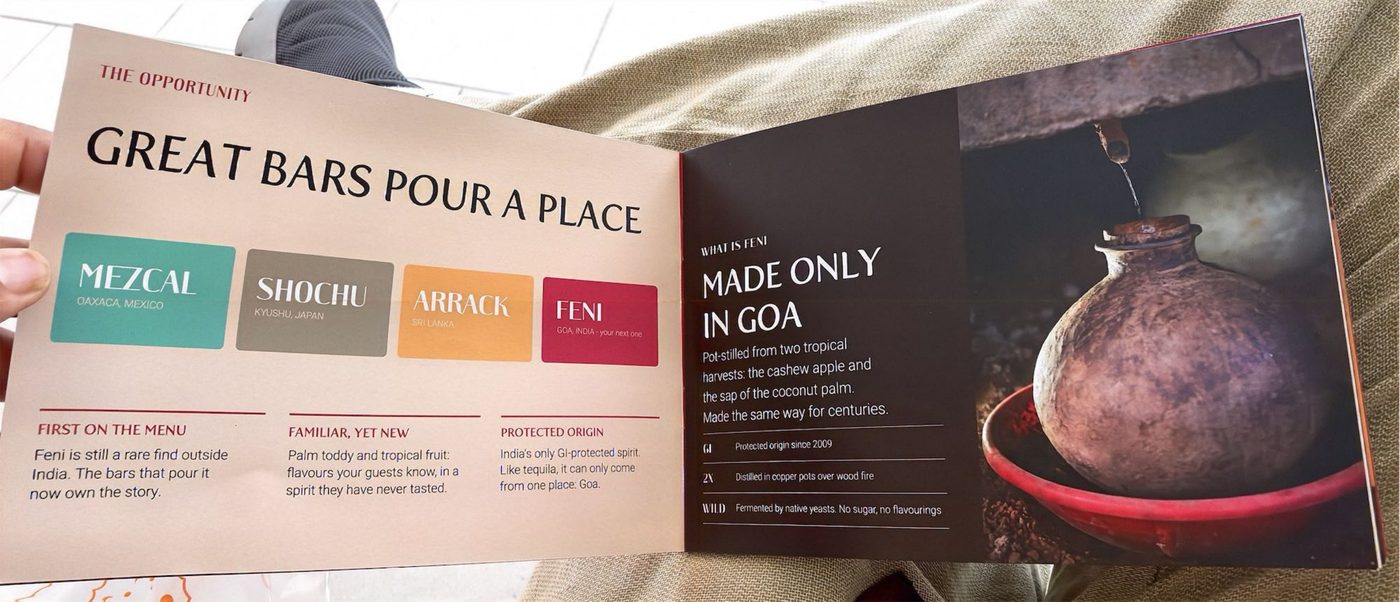
Cazulo brochure spread 'Great bars pour a place': mezcal from Oaxaca, shochu from Kyushu, arrack from Sri Lanka and Feni from Goa.
The brochure puts Feni alongside mezcal, shochu and arrack: spirits that “pour a place”.

One base, five bottles

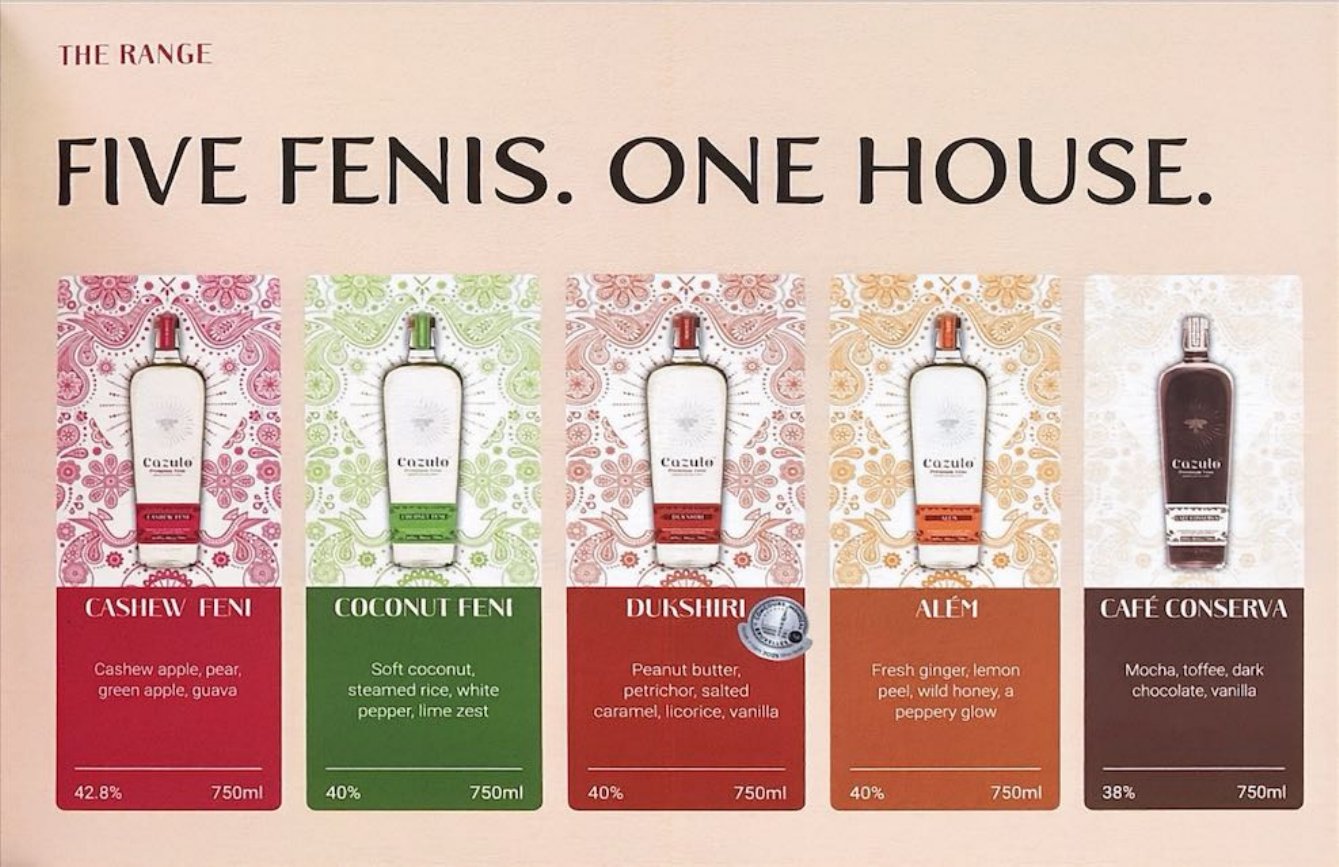
Reading the labels explained a lot. Cazulo makes two base Fenis, cashew and coconut. The other three are coconut Feni distilled with one additional ingredient each.

ExpressionBuilt onDistilled withBrochure ABV
Cashew FeniCashew appleNothing else42.8%
Coconut Feni100% coconut toddy, double distilledNothing else40%
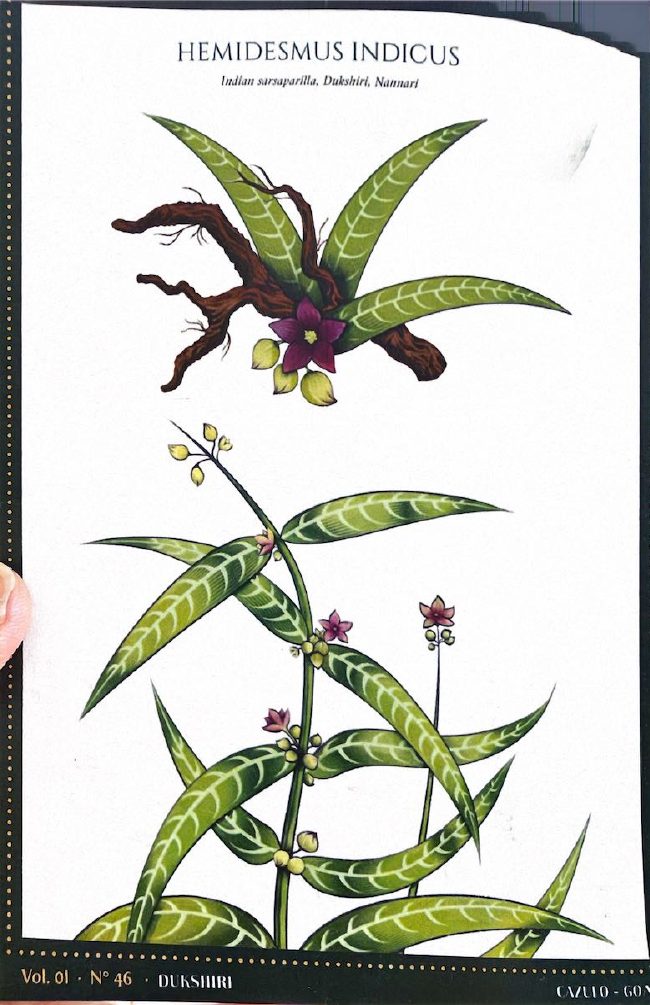
DukshiriCoconut FeniIndian sarsaparilla (Hemidesmus indicus)40%
AlémCoconut FeniGinger40%
Café ConservaCoconut FeniCoffee38%

From the bottle labels and brochure. The Dukshiri on the table wore a silver medal from the Concours Mondial de Bruxelles (2025). Its bottle label looked like it read 42.8% rather than the brochure’s 40%; I didn’t get to check it closely.

Pour of the weekend

Cashew Feni

42.8% · 750 ml

Brochure: cashew apple, pear, green apple, guava.

Day 1 · poured 2nd, tasted twiceTropical fruit, something like jackfruit. A little wild, a bit like mezcal but not as wild. Subtle smoke and an oak-like kick at the end.

Day 2 · clearer palateEven better. Still my favourite. Hansel gave me a small bottle.

4/5

Coconut Feni

40% · 750 ml

Brochure: soft coconut, steamed rice, white pepper, lime zest.

Day 1 · poured 1stCoconut on the nose, a little sweetness, tropical fruit. A gentle way in.

Day 2 · 4/5Tender coconut, tart coconut, green chilli, toddy, a slight acidity, soft floral sweetness. Better than I remembered.

5/5

Dukshiri

40% (brochure) · 750 ml

Brochure: peanut butter, petrichor, salted caramel, liquorice, vanilla.

Day 2 · 5/5Earthy root, root spice, herbal sweetness, warm herbal finish.

5/5

Além

40% · 750 ml

Brochure: fresh ginger, lemon peel, wild honey, a peppery glow.

Day 2 · 5/5 nose, palate, finishCitrus, lemon peel, pepper, honey, a dry herbal finish.

Café Conserva

38% · 750 ml

Brochure: mocha, toffee, dark chocolate, vanilla.

My notePoured on Day 1 without notes; I didn’t get back to it on Day 2.

Why the Cashew Feni won, twice

On Saturday the Cashew Feni didn’t make sense to me the first time. I asked for it again, and on the second sip it opened up: fruit first, then a slightly untamed edge, then a little smoke at the finish. On Sunday, with my cold behind me, both the Cashew and the Coconut tasted even better, and the Cashew was still the one I’d choose.

Sunday also brought the surprise of the weekend. The two botanical Fenis I hadn’t written about on Saturday, Dukshiri and Além, were the highest scores I gave anything all weekend. Além got five stars for nose, palate and finish.

A spirit I won’t easily get in Singapore. Next time I’m in Goa, it’s on the list.
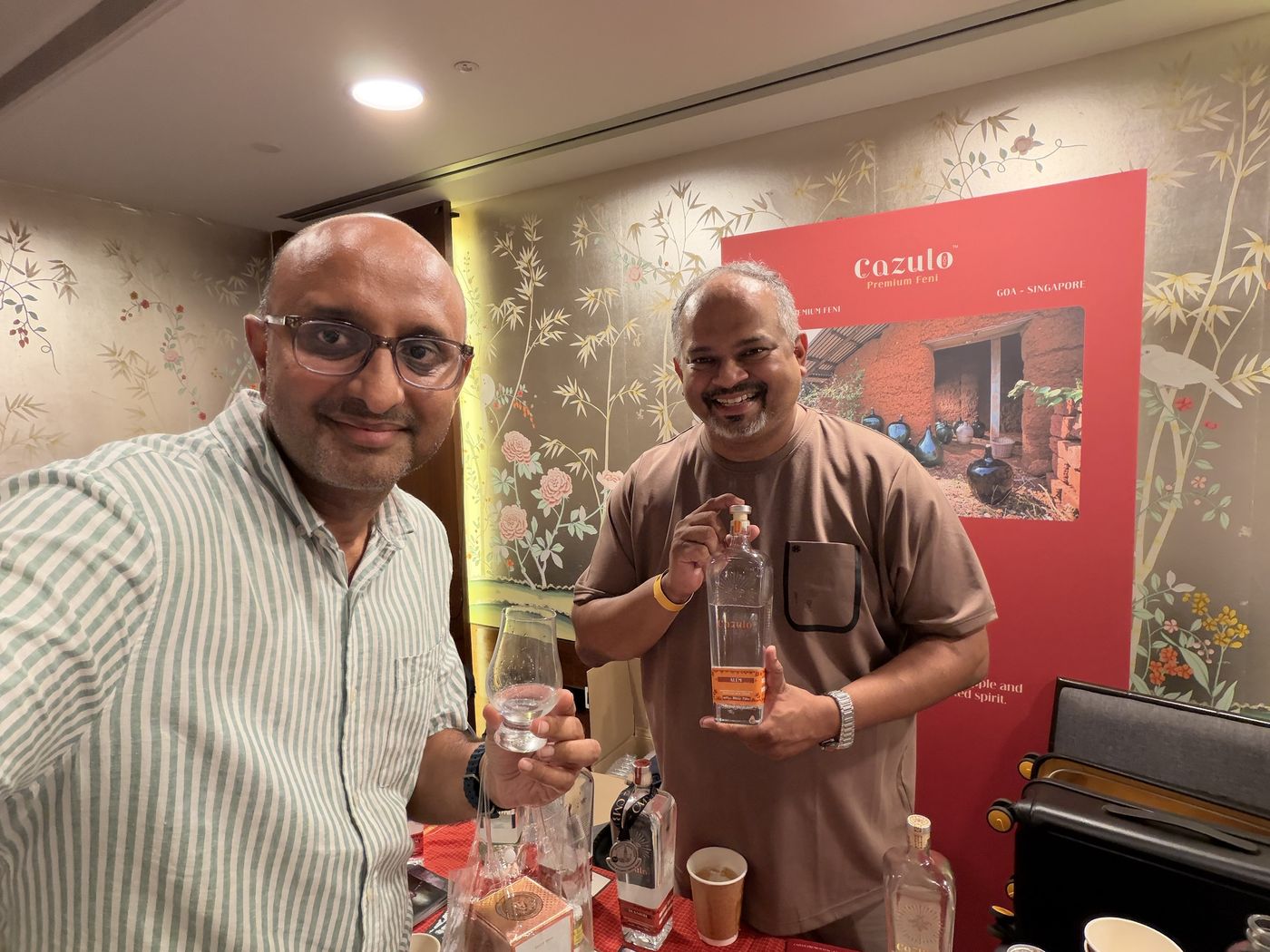
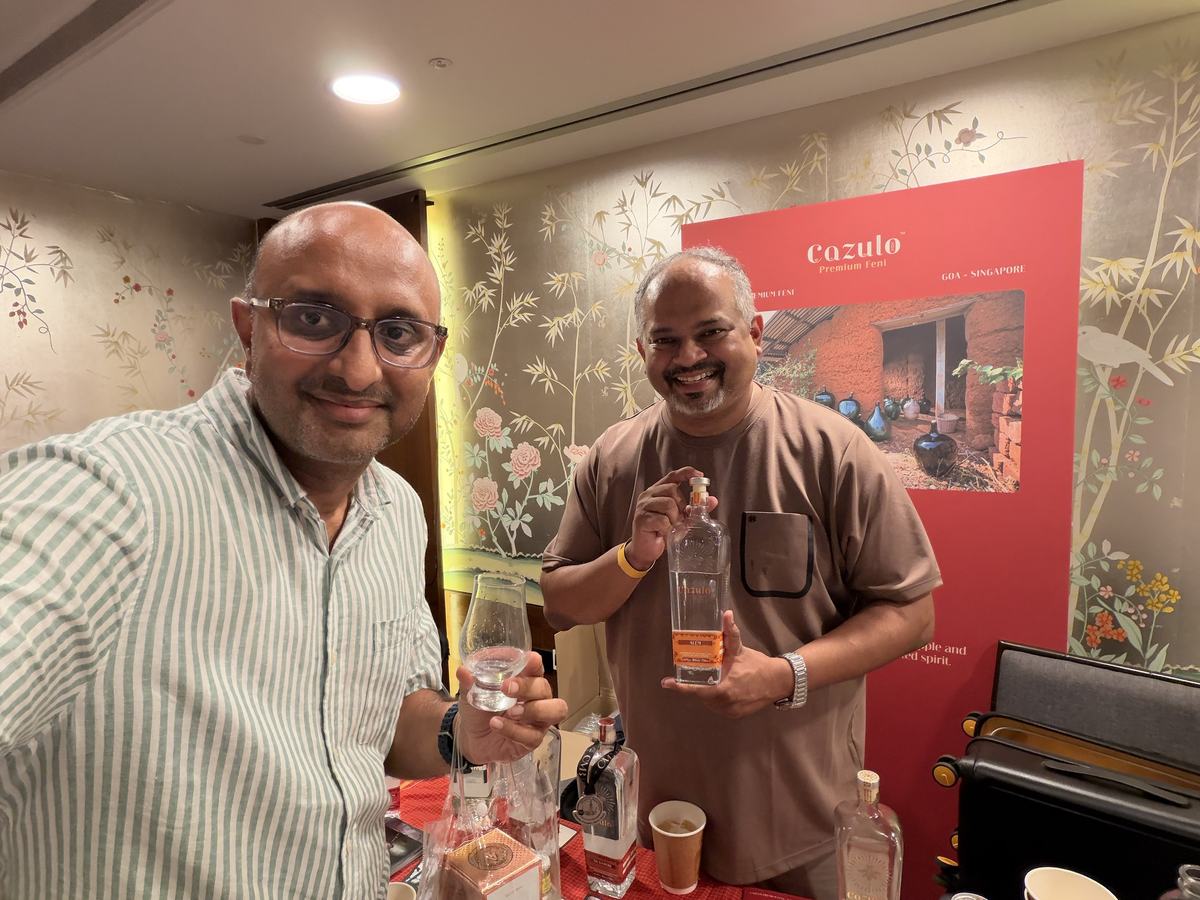
Selfie of Harish holding a Glencairn at the Cazulo stand on Day 2, next to Hansel Vaz holding a bottle of Além.
Back with Hansel Vaz at the Cazulo stand on Sunday, Além in hand.
Botanical illustration card of Hemidesmus indicus, Indian sarsaparilla, labelled Dukshiri.
The botanical card on the table: Hemidesmus indicus, the plant behind Dukshiri.
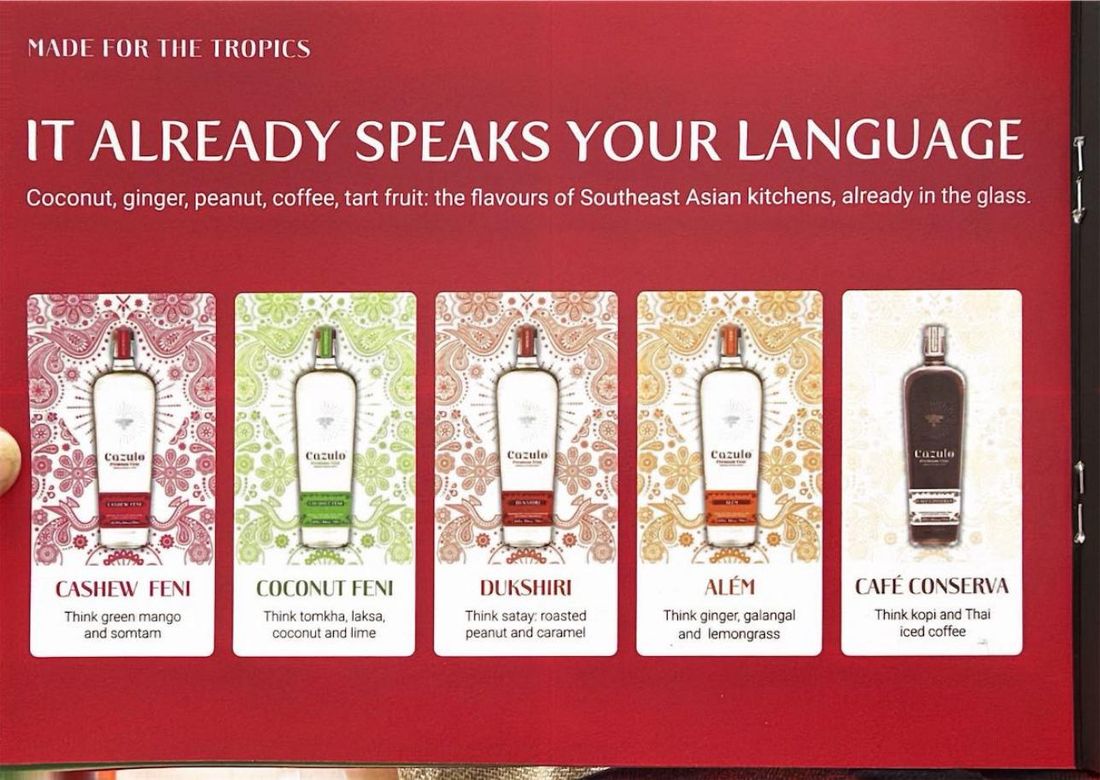
Cazulo brochure page pairing each Feni with Southeast Asian flavours.
The brochure matches each Feni to a flavour we know here. Além is “ginger, galangal and lemongrass”; Café Conserva is “kopi and Thai iced coffee”.

The rest of Saturday

Day 1 pours

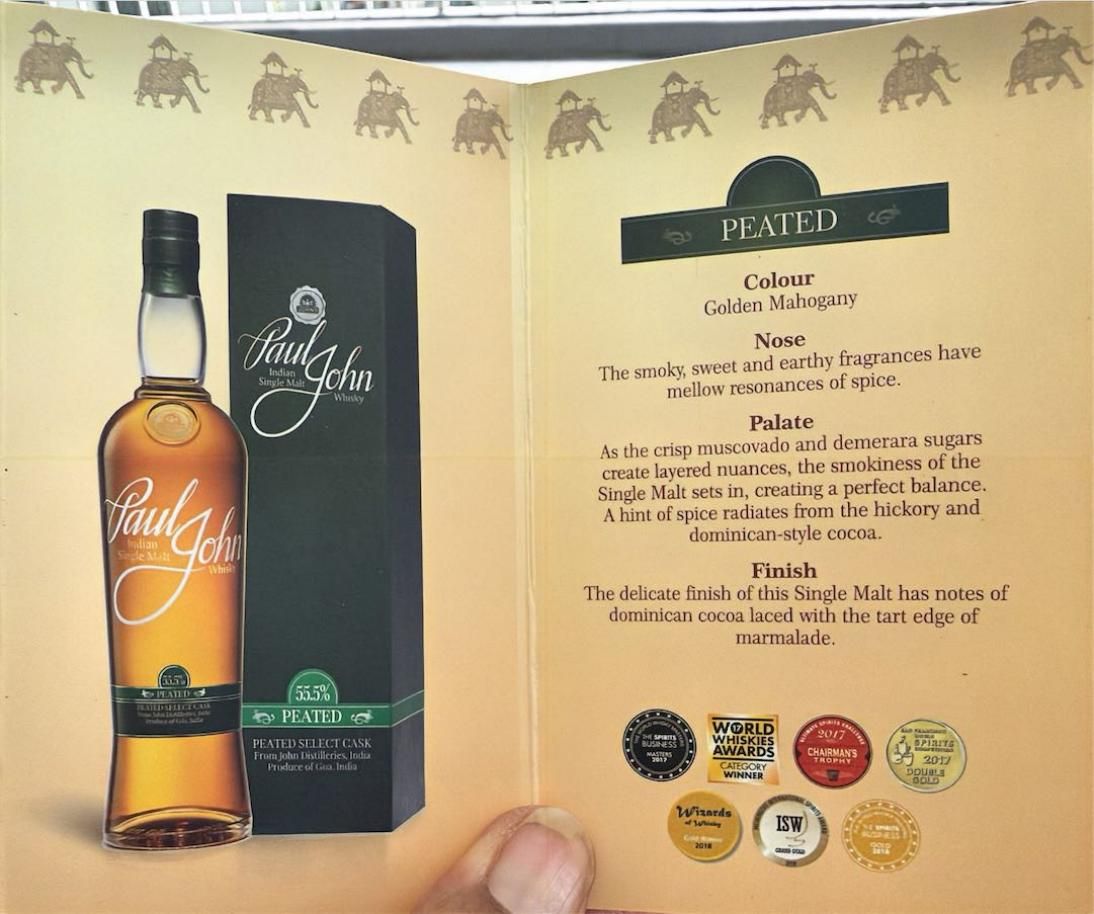
Paul John Peated Select Cask leaflet showing the bottle at 55.5% with tasting notes.
Paul John’s leaflet for the Peated Select Cask.

Paul John · John Distilleries, Goa

Peated Select Cask

Indian single malt55.5%PeatedLast pour of Day 1
Excellent

I ended Saturday here, and I’m glad I did. It has cask-strength intensity, but the peat is gentle and doesn’t flatten everything else. What I liked most was the complexity and the balance between smoke and sweetness. The leaflet describes smoky, sweet, earthy aromas, muscovado and demerara sugar on the palate, and cocoa with a tart marmalade edge on the finish.

I should be honest about my bias. I love peated whisky, and 55.5% sits right where my palate is happiest. On Sunday I tried two more Paul Johns, and neither beat it.

Why only one Paul John on SaturdayI’m not usually a big Paul John fan. I tried their Nirvana a long time ago and it didn’t win me over, and the brand is easy to find in Singapore. I went to the stand hoping to taste Mithuna, their premium expression that sells for more than S$200, but it wasn’t being poured.
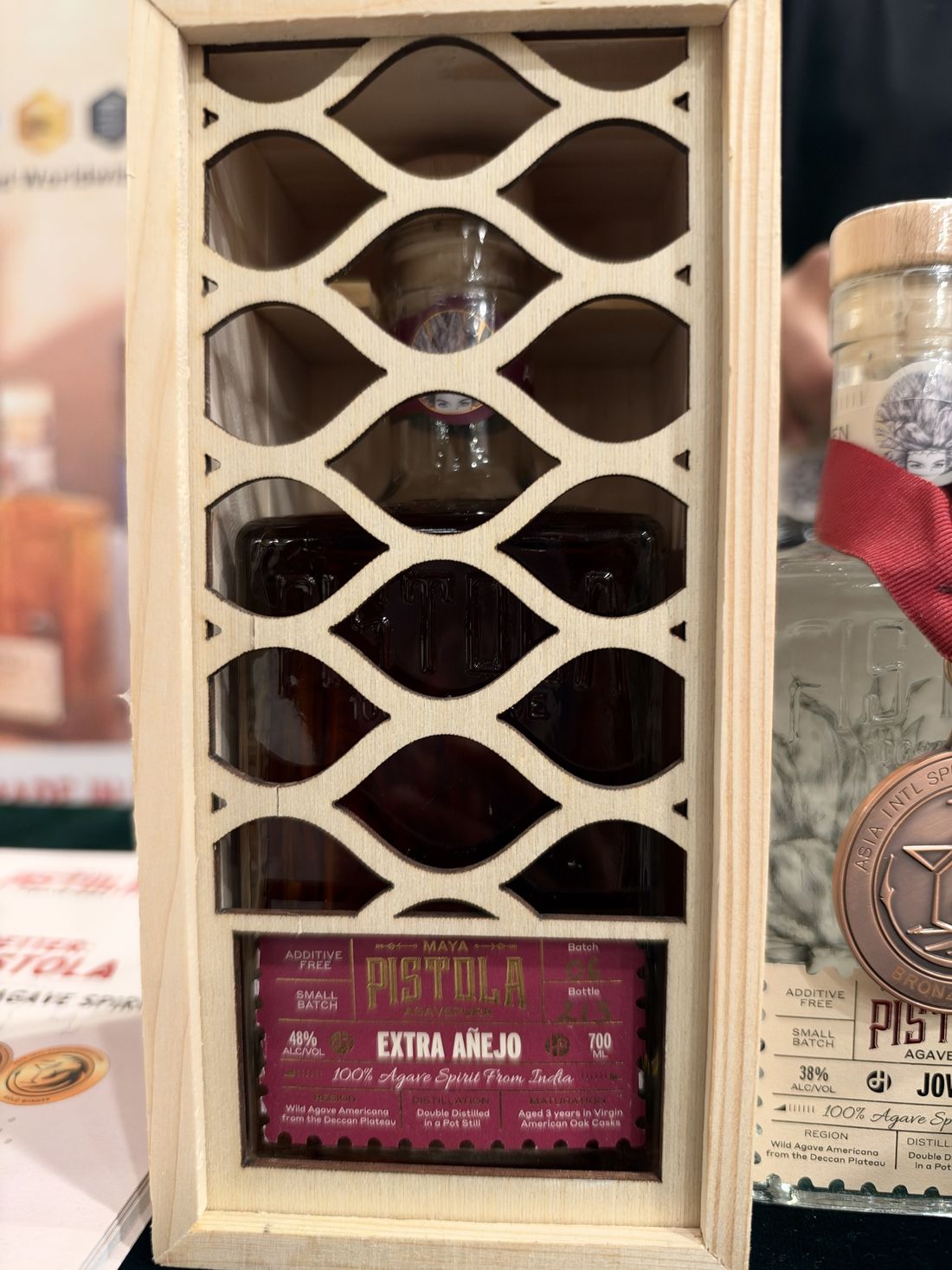
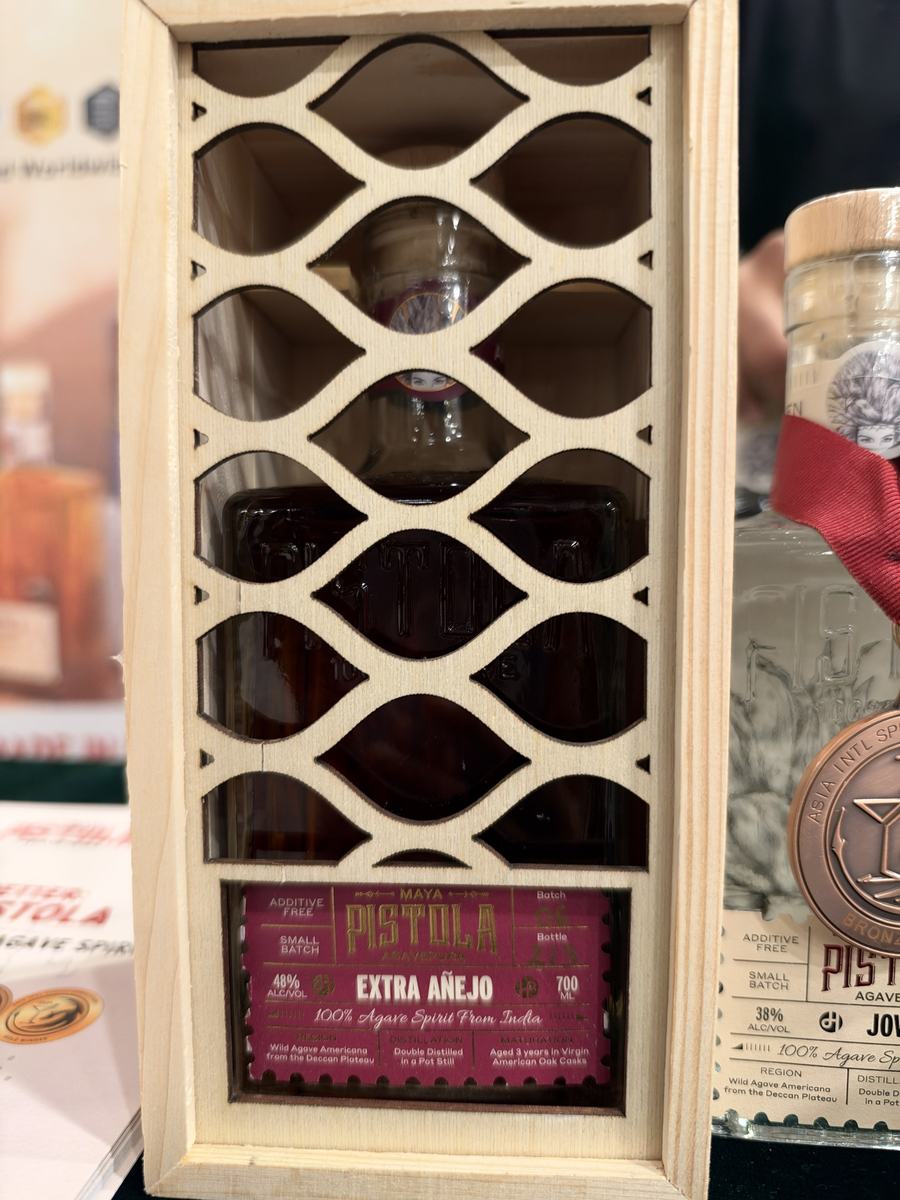
Pistola Extra Añejo in a laser-cut wooden case. Label: 48%, 700 ml, 100% agave spirit from India, wild Agave Americana from the Deccan Plateau, double distilled in a pot still, aged 3 years in virgin American oak.
The Extra Añejo, opened for me from the masterclass stock.

Maya Pistola Agavepura · India

Pistola Extra Añejo, and the range

100% agave spirit48%3 years, virgin American oakDouble pot-distilledAdditive free
Very good, both days

This was the stand I didn’t see coming. Pistola is a 100% agave spirit made in India. The name tequila is protected under Mexican rules and reserved for spirit from designated regions of Mexico, so Pistola is labelled an agave spirit, and that’s what I’ll call it. The bottle says “100% Agave Spirit From India”, and the brochure calls it Asia’s first aged 100% agave spirit.

As it was explained to me at the stand, the agave grows across parts of South India, in Telangana, Andhra Pradesh and Karnataka. It is distilled in Andhra Pradesh and then taken to Goa, where the tropical climate does the ageing in American oak. The label itself says wild Agave Americana from the Deccan Plateau, double-distilled in a pot still, and aged three years in virgin American oak.

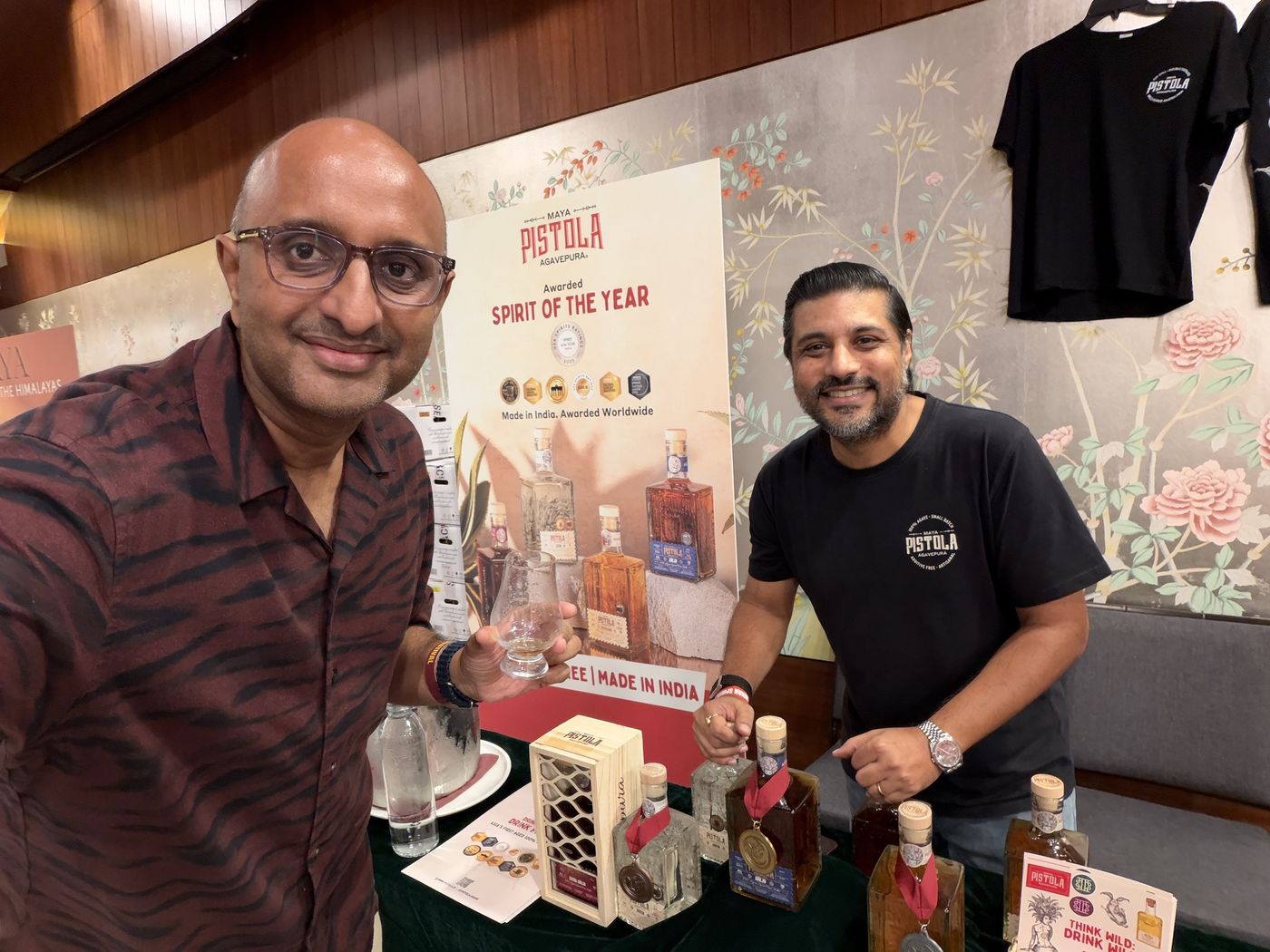
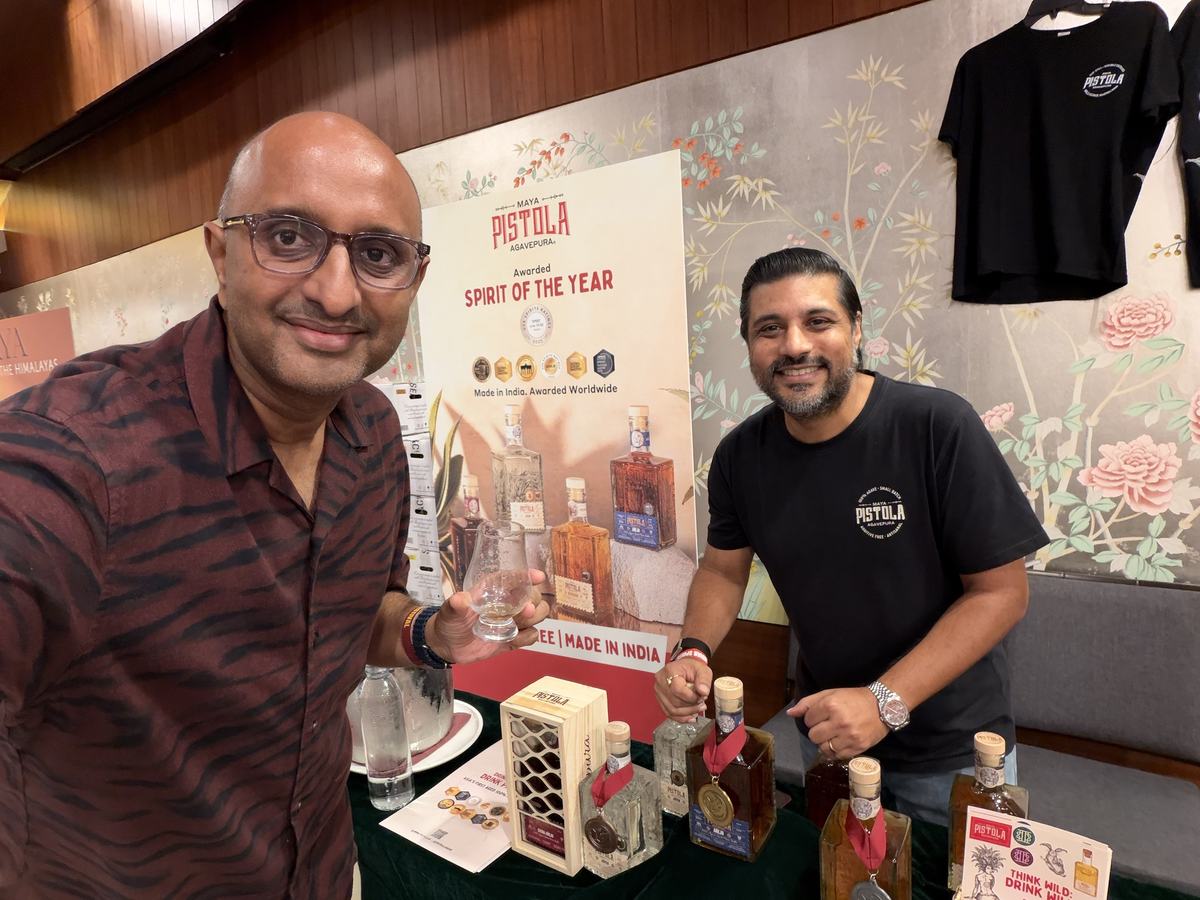
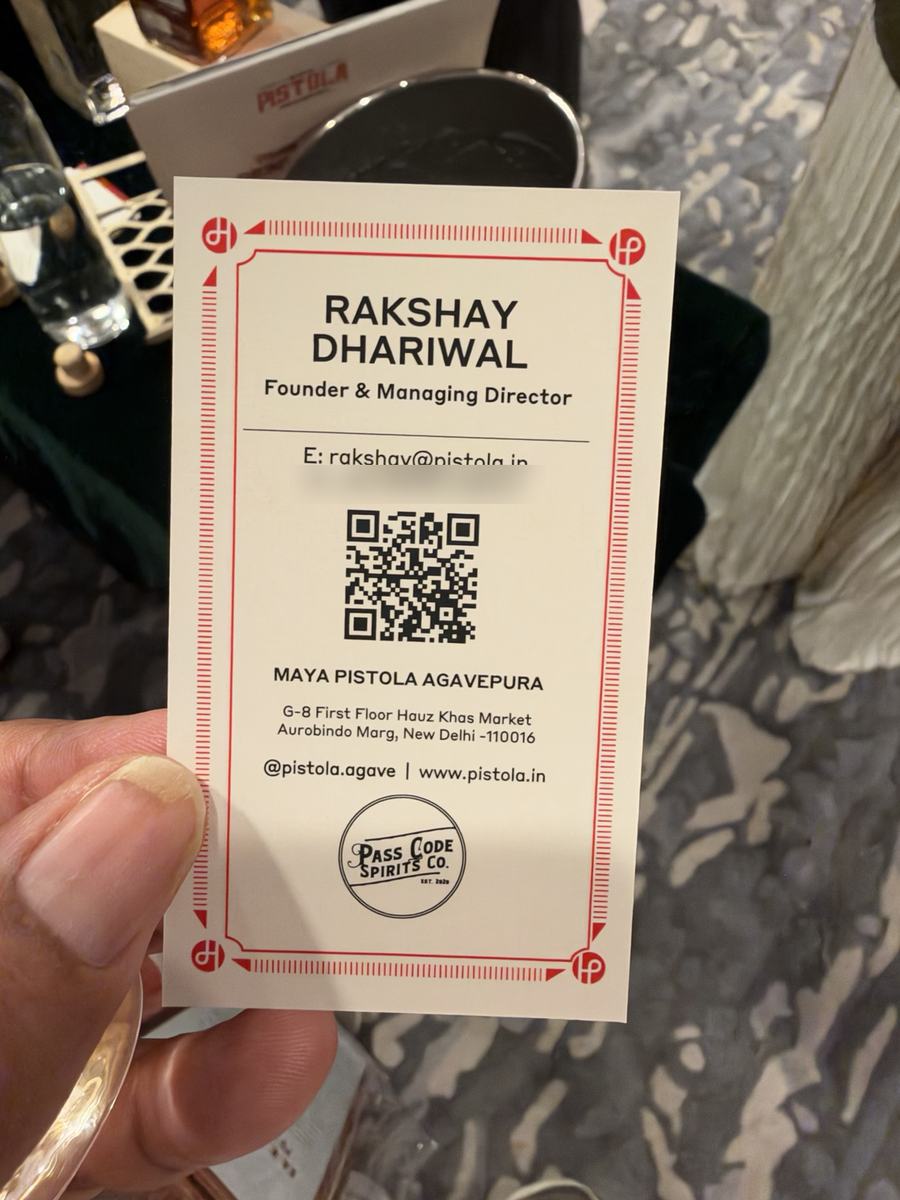
Rakshay Dhariwal, who was running the stand, poured me the whole range, then opened the Extra Añejo, which he had been saving for a masterclass, just so I could try it. I found it noticeably better than the standard Pistola I’d had before. On Sunday I went back, had another long conversation, tasted it again and still found it very good. That second visit is where I picked up his card and learned he is the brand’s founder and managing director.

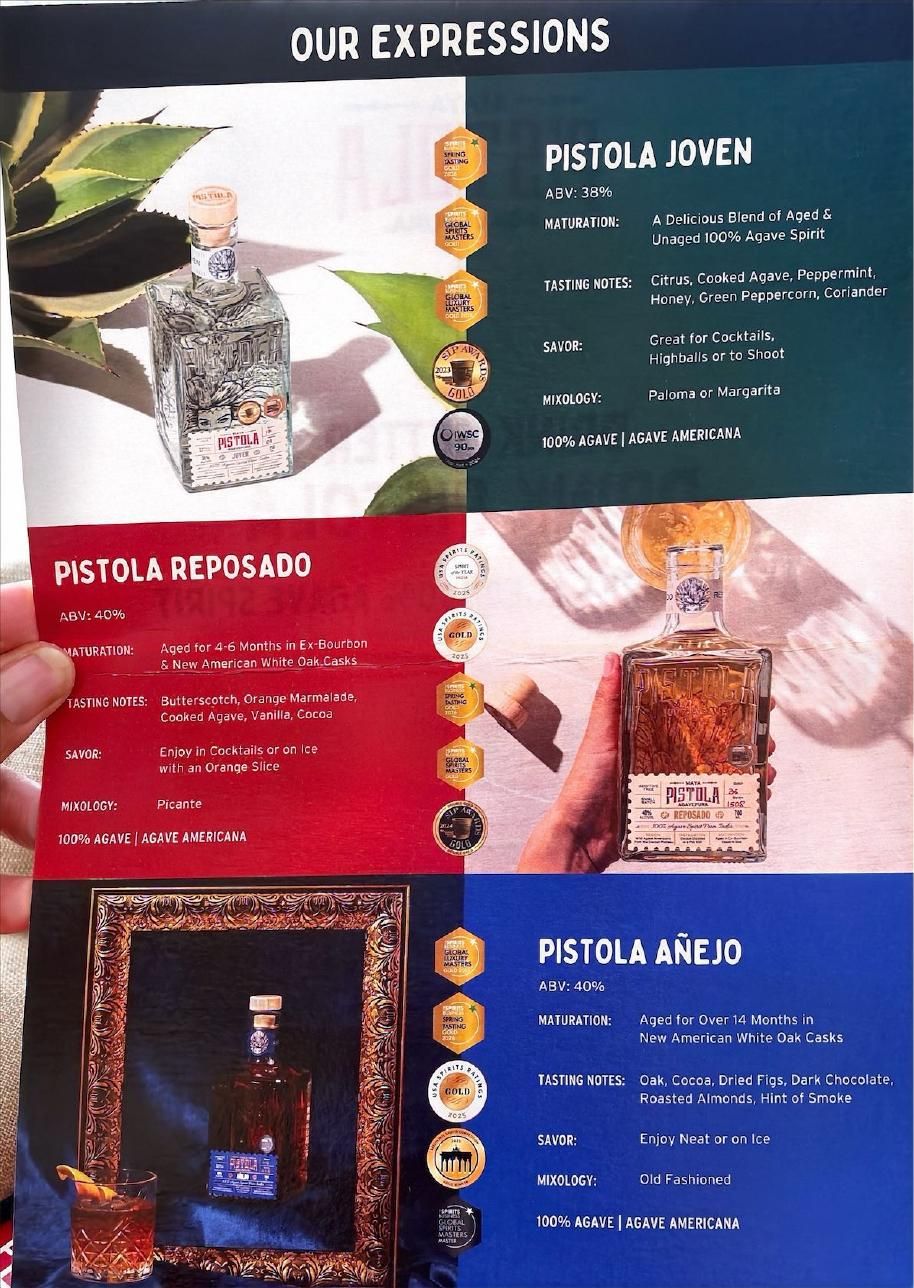
The range, per the brochureJoven 38%: a blend of aged and unaged agave spirit · Reposado 40%: 4–6 months in ex-bourbon and new American oak · Añejo 40%: over 14 months in new American white oak · Extra Añejo 48%: 3 years in virgin American oak (from the bottle label).
Harish holding a Glencairn glass next to Rakshay Dhariwal at the Pistola stand, with a 'Spirit of the Year' banner and the bottle range behind them.
With Rakshay Dhariwal, Pistola’s founder, on Saturday, the afternoon he opened the Extra Añejo for me.
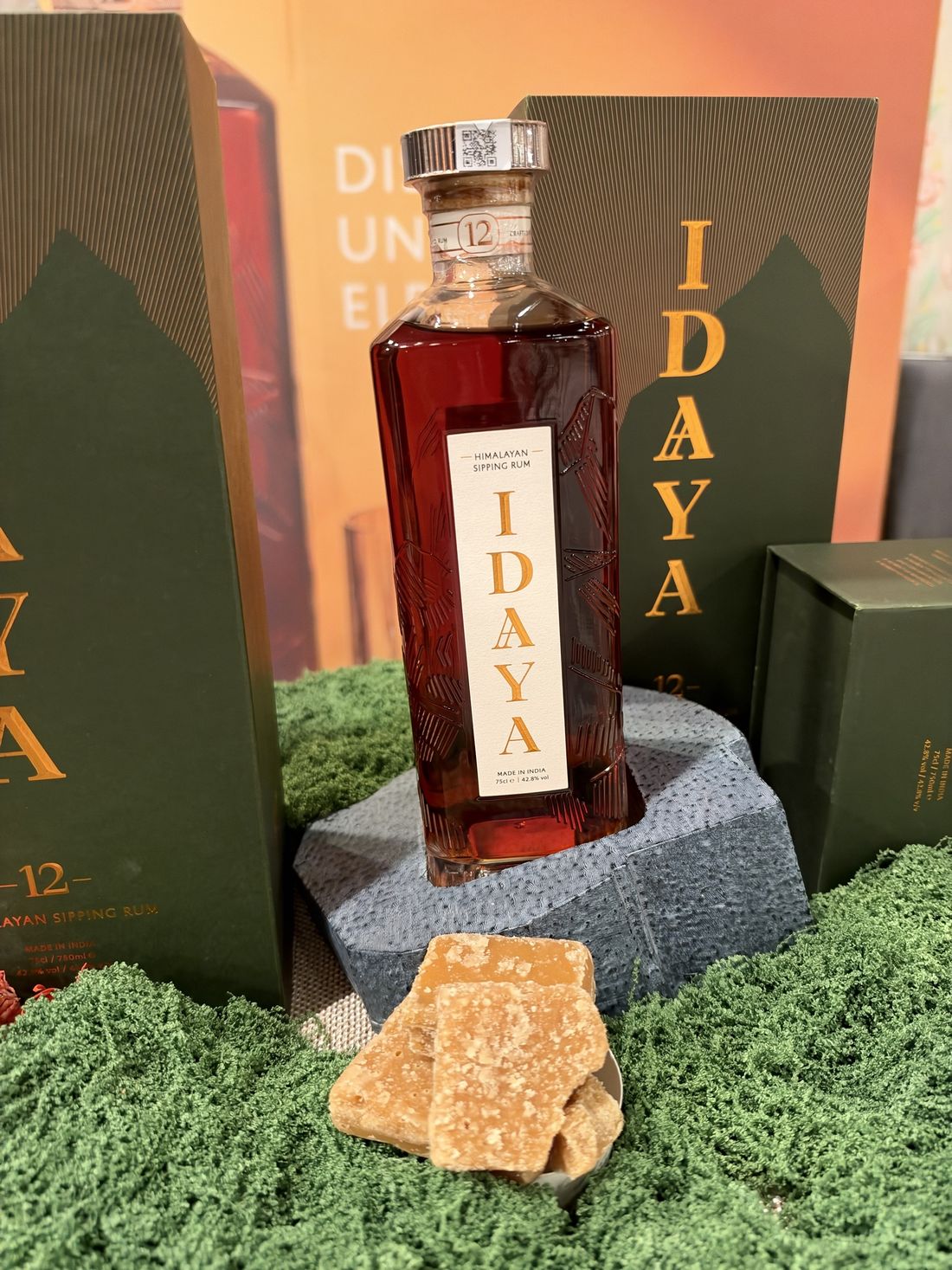
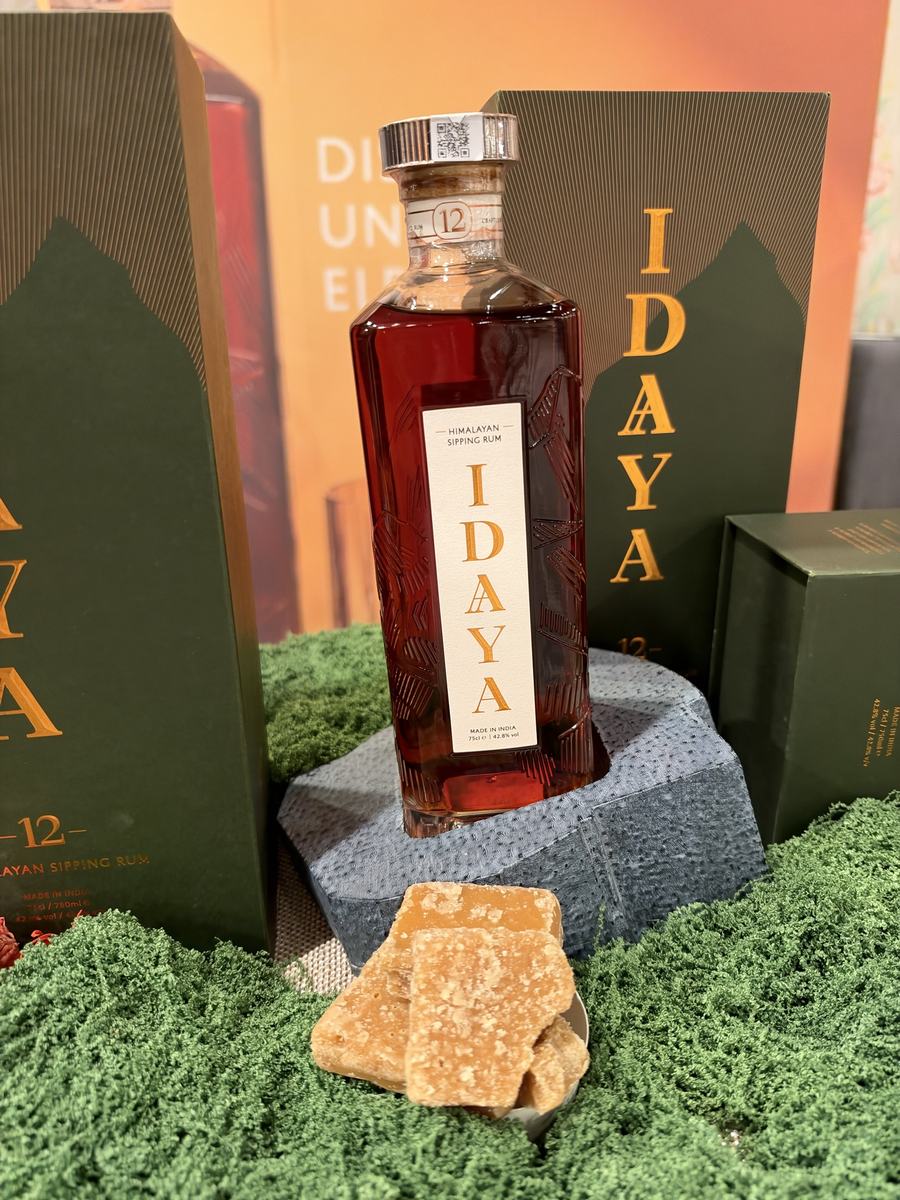
IDAAYA Himalayan Sipping Rum 12 bottle, 75 cl, 42.8%, displayed on stone with blocks of jaggery in front and green gift boxes behind.
Note the jaggery on the display. It’s on the palate too.

IDAAYA · India

Himalayan Sipping Rum 12

Rum42.8% (label)75 clSal wood finishNo added sugar
Liked · want to buy

The bottle caught my eye first. Then I met the founder, Karishma, who walked me through how it’s made. As I understood it, a 12-year-old Panamanian rum aged in bourbon casks is brought to India and blended with Indian rum. The blend is then finished in sal wood casks in Jammu and Kashmir, using a process rooted in traditional Indian (Ayurvedic) methods, for a short period. I remember it as less than a month.

In the glass it was on the sweeter side, with a clear jaggery note and a pleasant aftertaste. On Sunday I spoke with Karishma again and retasted it: sweet, with a little spice at the back of the throat. This is a rum I judge by its palate and balance, not by how complex or strong it is, and on those terms I like it. It isn’t sold in Singapore yet, so it’s on my list for an Indian airport.

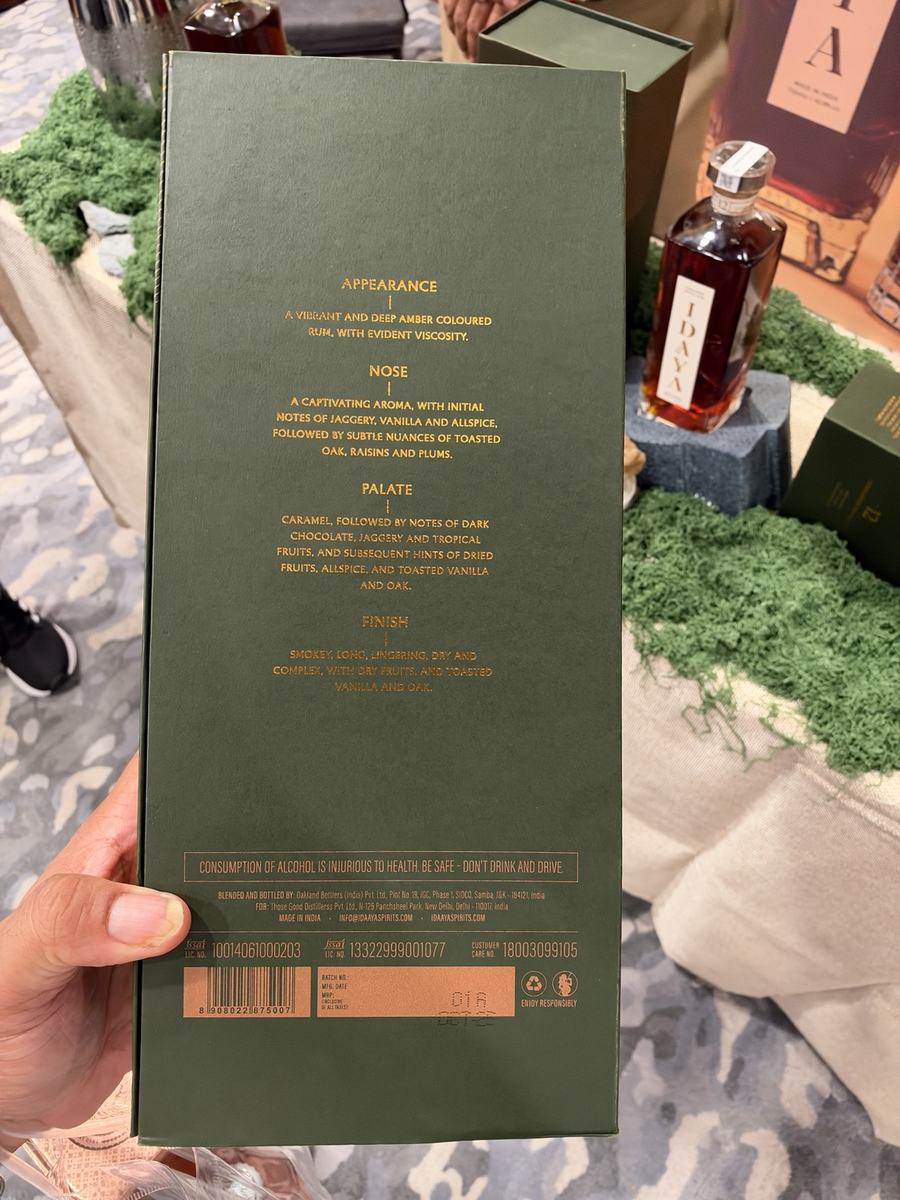
From the brochure and the boxThe brochure describes 12-year-old bourbon-cask rum blended with Indian rum through a solera system and sal wood casks, with no added sugar or artificial colour. The box lists jaggery, vanilla and allspice on the nose; caramel, dark chocolate, jaggery and tropical fruit on the palate; and a long, dry, slightly smoky finish. Blended and bottled by Oakland Bottlers in Samba, Jammu and Kashmir.
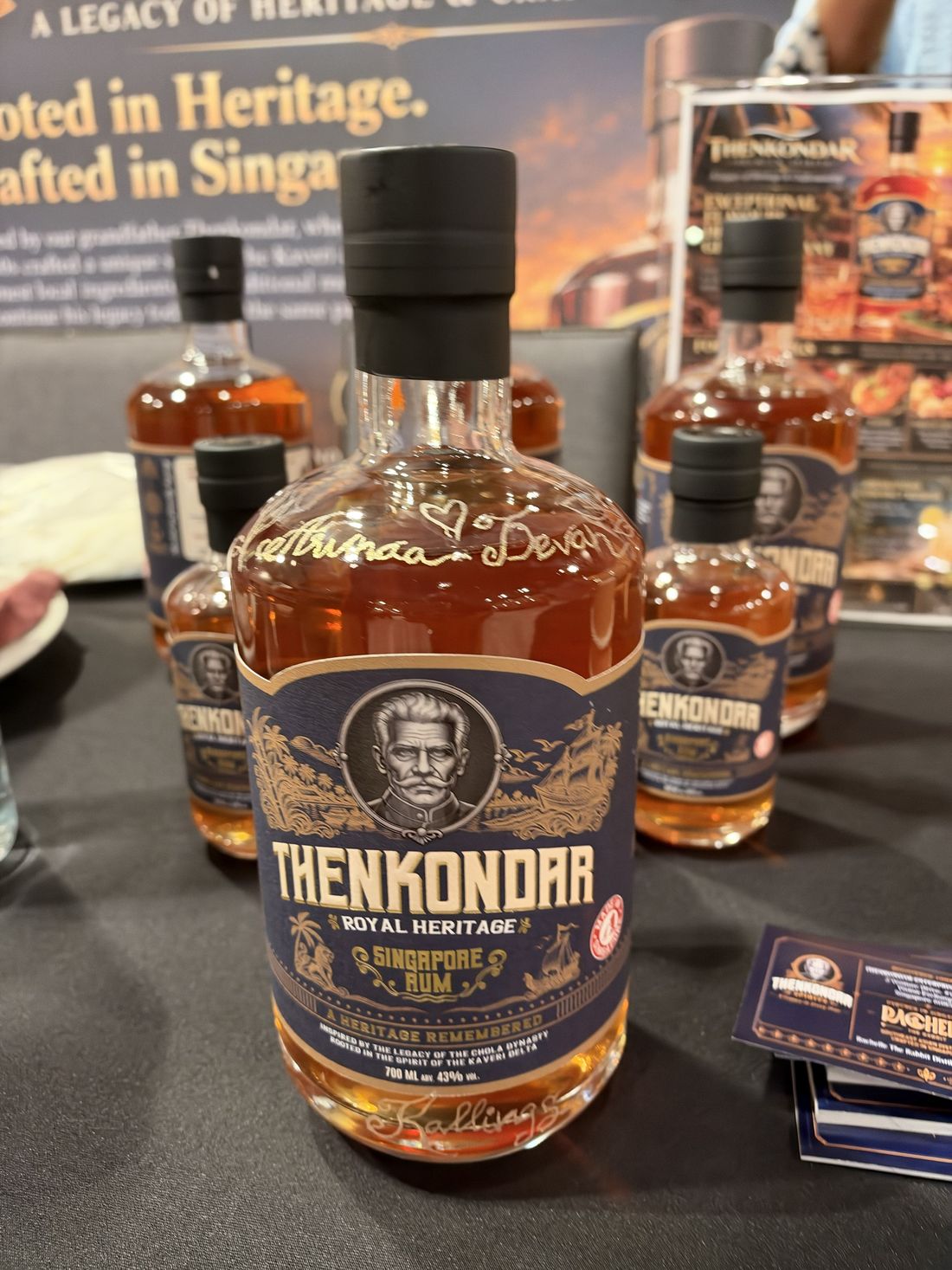
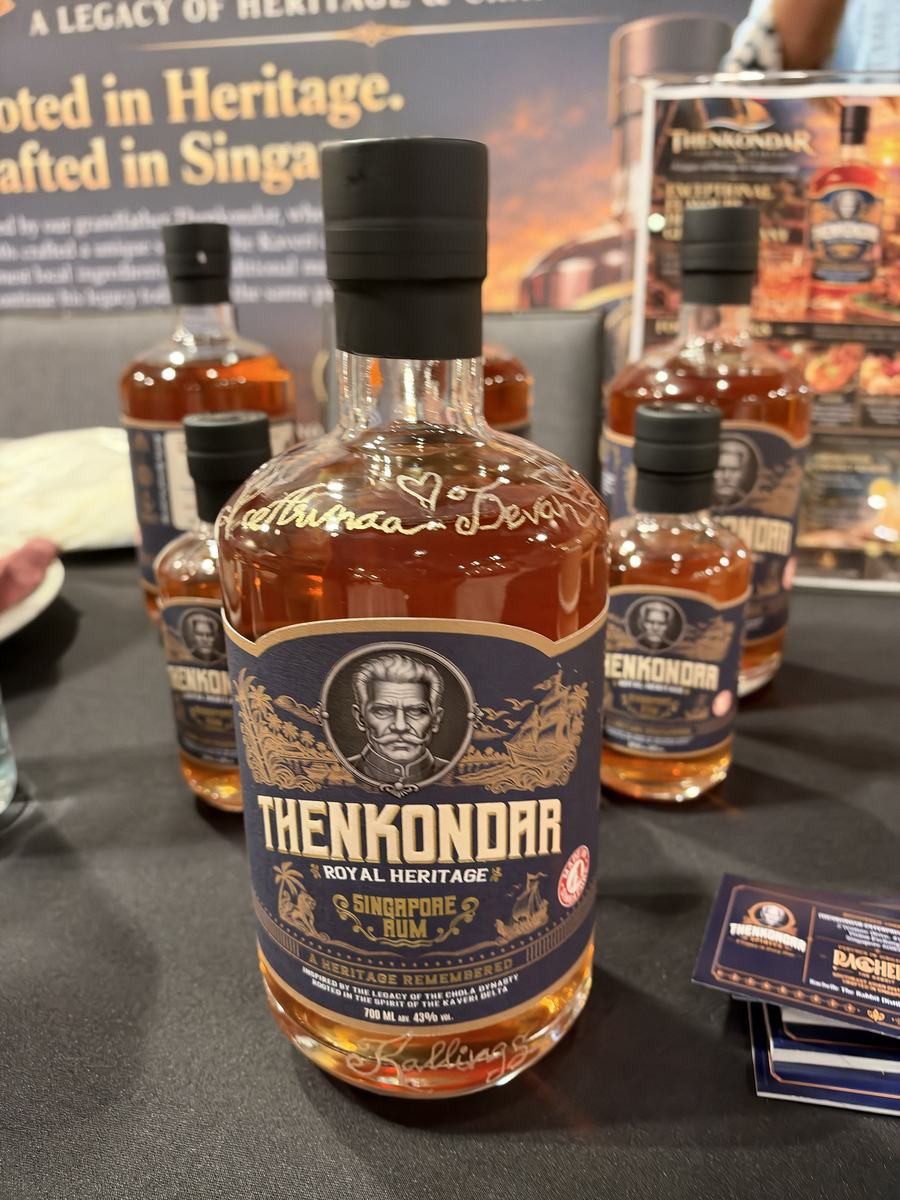
Thenkondar Royal Heritage Singapore Rum, 700 ml, 43%, the front bottle hand-signed in gold pen.
Bottles bought on the day could be signed or named.

Thenkondar Spirits · Singapore

Royal Heritage Singapore Rum

Rum43%700 mlAged 2–3 years in Singapore
Not bad

The one local brand I tasted, with an Indian story. As it was explained to me, the ingredients come from India (molasses and botanicals they describe as Ayurvedic), and the rum is aged here in Singapore. Their Singapore partner is Rachelle the Rabbit, the distillery I toured in August.

It was a little sweet, with a touch of oak at the end. Because it’s local, they could sell it at the festival, at about S$90, with a name signed on the bottle. I preferred IDAAYA: the 12-year-old component gives it a depth a 2–3 year rum can’t match yet.

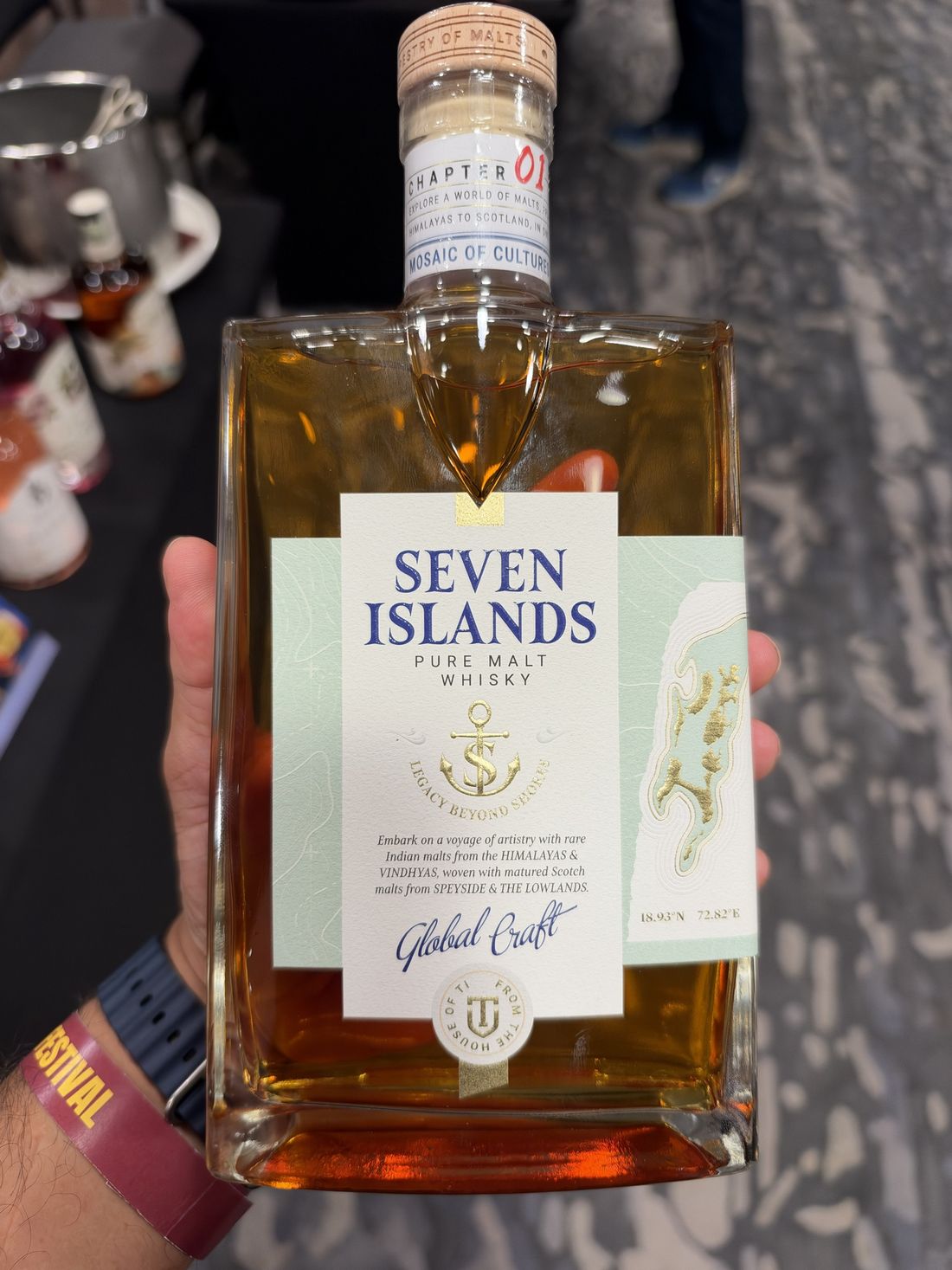
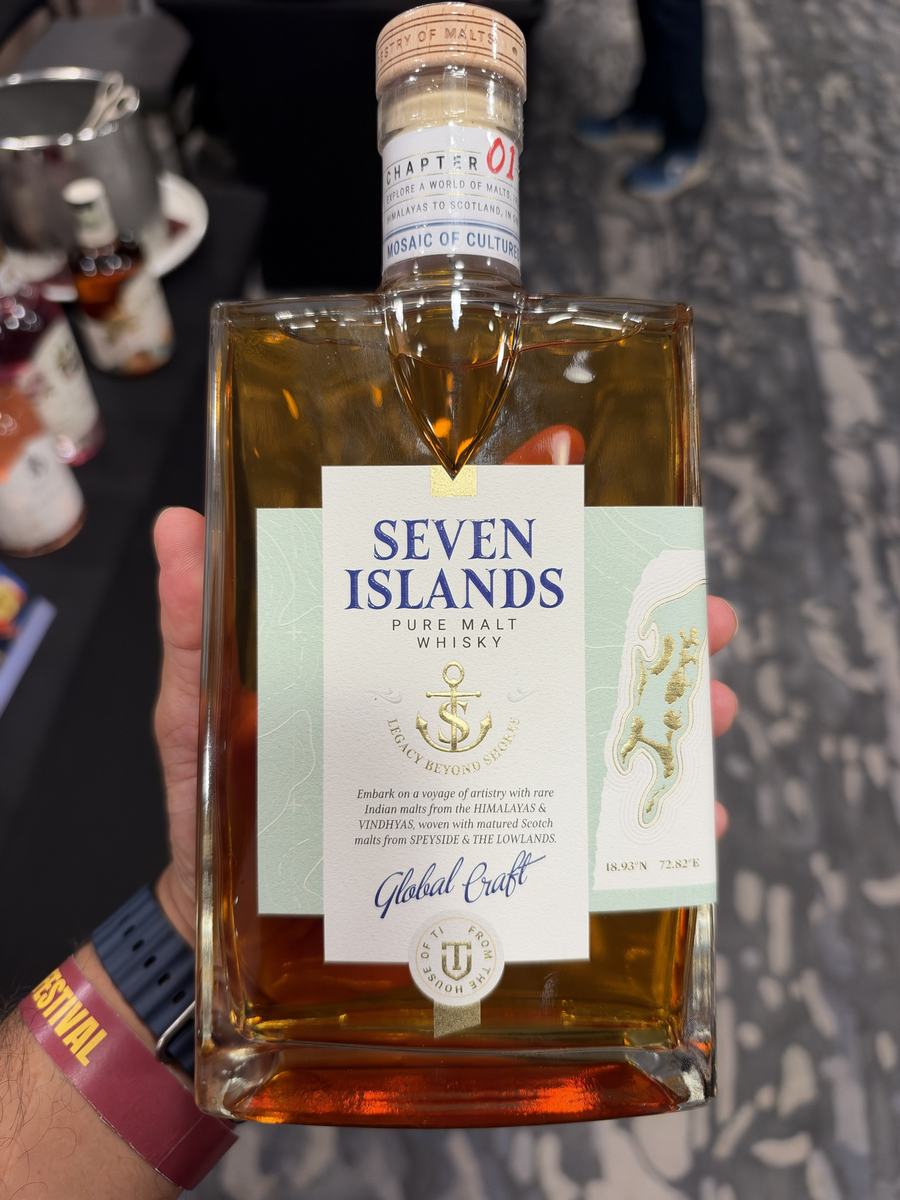
Seven Islands Pure Malt Whisky bottle held in hand.
Seven Islands. The label map shows Bombay’s islands, with Mumbai’s coordinates.

Tilaknagar Industries · Maharashtra

Seven Islands Pure Malt and Monarch Legacy Edition

Pure malt 42.8%Grape brandy 40%Up to 8 years
Average for me

Seven Islands blends four single malts: Himalayan and Vindhyan from India, Speyside and Lowlands from Scotland, matured up to 8 years in ex-wine French oak and ex-bourbon American oak. Pleasant, mildly sweet, a bit of oak, but it didn’t stay with me. I liked how it looks more than how it tastes.

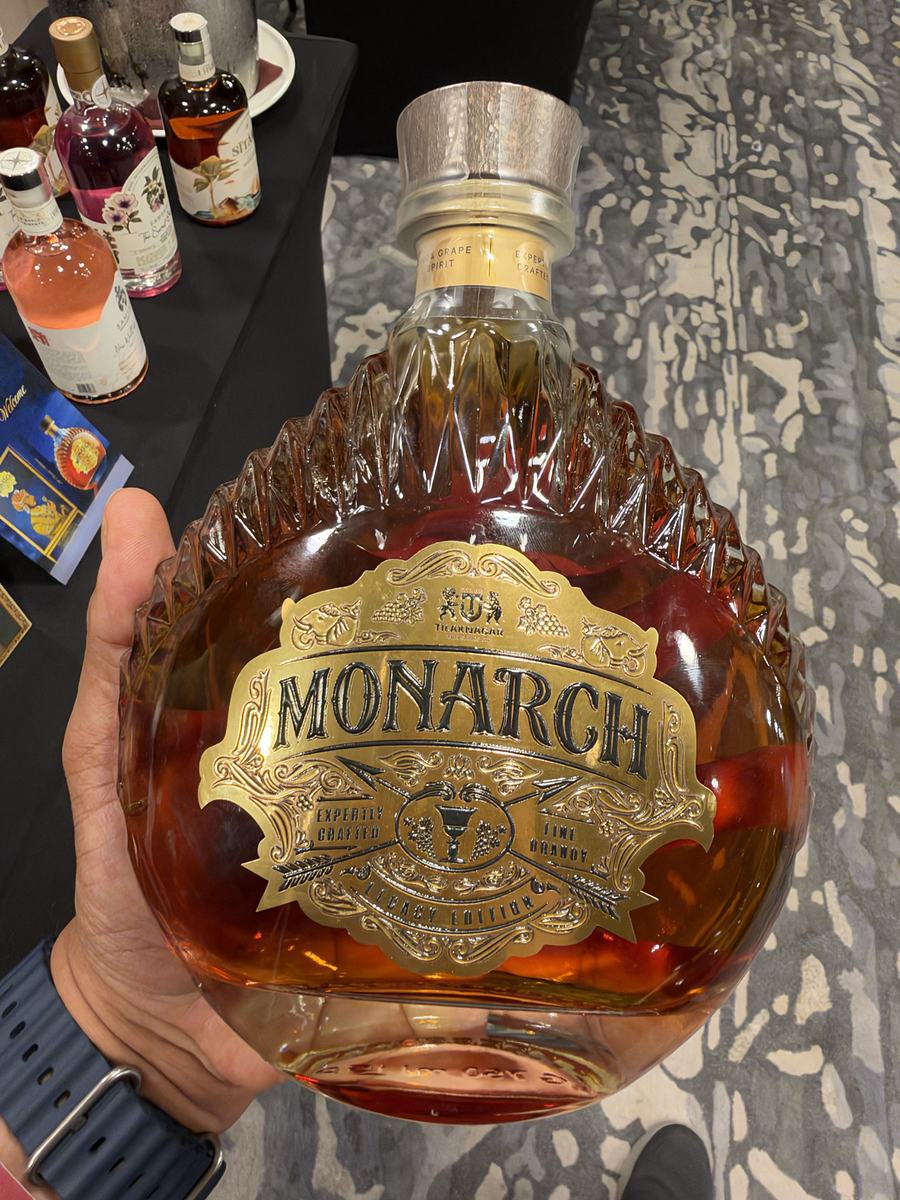
Monarch Legacy Edition is made entirely from grapes: Indian grape spirit from the Sahyadri slopes blended with French grape spirit, aged up to 8 years. Sweet grape character, not bad, but average, and the decanter reminded me strongly of a Rémy Martin. The same stand’s Samsara gins turned out to be a very different story on Sunday.

Skipped on purposeI went to the Indri and Piccadilly booth for one bottle, Camikara 12 Year Old, which I remembered as very good from a rum festival two or three years ago. They only had the 3 and the 8, and I already have an open Camikara 8 at home. I also own the Indri Dru Cask Strength and two bottles of the core Indri single malt, so I spent my palate elsewhere. I wasn’t trying to tick off every brand.

Sunday 1 November

Day 2 · Shared, and with a clearer palate

The plan was to be there at noon. Instead we went to an 11 o’clock movie that ended around 1:30, and I was hungry, so Anusha and I stopped at Nando’s first. We reached the festival at about 2:30 with Prateek. Sunil joined at around 5 with another friend, and I left at about a quarter to six for HarbourFront, to meet a friend visiting from Mumbai who had brought sweets.

Day 1 was discovery on my own. Day 2 was discovery shared, and it was a different kind of good. My palate had come back after the cold, so I used the afternoon for two things: going back to the spirits I wanted to test again, and letting the others pull me towards stands I hadn’t visited.

  1. 2:30 pmArrive with Anusha and Prateek, straight to Cazulo.
  2. AfternoonReturn visits to Pistola and IDAAYA; first visits to Samsara, Rutland Square, Loca Loka and more.
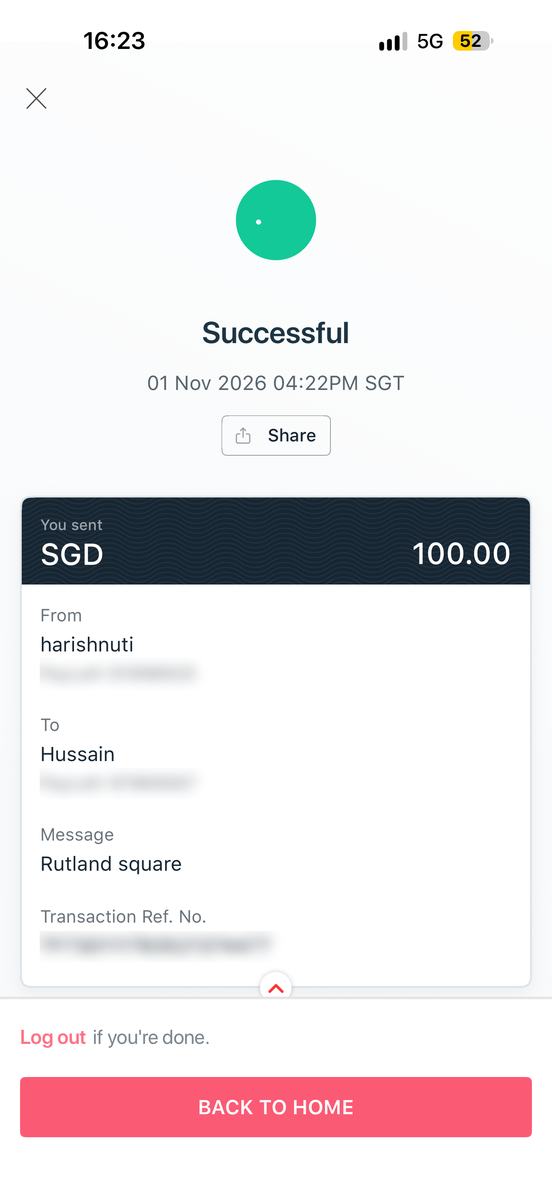
  3. 4:23 pmPay S$100 at Rutland Square.
  4. 5:00 pmSunil arrives with a friend.
  5. 5:45 pmLeave for HarbourFront.
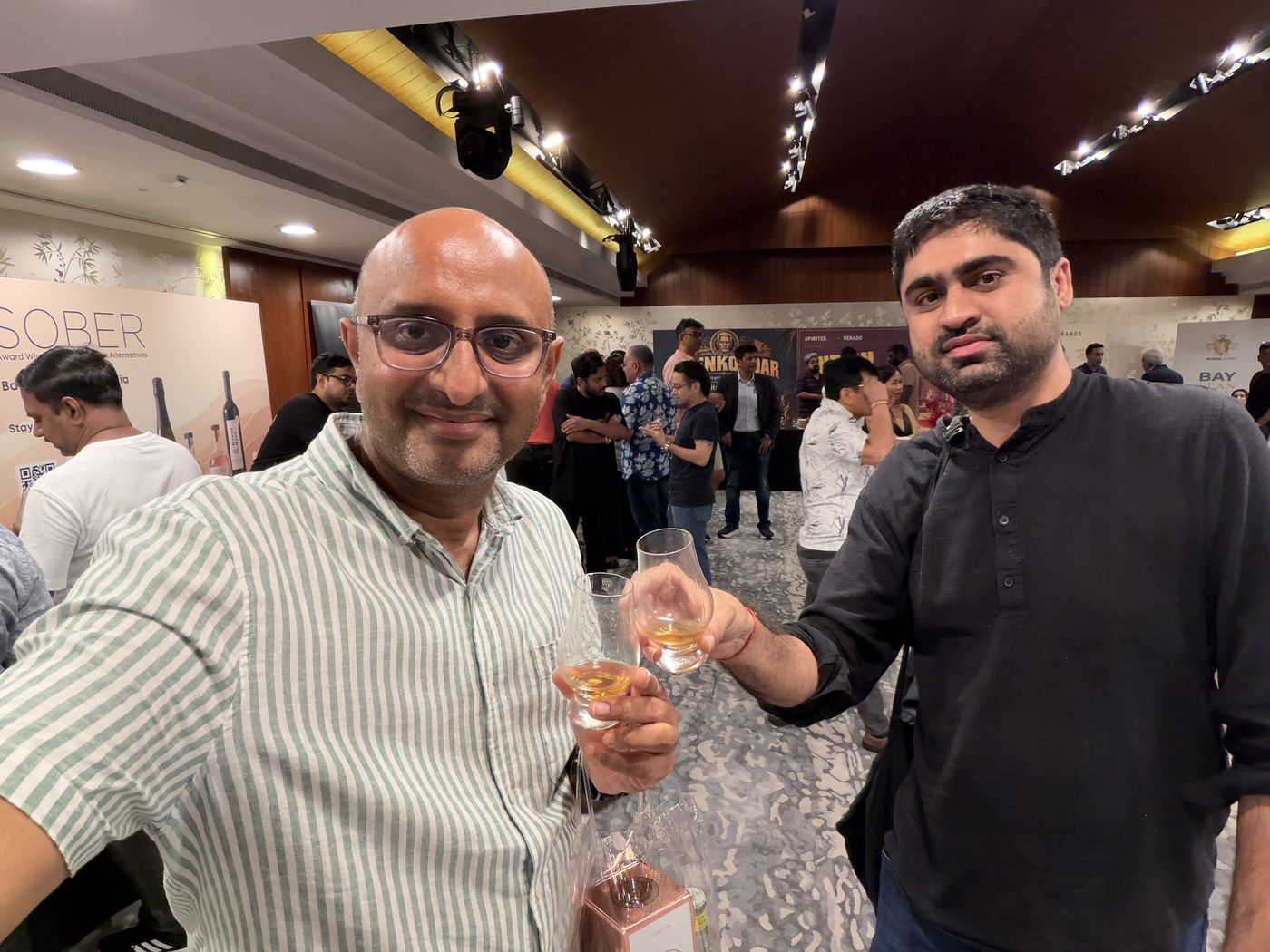
Selfie of Harish and a friend clinking Glencairn glasses in the busy festival hall.
Sunday afternoon on the festival floor.
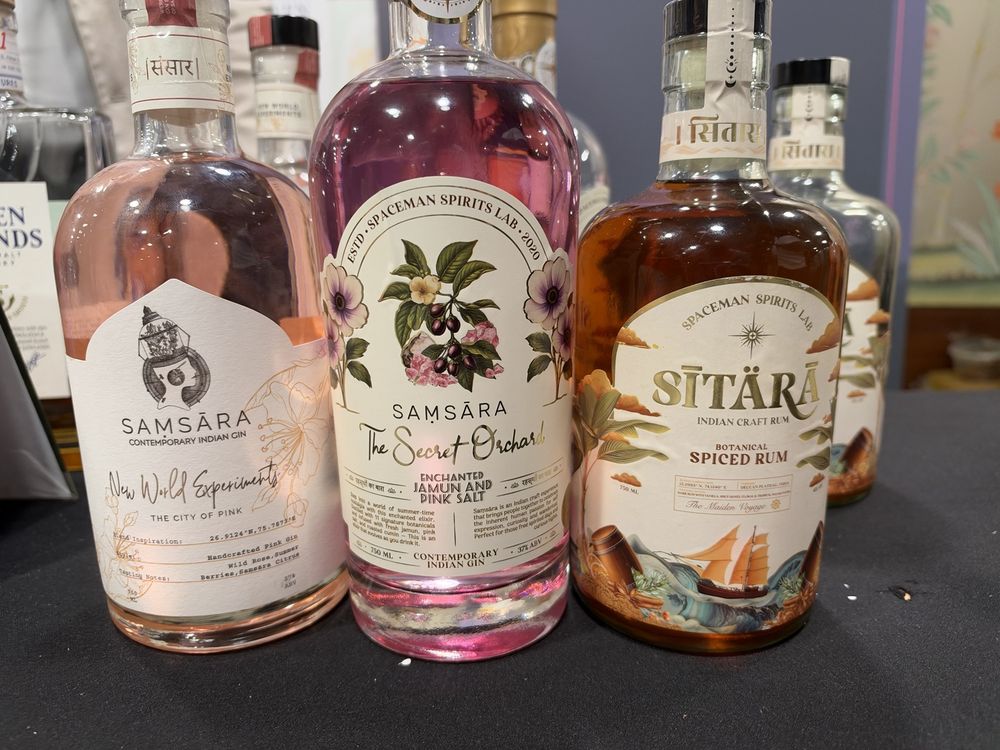
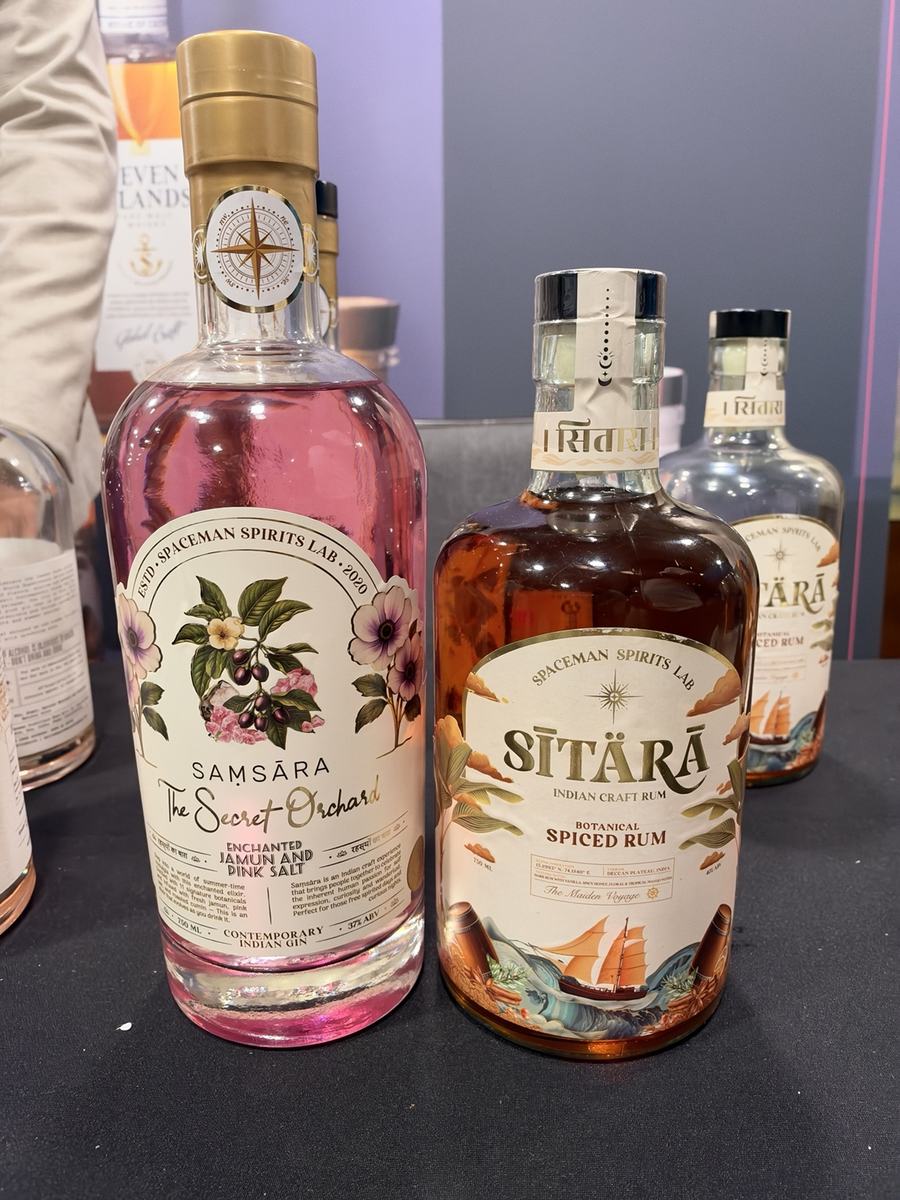
Samsara The Secret Orchard and City of Pink gins next to Sitara Spiced Rum on the Tilaknagar table.
Samsara gins with Sitara Spiced Rum on the House of TI table.

Samsara · House of TI (Tilaknagar)

The City of Pink and The Secret Orchard

Indian craft ginNeat and with tonic
Want to buy · City of Pink first

The gin discovery of the weekend came from the same stand whose whisky and brandy hadn’t moved me on Saturday. The Secret Orchard (Enchanted Jamun & Pink Salt) was immediately recognisable: the jamun stood out straight away. Anusha liked it too, and Sunil thought about buying a bottle.

The City of Pink was the one we both preferred: floral and refreshing, neat and with tonic. If I buy one, it’s this. Anupam gave us an indicative price of S$90–100, and I’ll probably look for it in India rather than buy here.

The Tilaknagar portfolio describes its pink gin as distilled with 11 signature botanicals and then infused with Himalayan strawberries, mulberries, Indian rose and hibiscus. That’s the producer’s description; mine is simpler: floral, refreshing, and better than the jamun for me.

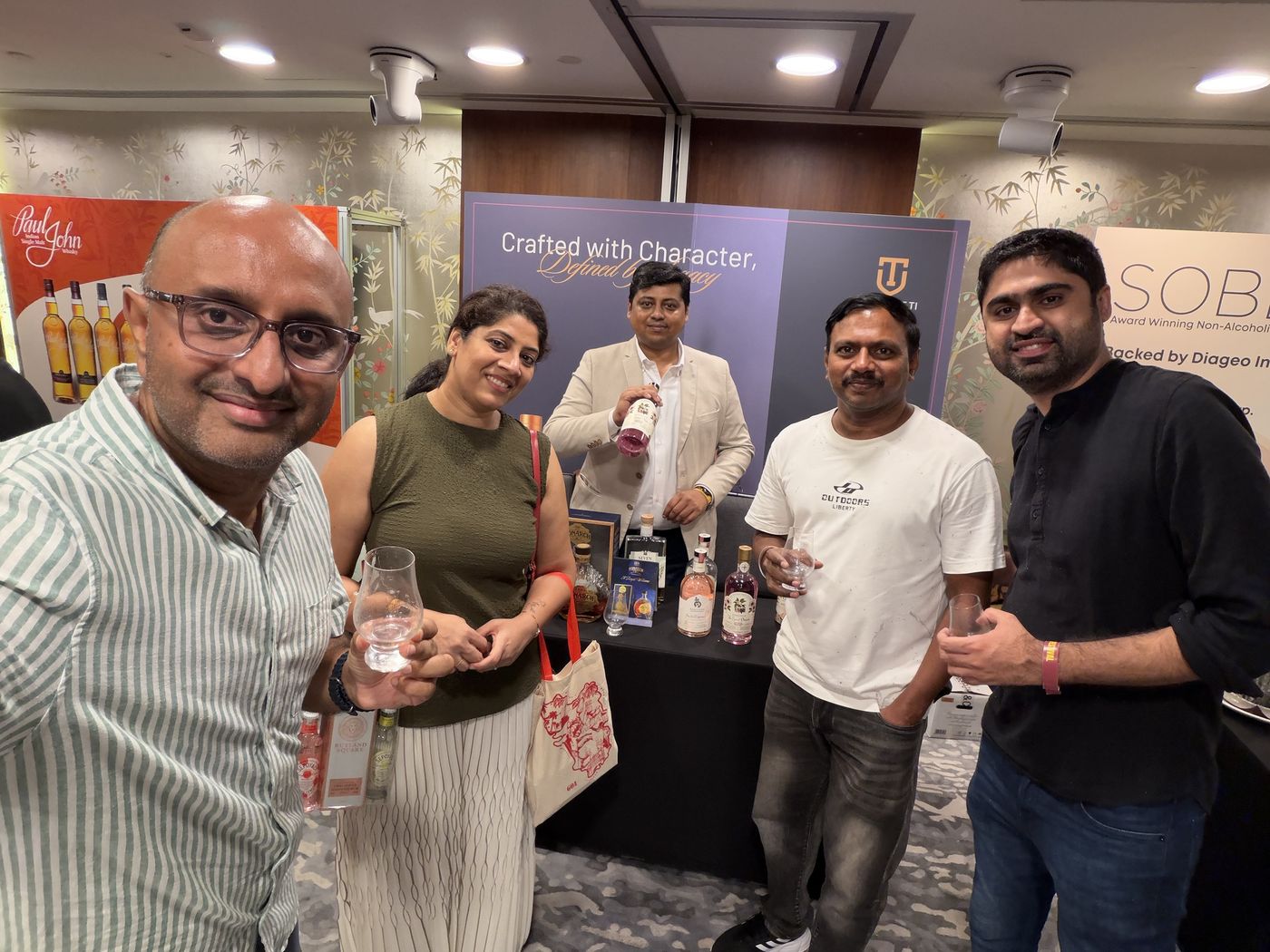
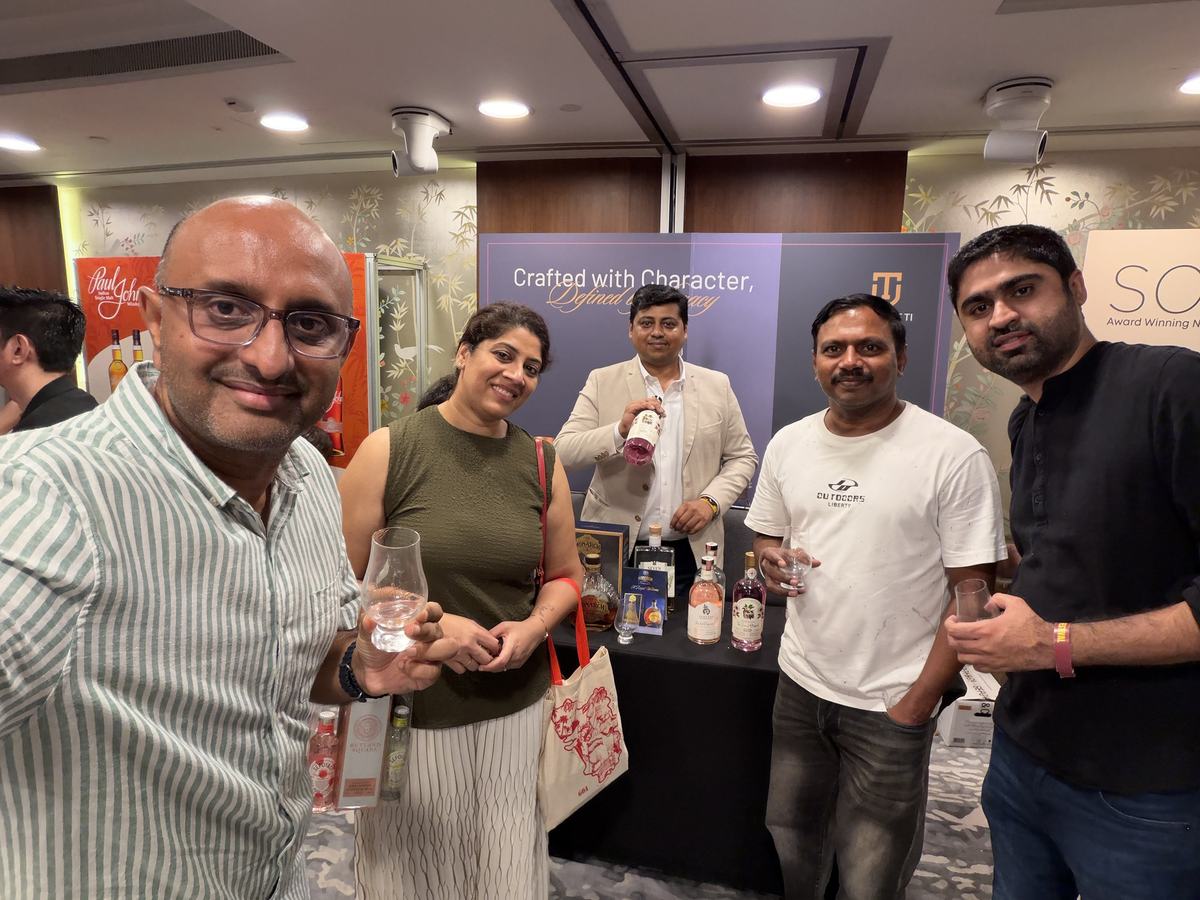
Harish with Anusha and two friends at the House of TI stand, where a representative holds up a bottle of Samsara gin.
Back at the House of TI stand with Anusha and friends, this time for the gins.
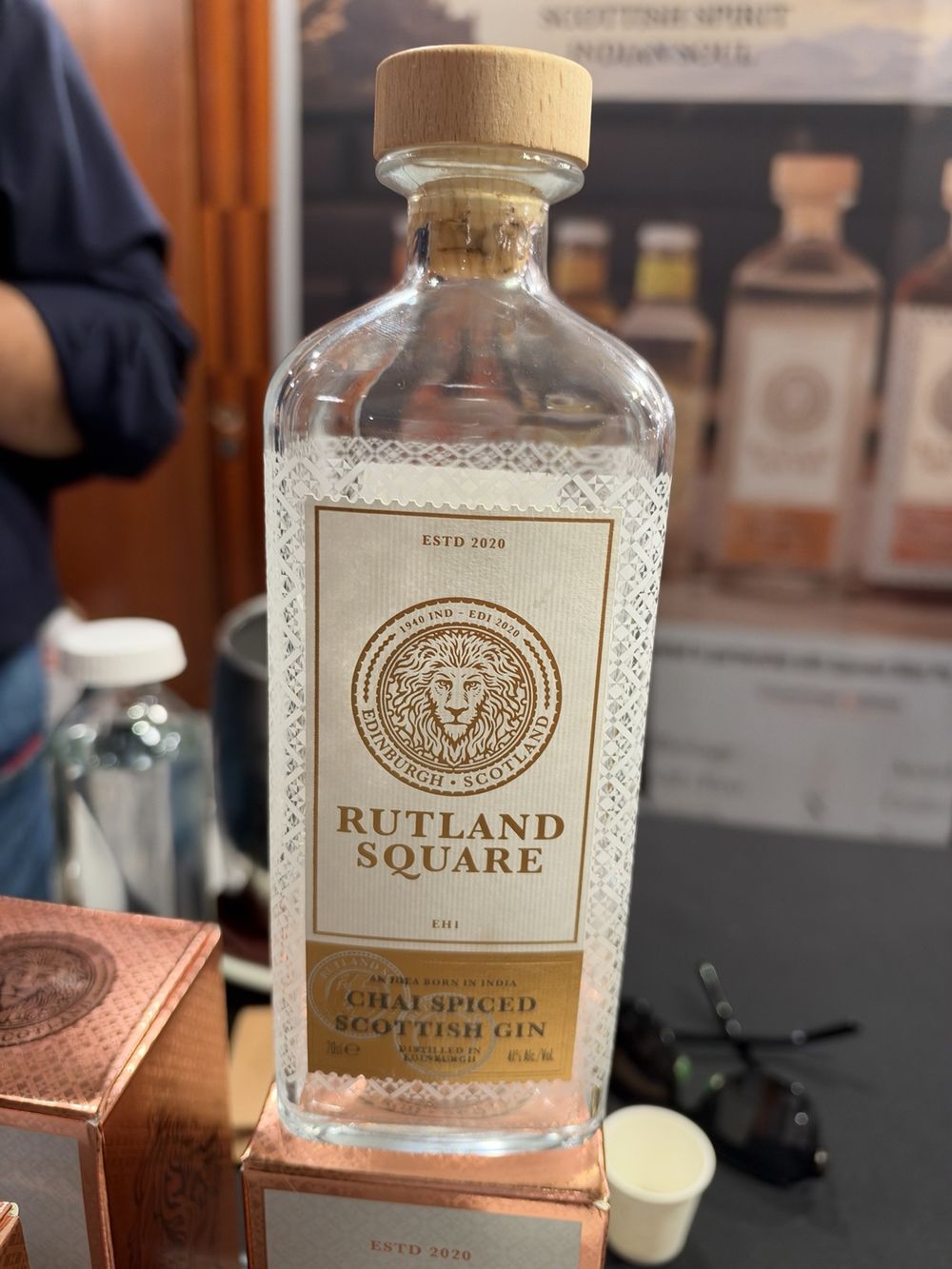
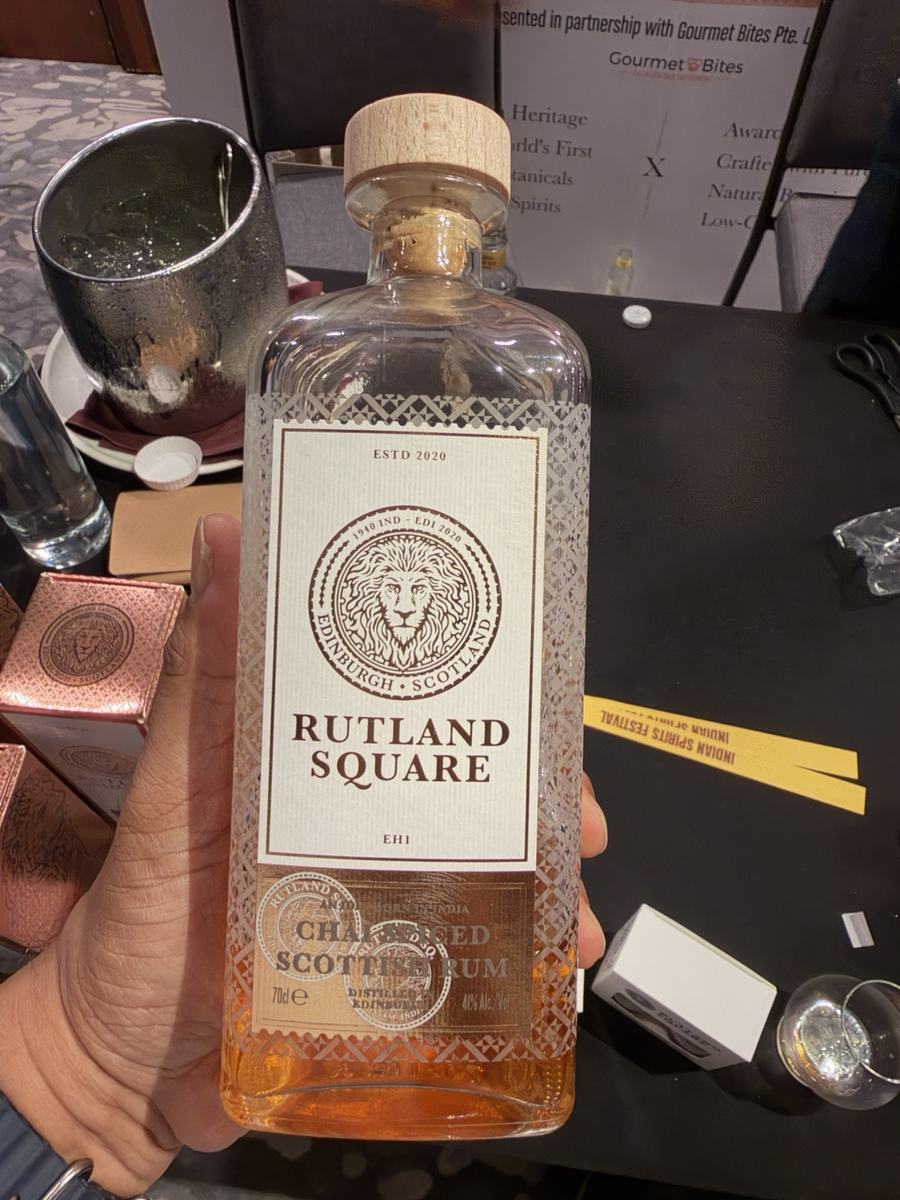
Rutland Square Chai Spiced Scottish Rum bottle.
The bottle I bought.
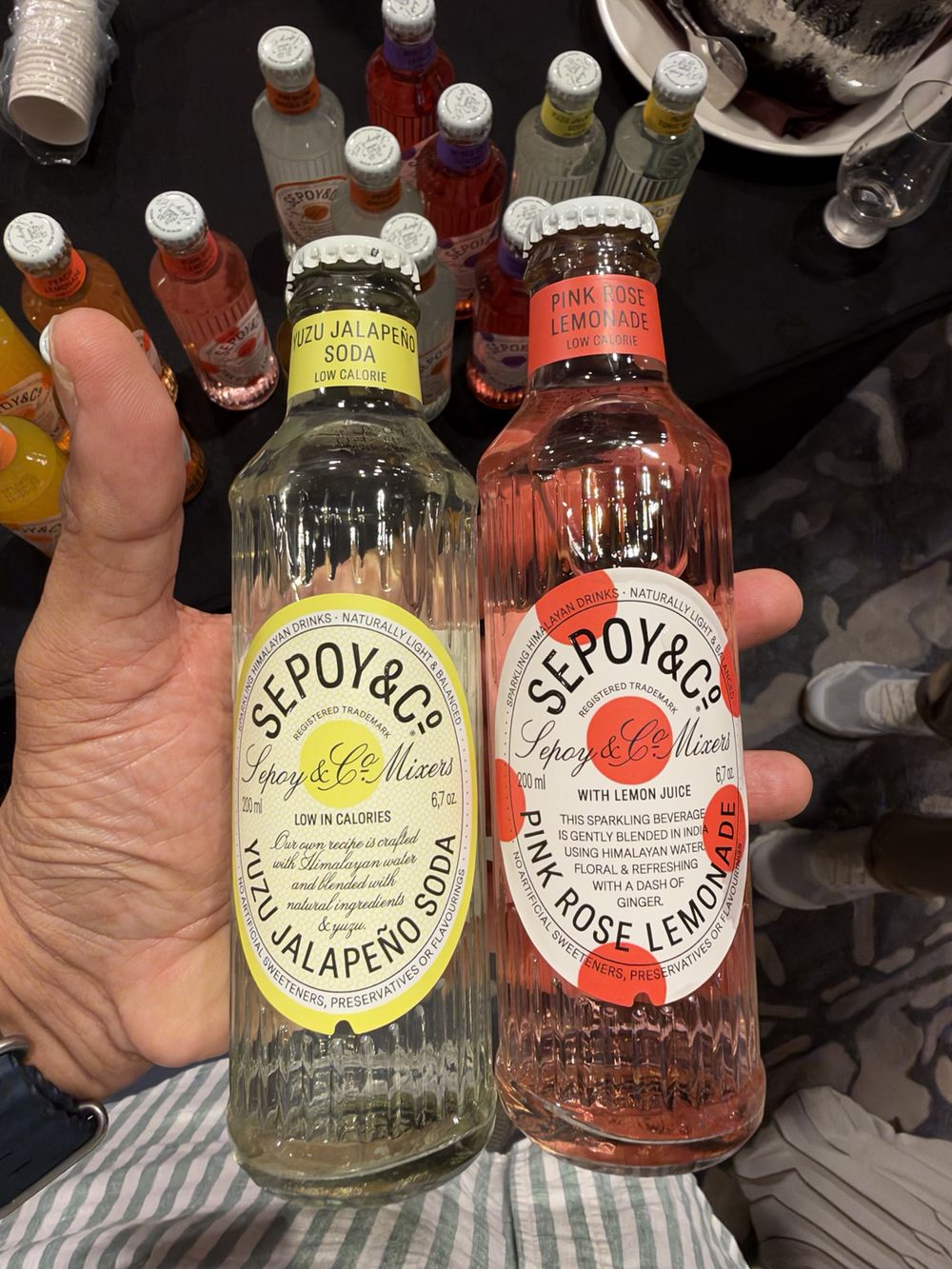
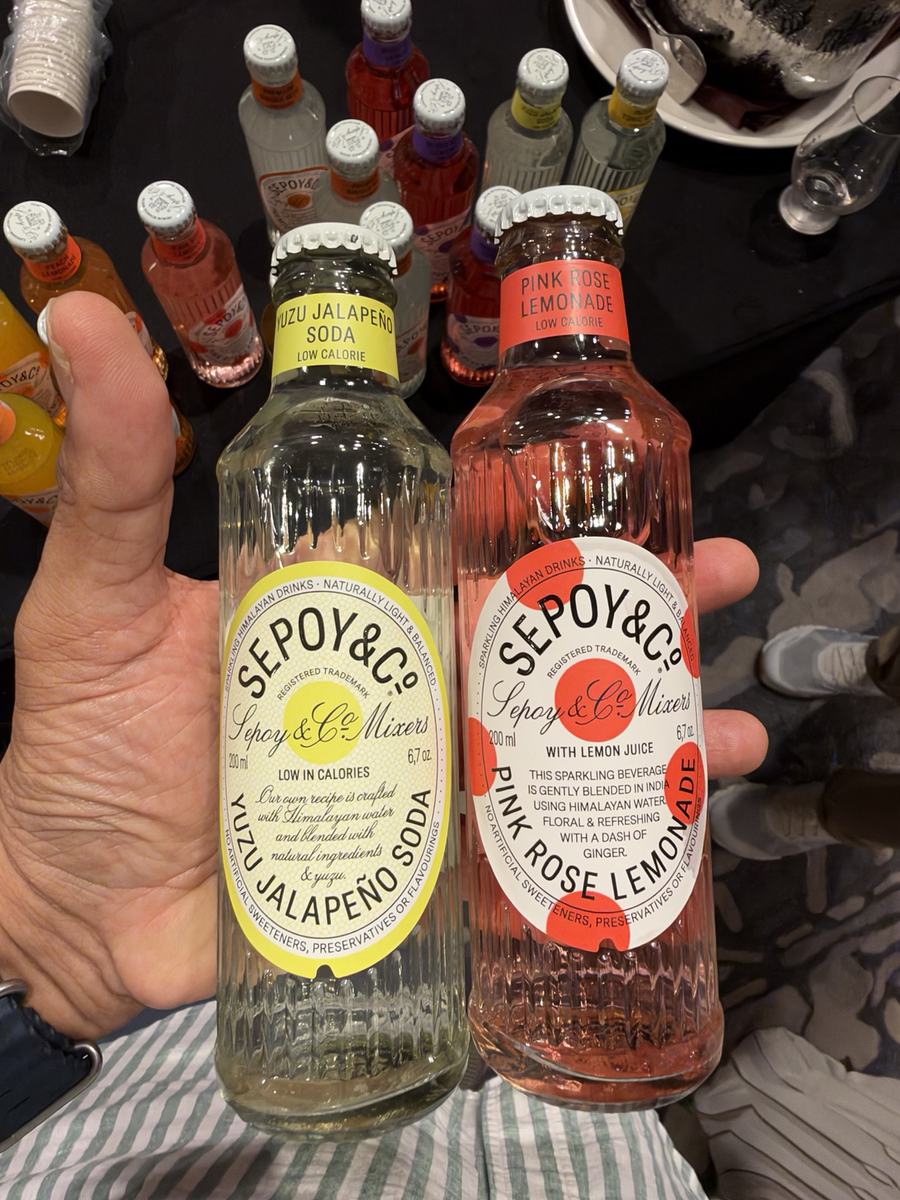
Two Sepoy and Co. sodas held in hand: Yuzu Jalapeño Soda and Pink Rose Lemonade.
The two Sepoy sodas in the bundle.

Rutland Square · Edinburgh

Chai Spiced Scottish Rum, and a bottle home

Spiced rum41%70 clBought
Bought · S$88

The presenter told us he had lived in Scotland for a long time and had been experimenting with chai and Indian herbs. He had two bottles open. The gin was almost finished, and Anusha and I shared the last small pour: not bad, but too little to judge.

The rum was the stronger experience. Neat, it wasn’t harsh, with a modest spicy kick at the back of the throat. It really opened up mixed: Anusha particularly liked it with Sepoy tonic and ginger beer. It’s a rum for building drinks with, and that’s how we’ll use it.

Chai Spiced Scottish Rum, 700 mlS$88
Two Sepoy & Co. sodas, Yuzu Jalapeño and Pink Rose Lemonade, S$2.50 eachS$5
Gin and rum miniature twin pack (normally S$30, he said)S$7
Total, one payment at 4:23 pmS$100

Master of Malt lists the rum at 41% and 70 cl: a sherry-cask-matured Caribbean rum infused with white tea, cardamom, star anise and ginger, from Summerhall Distillery in Edinburgh. I didn’t catch the presenter’s name.

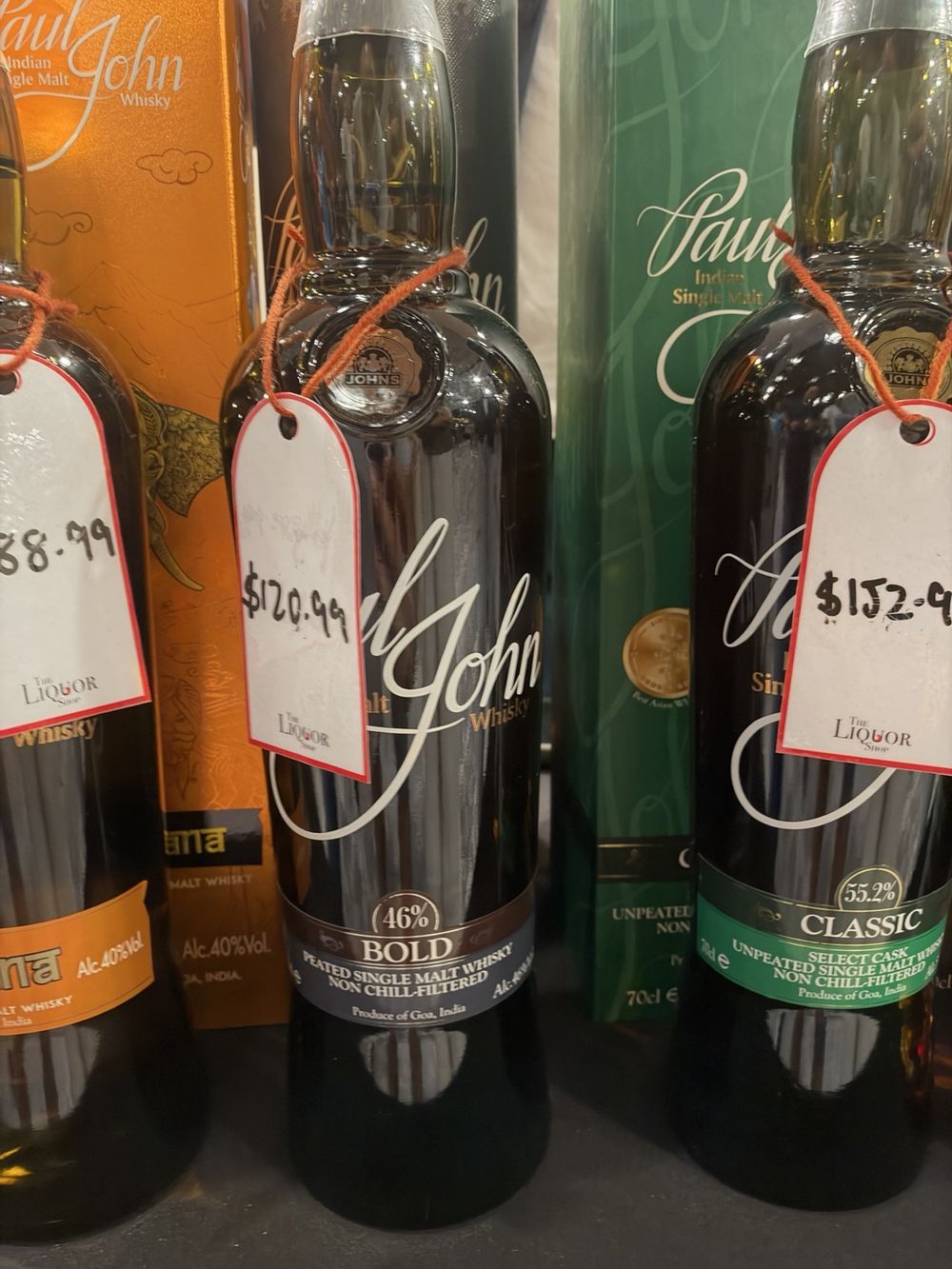
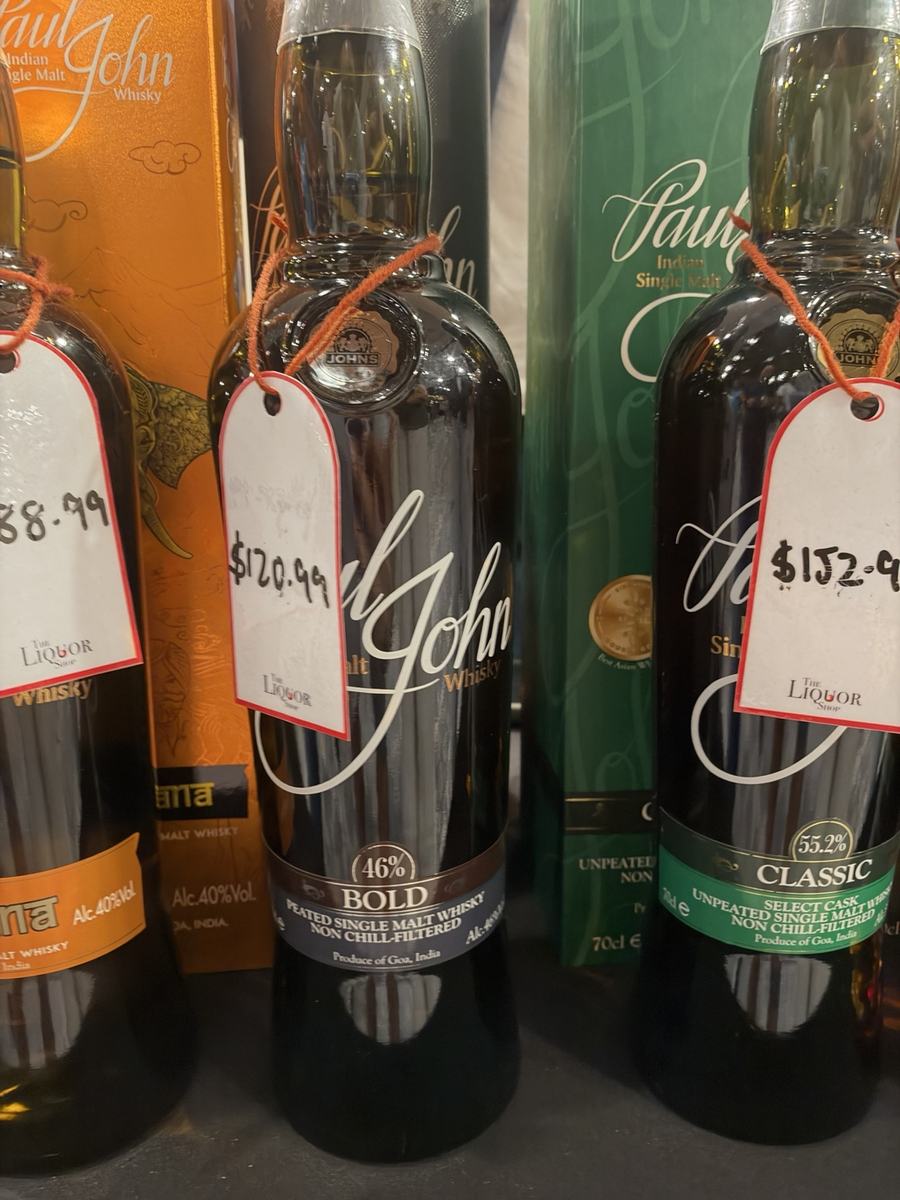
Paul John Bold 46% and Classic 55.2% bottles with handwritten price tags of S$120.99 and about S$152.
Price tags at the Paul John stand: Bold S$120.99, Classic around S$153 (the last digit is cut off).

Paul John · Goa

Classic Select Cask and Bold

Classic 55.2%, unpeatedBold 46%, peated
Classic enjoyed · Bold decent

I wanted an unpeated contrast to Saturday’s Peated Select Cask, so I tried the Classic Select Cask neat, no water. Tropical fruit with a bourbon-cask finish, and the high strength gives it intensity and complexity. Enjoyable, as it usually is.

Then the Bold, for heavier peat. Decent, not bad, but nowhere near as impressive as the Peated Select Cask from the day before. Neither price looked like a festival discount, so I left without one.

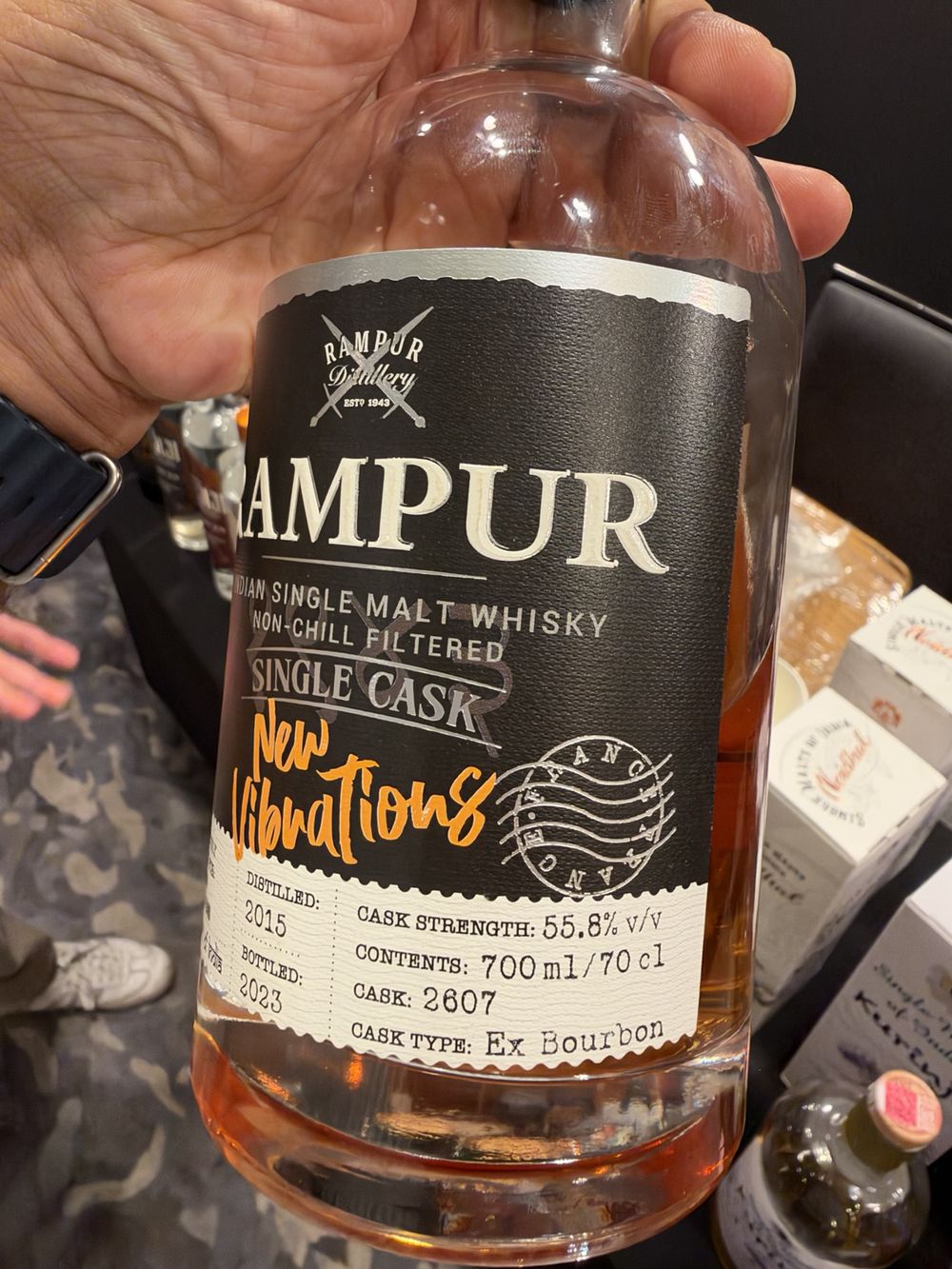
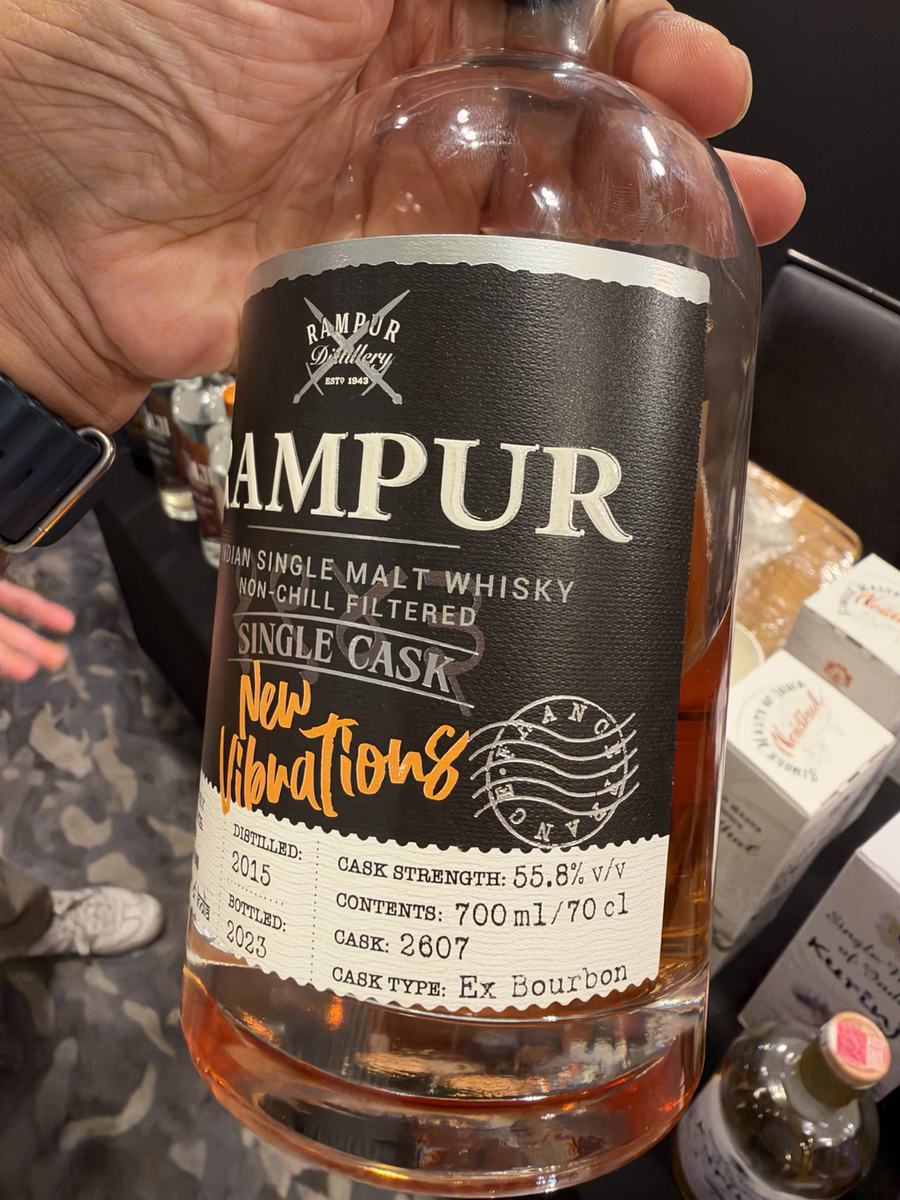
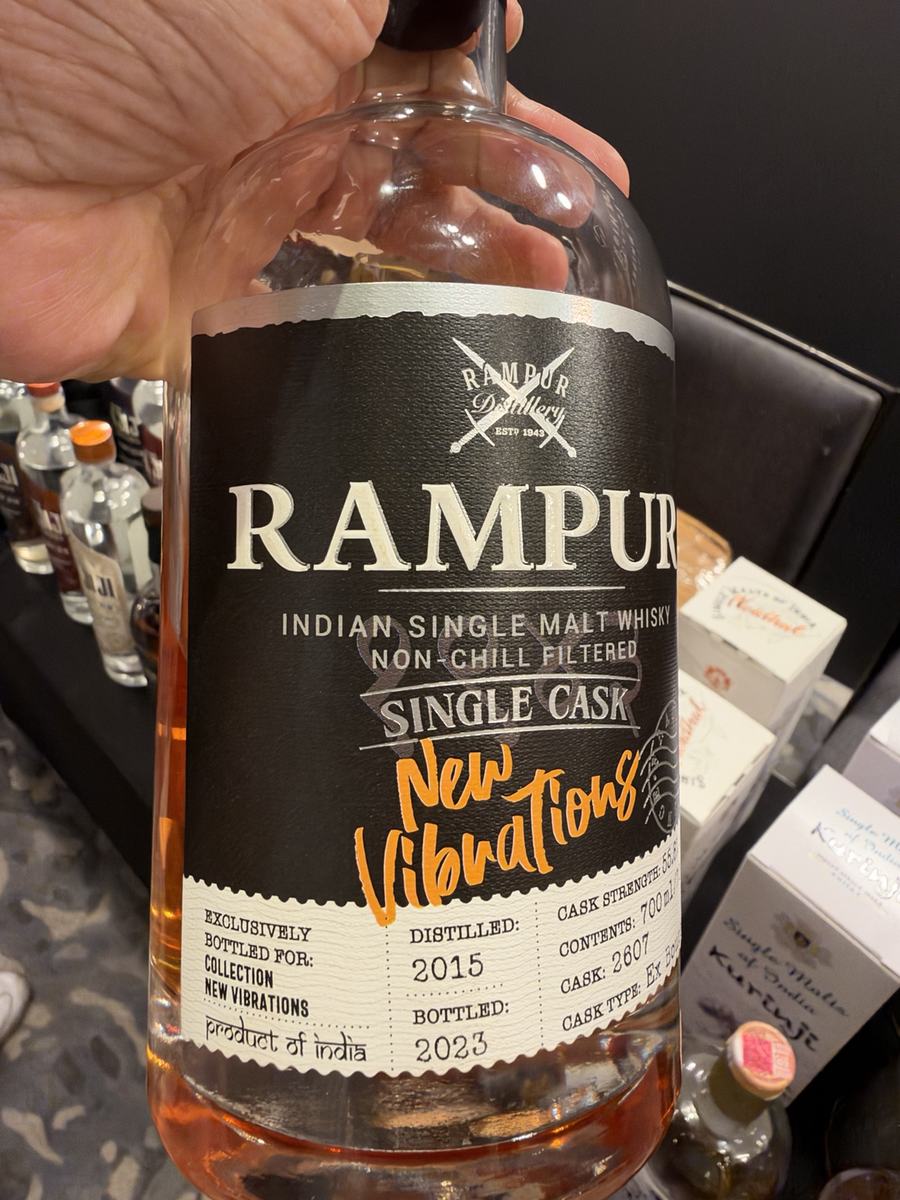
Rampur Indian Single Malt Single Cask New Vibrations label: distilled 2015, bottled 2023, cask strength 55.8%, 700 ml, cask 2607, ex-bourbon.
Rampur Single Cask “New Vibrations”, cask 2607.

Rampur · Indian single malt

Single Cask “New Vibrations”

55.8% cask strengthDistilled 2015 · bottled 2023Ex-bourbon · non-chill filtered
5/5

I didn’t write much at the stand. I just gave it five stars and tagged it malt, vanilla, honey, sweet, dry oak and a long finish. Looking back, that fits everything I know about my palate: a single cask, bottled at full strength, and a long, dry finish that holds the sweetness up.

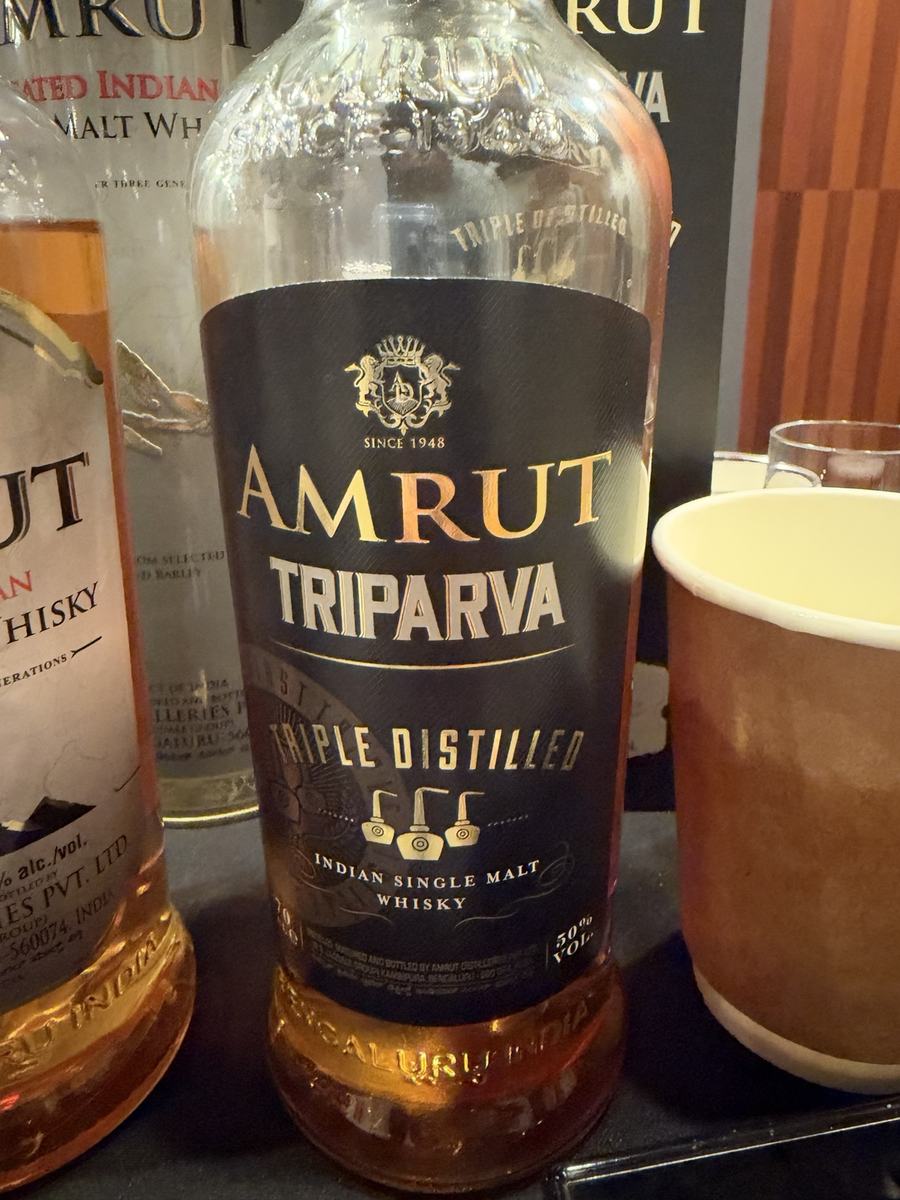
Next to it I tried Amrut Triparva, the triple-distilled single malt. My only note says “spicy finish, unique”, and I didn’t score it, so I’ll leave it there.

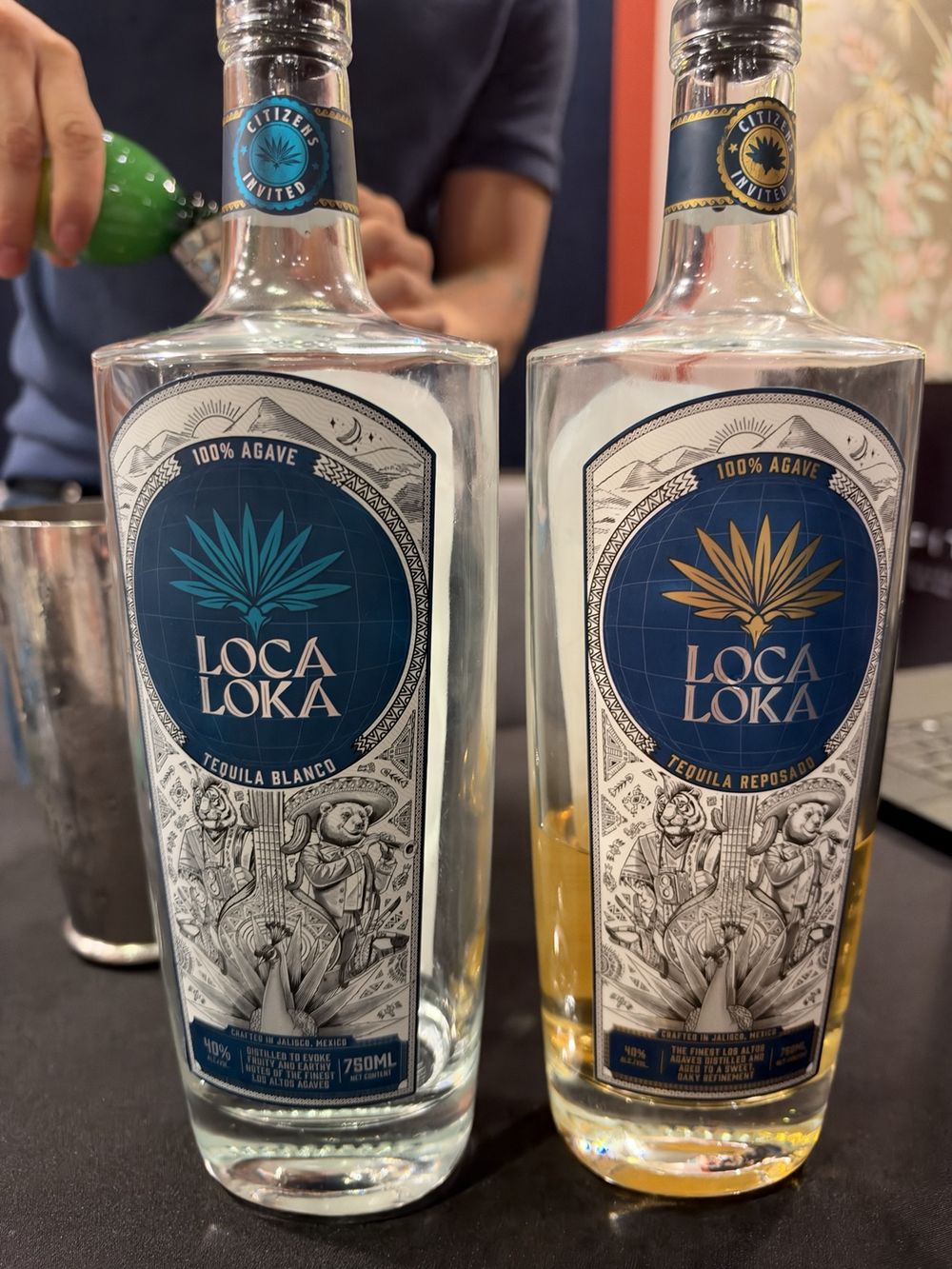
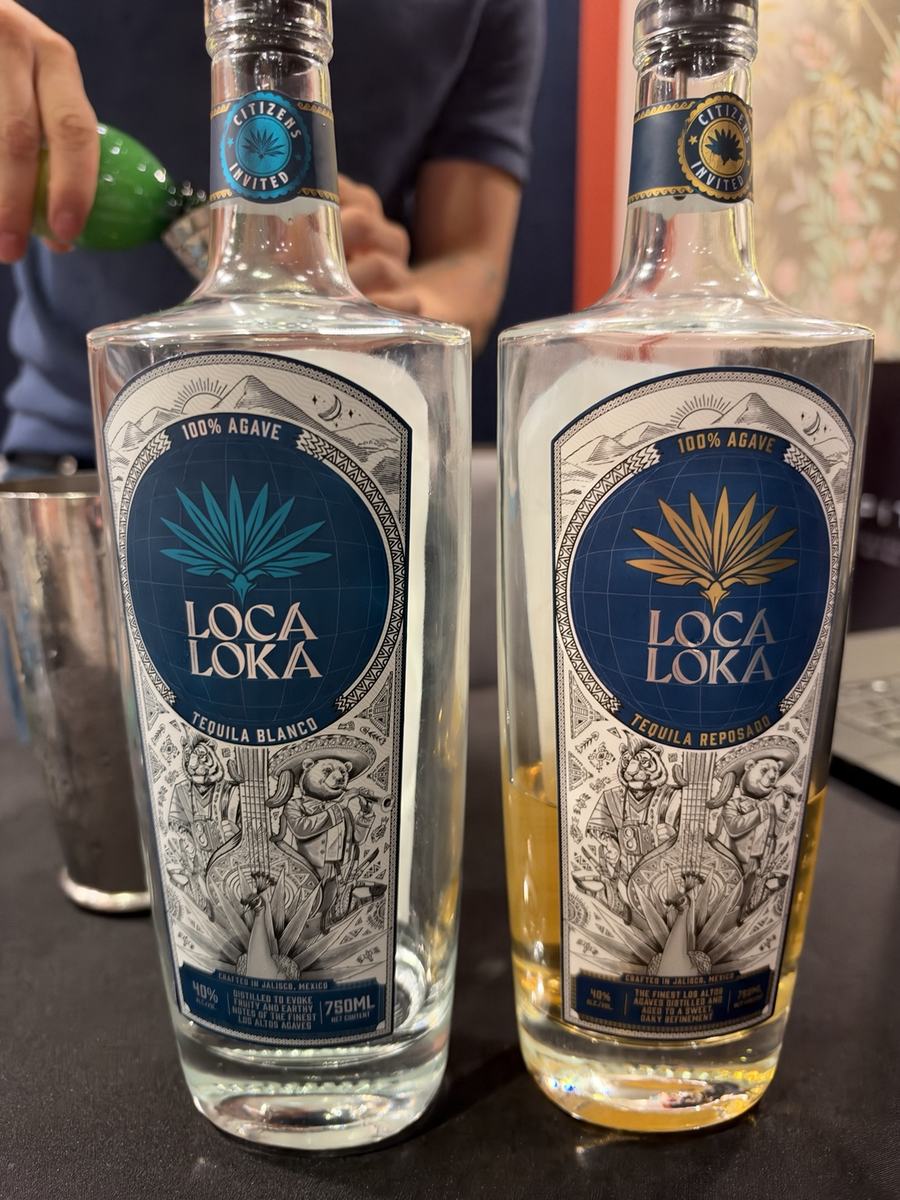
Loca Loka Blanco and Reposado tequila bottles.
Loca Loka Blanco and Reposado.

Loca Loka · Mexico

Blanco in a margarita, Reposado neat

Tequila40%Indian-owned, made in Mexico
Maybe

Unlike Pistola, Loca Loka really is tequila: an Indian-owned brand produced in Mexico, in Jalisco according to the brand. The Blanco came in a margarita made with honey, Angostura bitters and agave. It was too sweet for me, the honey dominated, and I could only just pick out an apple-like note underneath. With less honey the tequila would have had more room.

The Reposado, sipped neat, was not bad, with some oak on the finish. The presenter said it was aged for less than a year; I also noted “8–9 months” at one point, so I’ll treat the exact figure as unconfirmed.

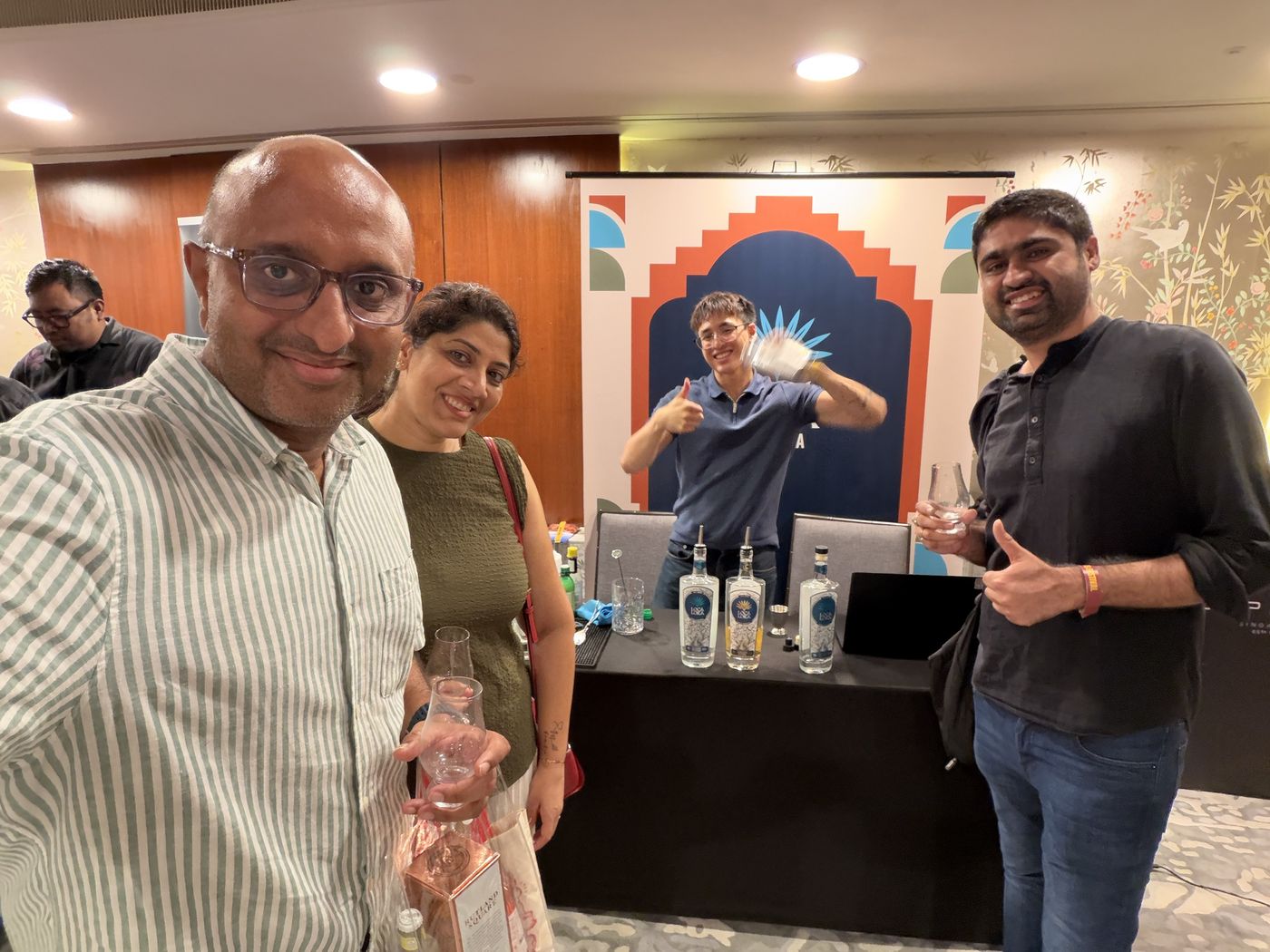
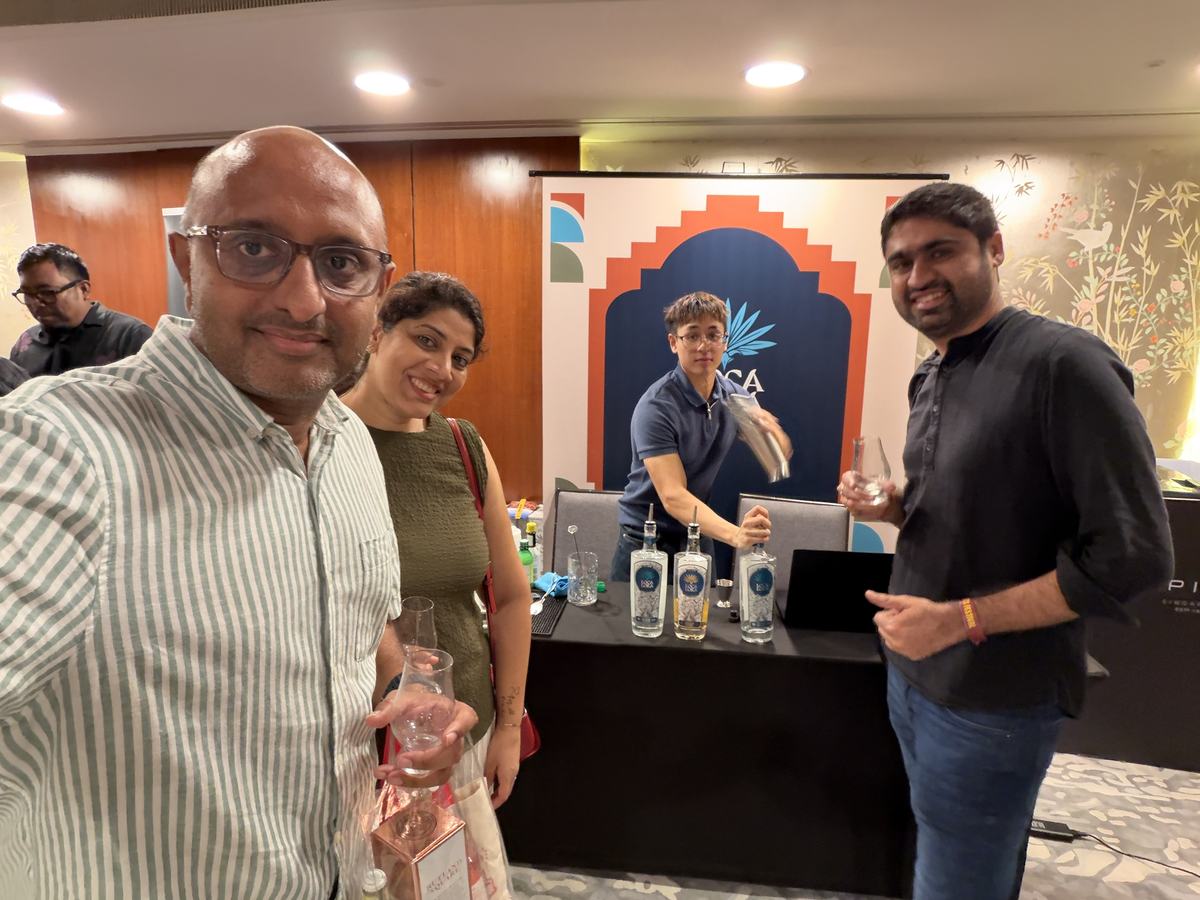
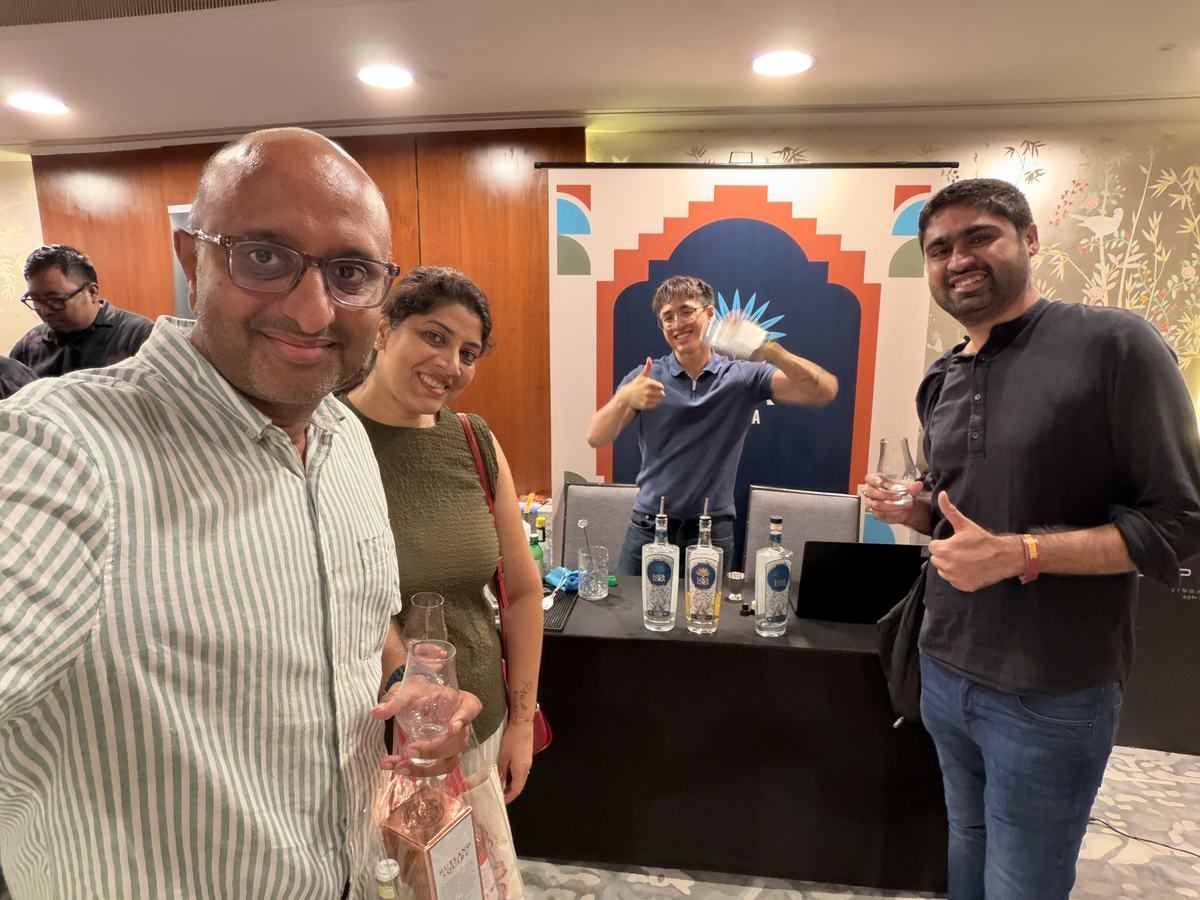
Harish, Anusha and a friend at the Loca Loka stand while the bartender gives a thumbs up and shakes a cocktail.
At the Loca Loka stand, margarita in progress.

Honest verdicts

The ones that didn’t work for me

An interesting story is not the same as a good glass. These were the clearest examples.

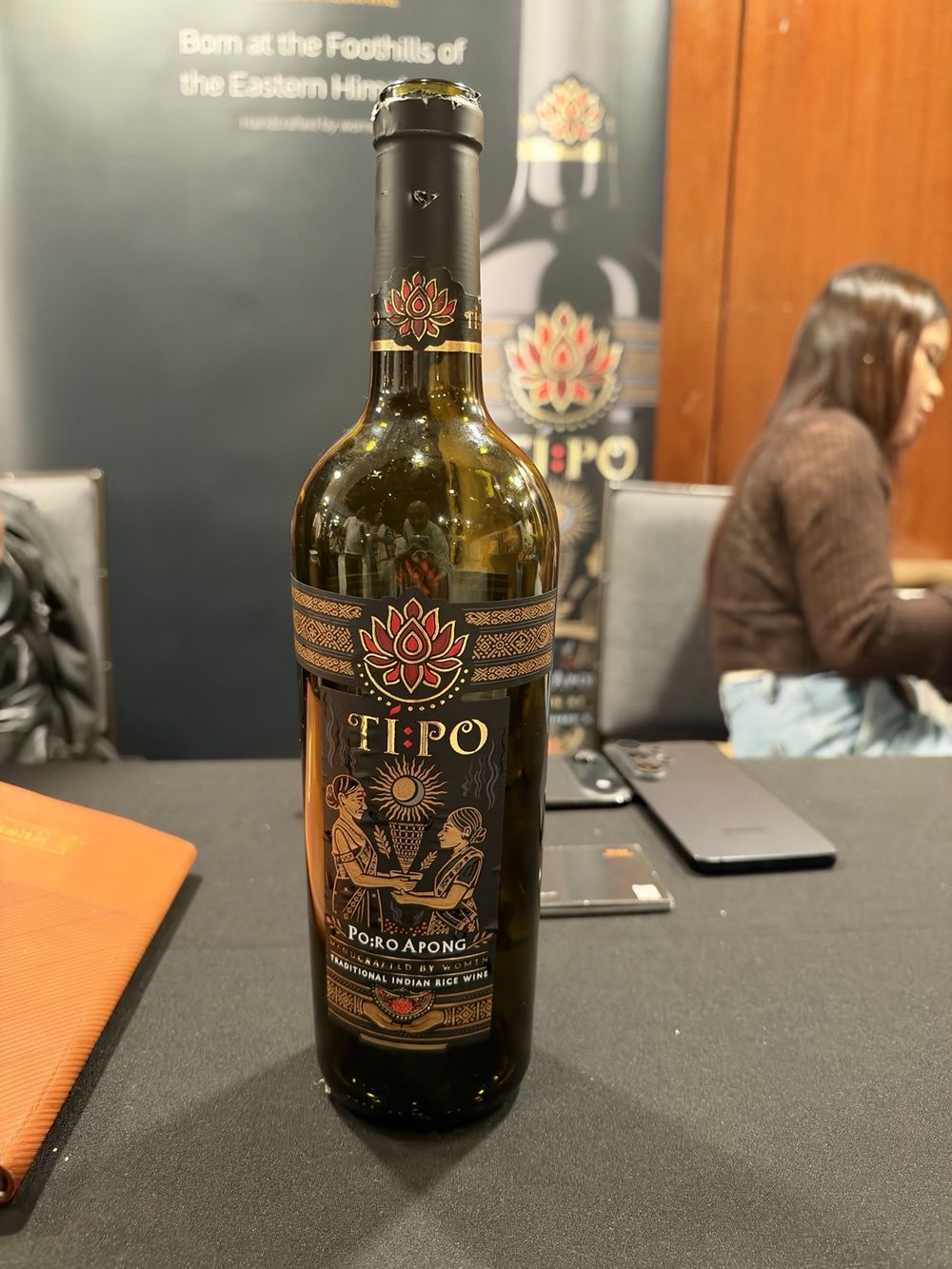
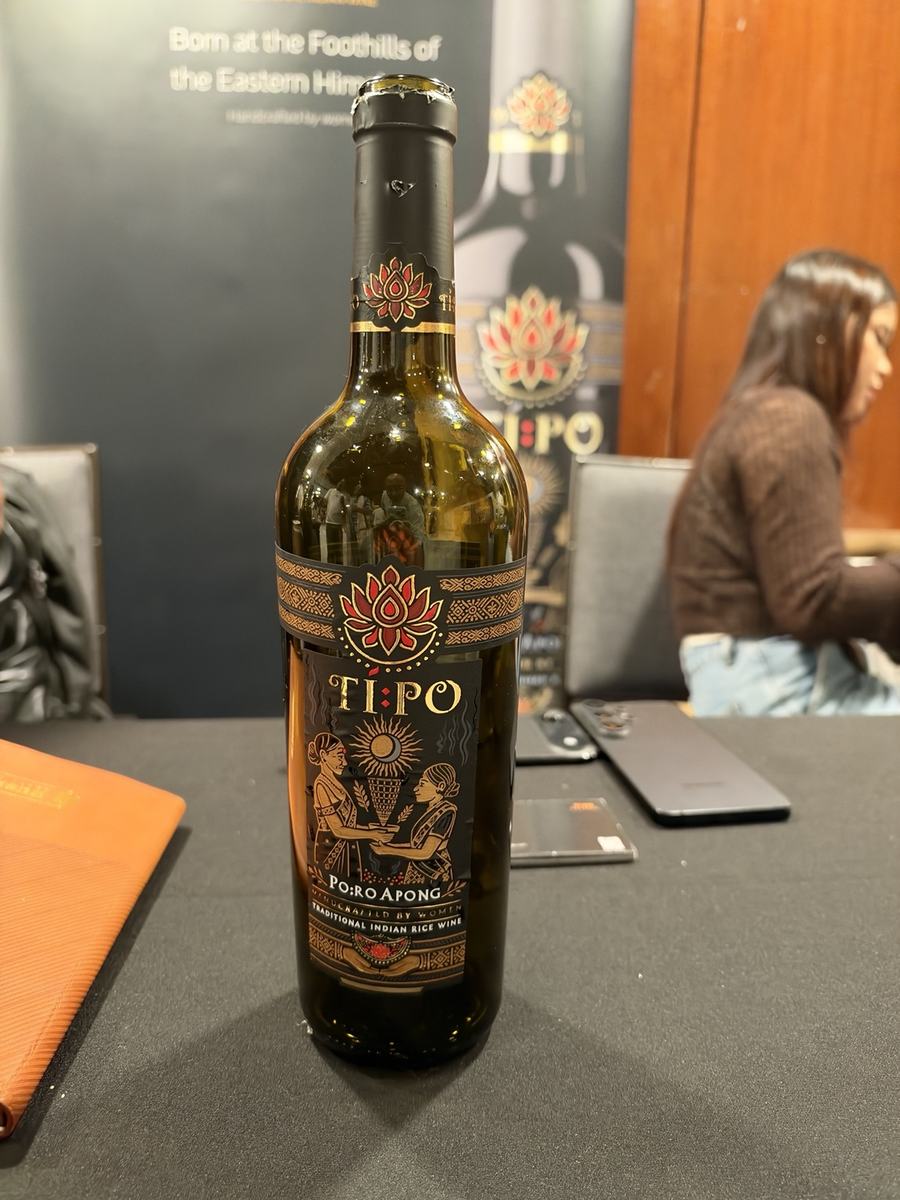
A bottle of TiPo Po:Ro Apong rice wine on a dark table.
TiPo Po:Ro Apong · rice wine, Assam. The brochure story is remarkable: a Mising tradition, 60+ forest botanicals, women brewmasters, solid-state fermentation. In the glass it was pungent and fermented, and I disliked it. Pass
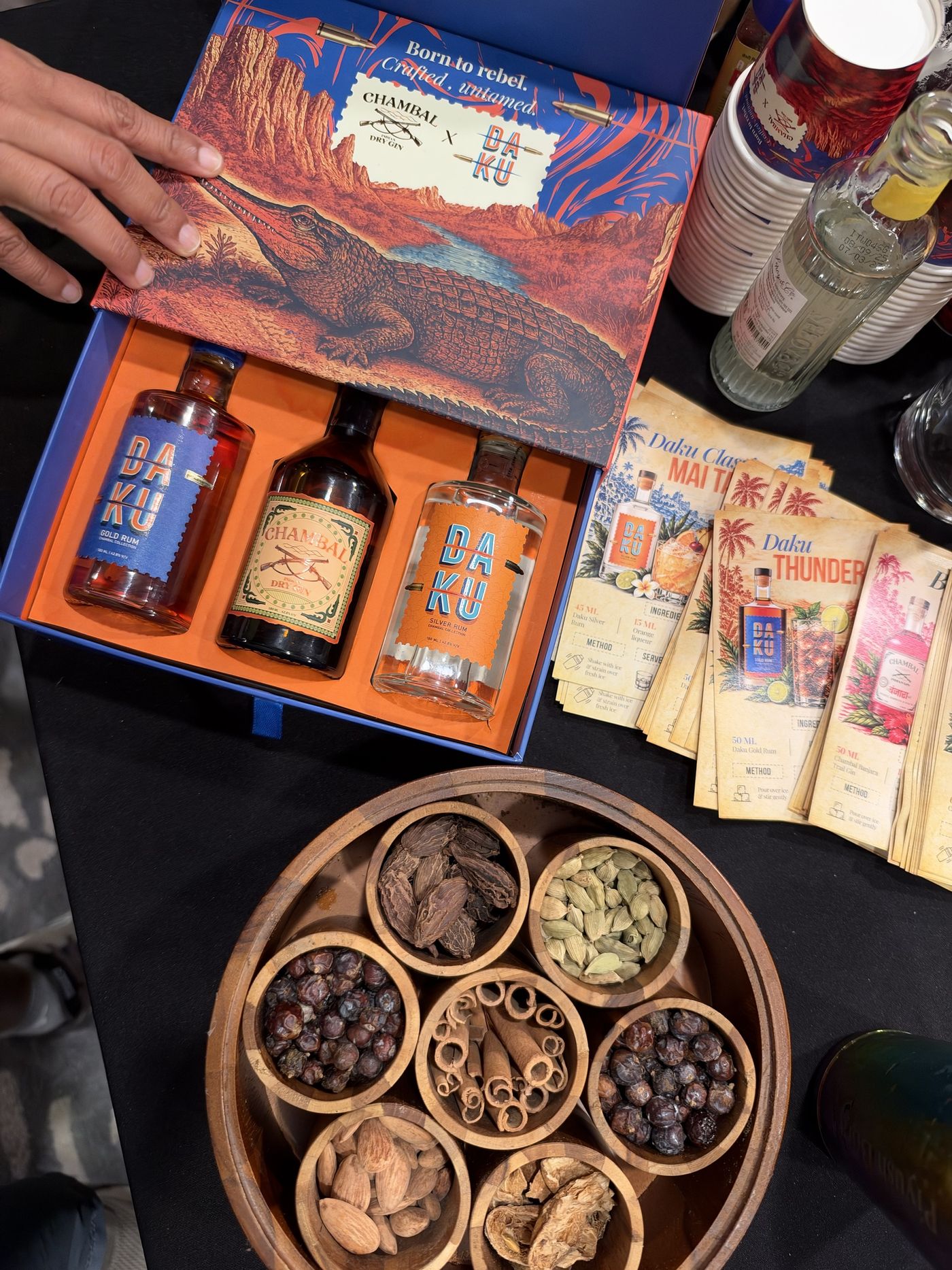
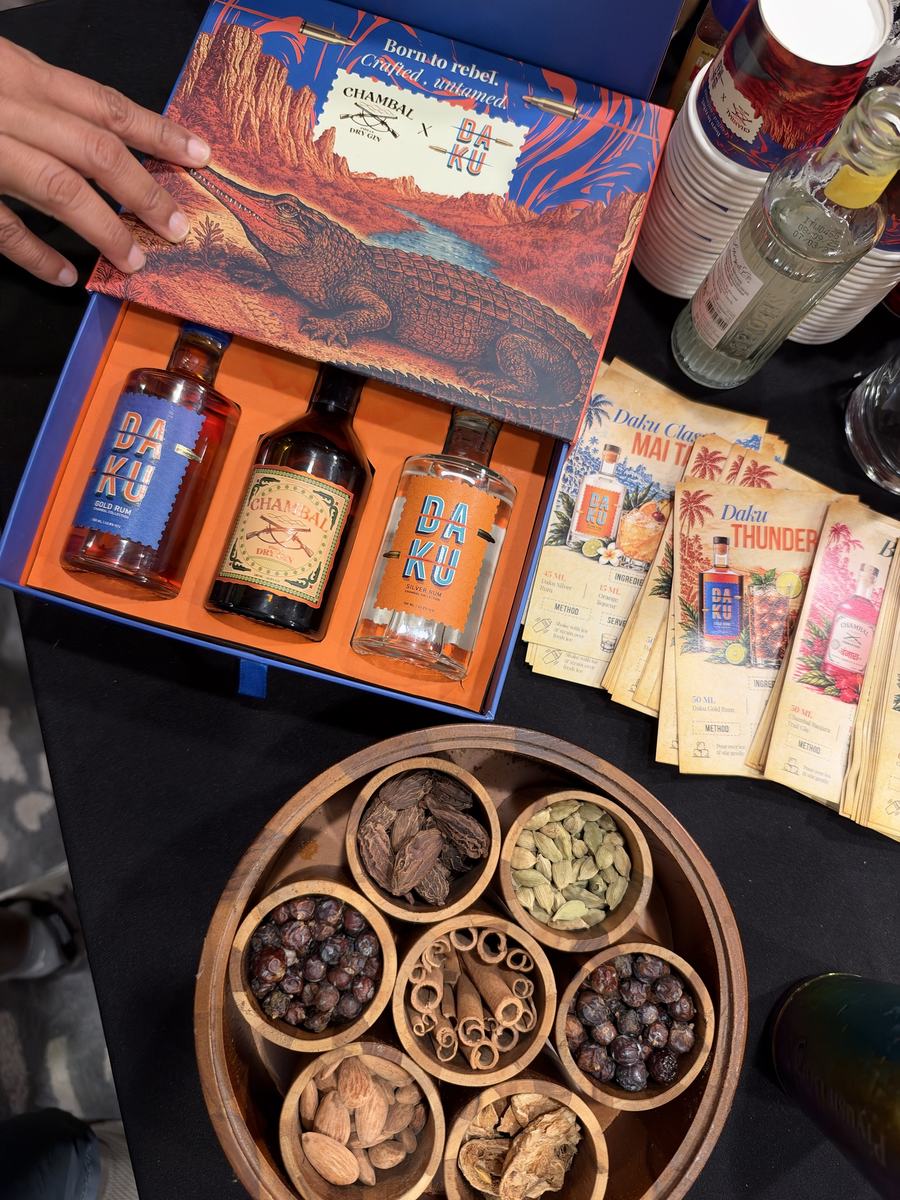
An open Chambal and Daku gift box with Daku Gold Rum, Chambal Dry Gin and Daku Silver Rum, beside a tray of spices.
Chambal Dry Gin · tried because of the hometown connection, neat and with a mixer. Some spice, not enough botanical character. I don’t think I tasted the Daku rums in the same box. Pass
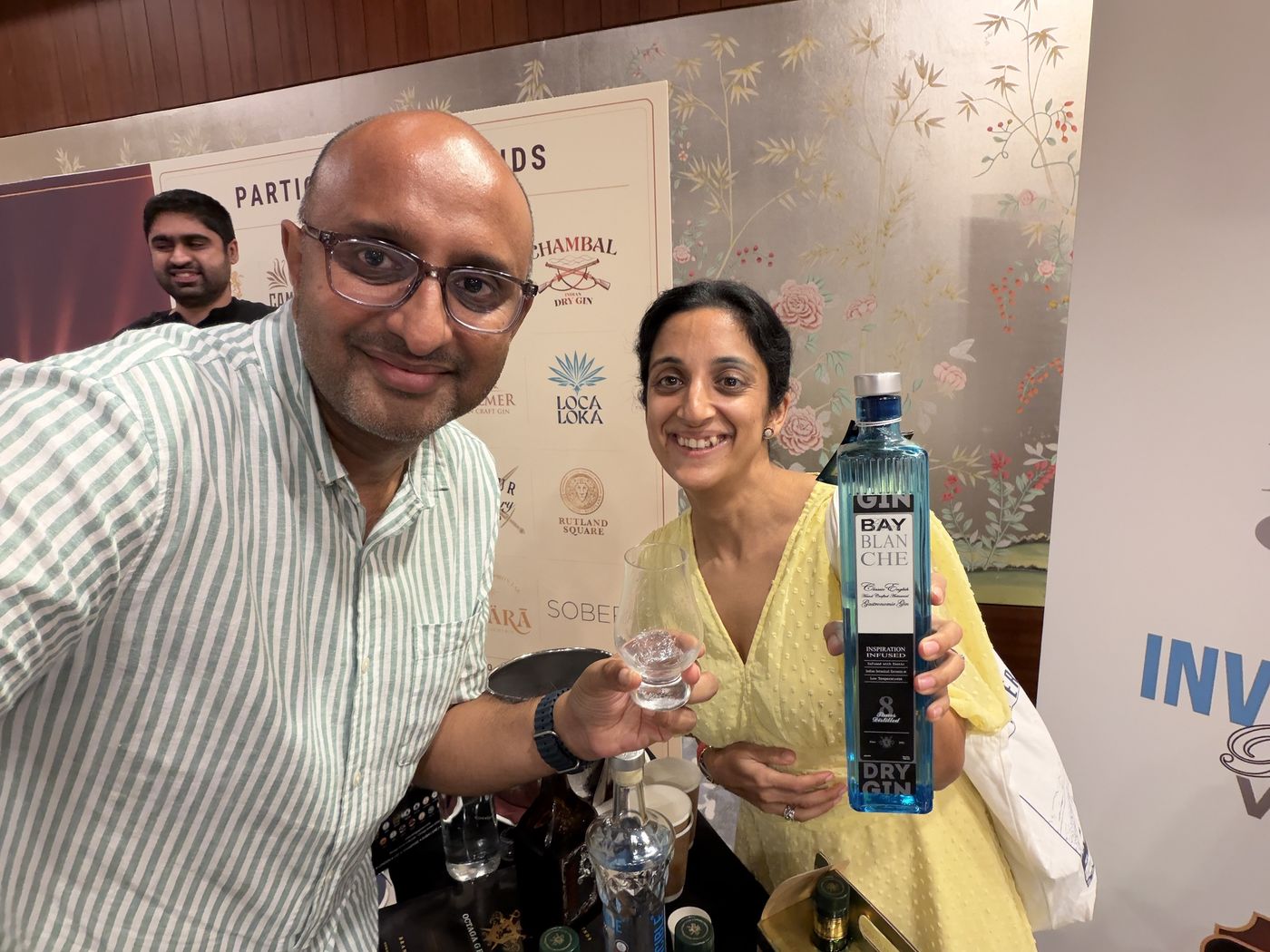
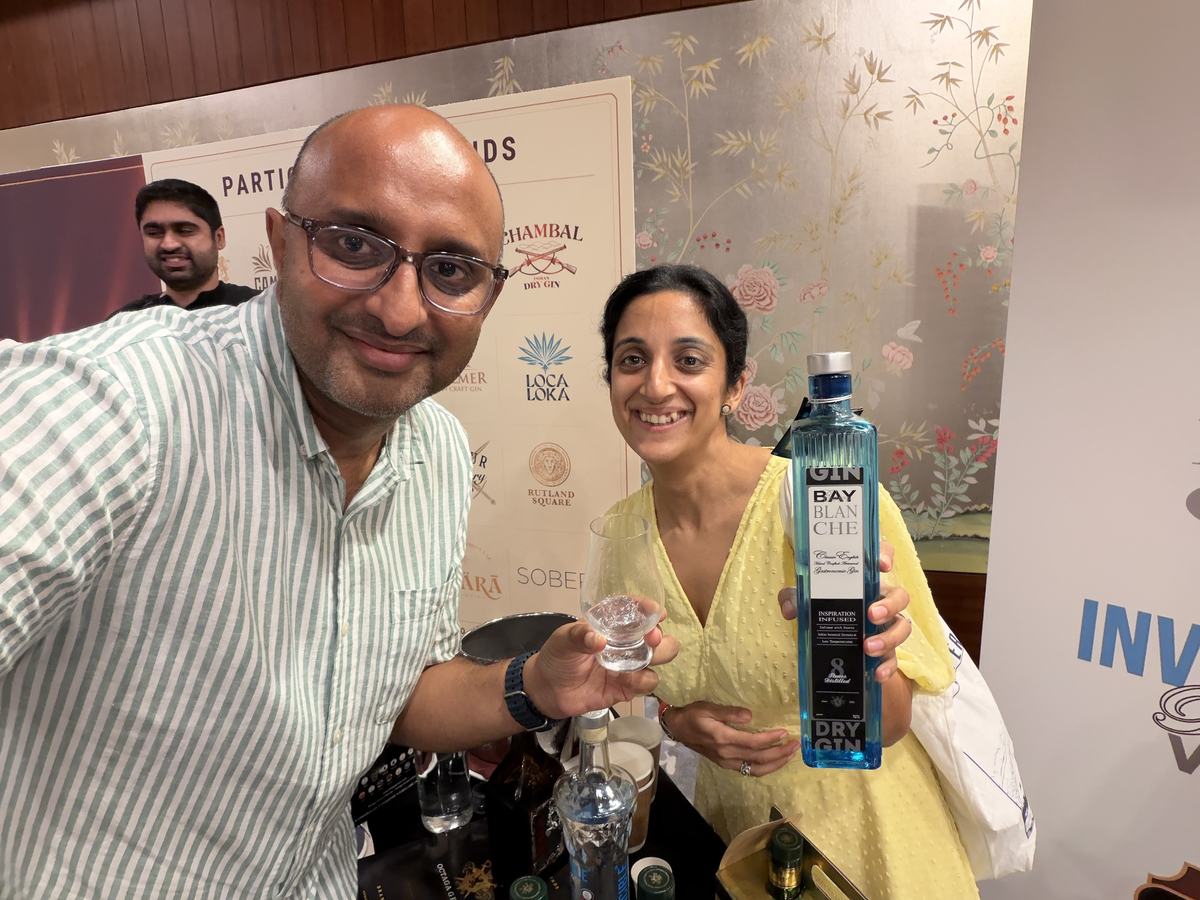
Harish with a woman holding a bottle of Bay Blanche Dry Gin in front of the participating-brands board.
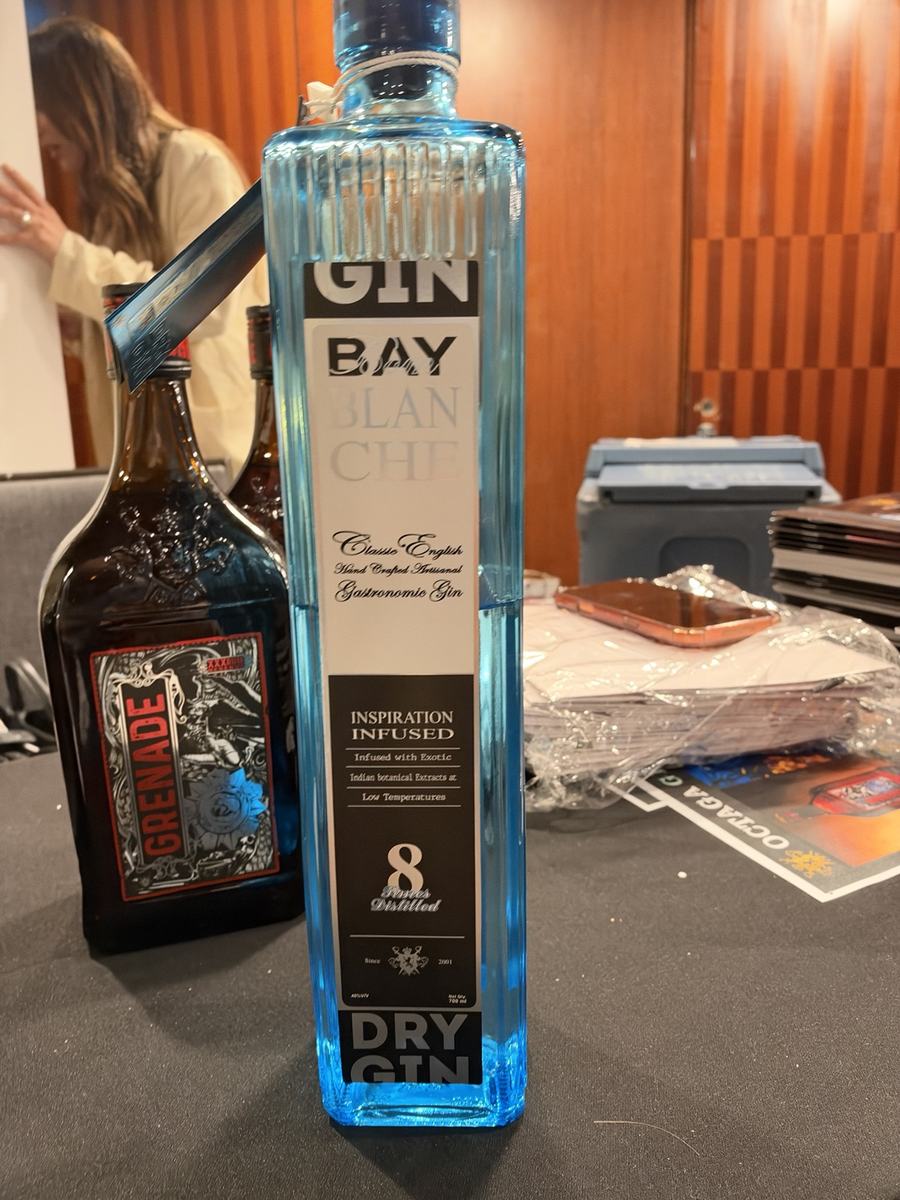
Bay Blanche Dry Gin · the stand had a lot of buzz; the gin was only okay, nothing distinctive. Pass
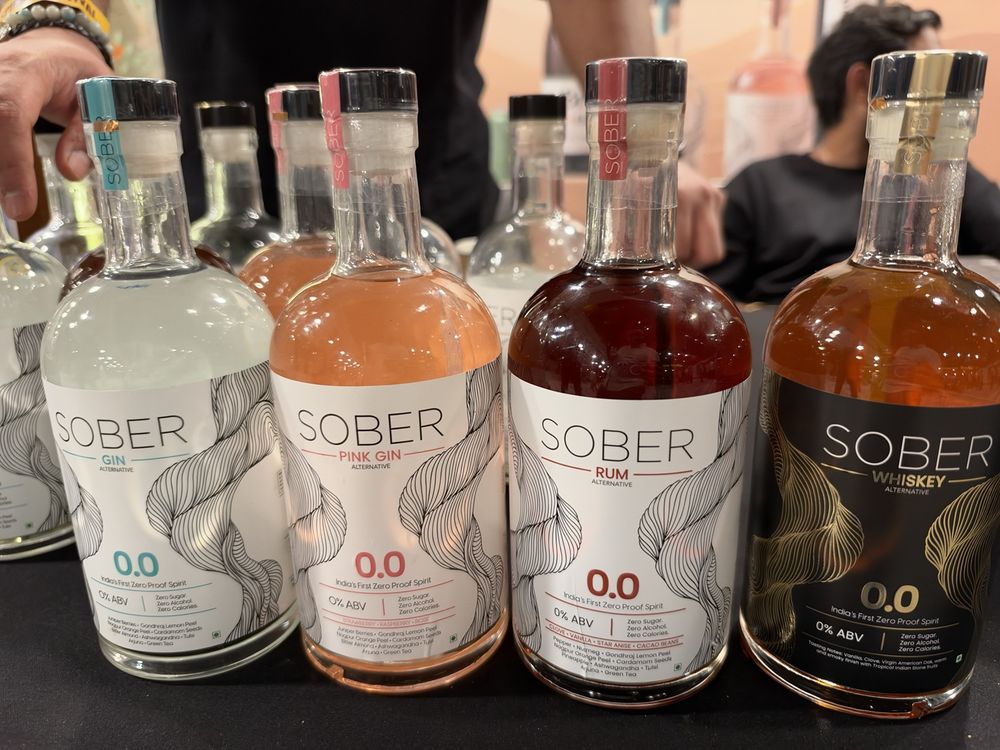
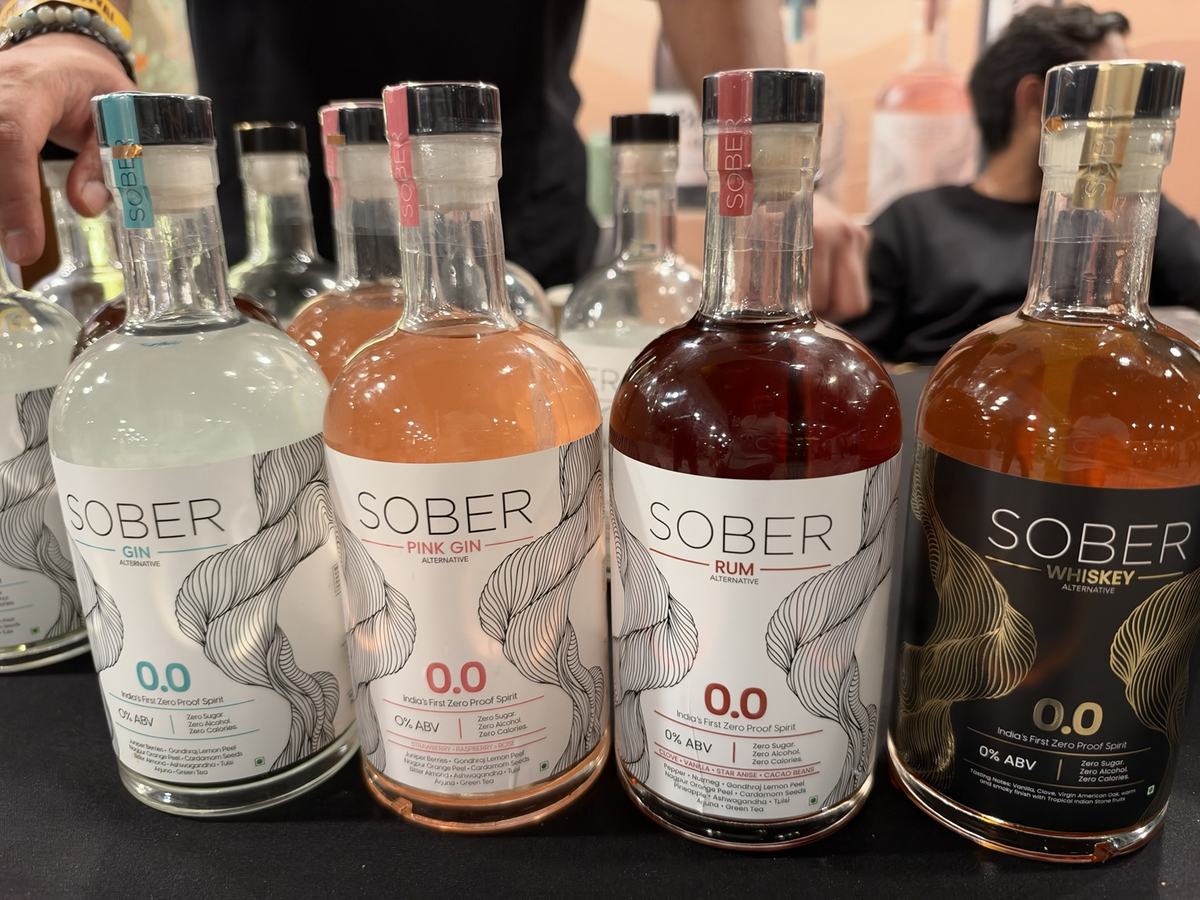
Four Sober 0.0 alcohol-free bottles: gin, pink gin, rum and whiskey alternatives.
Sober 0.0 gin and rum · the stand suggested tonic rather than neat. They felt like mock spirits, without the complexity I look for. Pass
Not tasted, or not sureI don’t think I tried the Daku Gold or Silver rums, so the brochure’s Thunder and Mai Tai recipes stay recipes. I honestly can’t remember whether I tasted Sitara Spiced Rum, so it gets no verdict. I didn’t get to Café Conserva, the Sentari barrel-aged cashew Feni or Jaisalmer gin.

Who poured, from their own brochures

The producers

One card per producer I tasted. Specs and tasting notes are the producers’ own claims, from the brochures handed out on the day or the bottle label; the verdict is mine. Tap a photo to enlarge it.

The five Cazulo Feni bottles from the brochure: Cashew, Coconut, Dukshiri, Além and Café Conserva.

Feni · South Goa

Cazulo

Cashew apples and coconut-palm toddy, distilled by a family house in South Goa.

  • Five expressions: Cashew 42.8%, Coconut 40%, Dukshiri 40%, Além 40% and Café Conserva 38%, all 750 ml.
  • Feni has carried protected-origin status since 2009, according to the brochure.
  • Copper pots over a wood fire, wild fermentation with native yeasts, no added sugar or flavourings.

My verdict The pour of the weekend. Cashew first, Coconut second.

The producer’s tasting notes

Cashew: cashew apple, pear, green apple, guava. Coconut: soft coconut, steamed rice, white pepper, lime zest. Dukshiri: peanut butter, petrichor, salted caramel, liquorice, vanilla. Além: fresh ginger, lemon peel, wild honey, a peppery glow. Café Conserva: mocha, toffee, dark chocolate, vanilla. The brochure pairs them with Southeast Asian food: Cashew with green mango and somtam, Coconut with tom kha and laksa, Dukshiri with satay, Além with ginger, galangal and lemongrass, Café Conserva with kopi.

The Maya Pistola range of agave spirits.

Agave spirit · Deccan Plateau

Maya Pistola

Agave grown across Telangana, Andhra Pradesh and Karnataka, distilled in Andhra Pradesh and aged in Goa. An agave spirit, not tequila. Founder: Rakshay Dhariwal.

  • Joven 38%: aged and unaged 100% Agave Americana, built for a Paloma or Margarita.
  • Reposado 40%: 4–6 months in ex-bourbon and new American white oak. Añejo 40%: over 14 months in new American white oak.
  • Extra Añejo 48% (label): wild Agave Americana, double pot-still distilled, three years in virgin American oak.

My verdict The Extra Añejo was the best agave of the weekend. I’d buy it if I could find it.

The producer’s tasting notes

Joven: citrus, cooked agave, peppermint, honey, green peppercorn, coriander. Reposado: butterscotch, orange marmalade, cooked agave, vanilla, cocoa. Añejo: oak, cocoa, dried figs, dark chocolate, roasted almonds, a hint of smoke. The brochure gives no panel for the Extra Añejo.

IDAAYA Himalayan Sipping Rum 12 with blocks of jaggery.

Rum · Jammu and Kashmir

IDAAYA Himalayan Sipping Rum 12

12-year-old Panamanian rum, aged in bourbon casks, blended in India with Indian rum. Founder: Karishma.

  • 42.8%, 75 cl.
  • Solera system and sal-wood casks, “ancient Indian methodologies” applied to the casks.
  • No added sugar or artificial colour, according to the brochure.

My verdict Liked on both days: sweet, jaggery, a little spice at the back of the throat. On my list.

The producer’s tasting notes

Nose: caramel, vanilla, gentle spice, toasted oak, raisins, ripe plums. Palate: silky caramel, dark chocolate, toffee, nutmeg, cinnamon, pepper, toasted vanilla. Finish: long, with ripe fruit, vanilla and oak.

Paul John Peated Select Cask leaflet showing the bottle at 55.5%.

Single malt · Goa

Paul John

John Distilleries, Goa.

  • Peated Select Cask 55.5% (Day 1).
  • Classic Select Cask 55.2% and Bold 46% (Day 2).

My verdict Peated Select Cask was the best whisky of Day 1. Bold was decent but a step below.

The producer’s tasting notes

Peated Select Cask. Nose: smoky, sweet and earthy with mellow spice. Palate: muscovado and demerara sugar, smoke, hickory, cocoa. Finish: cocoa with a tart marmalade edge.

Rampur Single Cask New Vibrations label.

Single malt · Rampur

Rampur Single Cask “New Vibrations”

No brochure for this one. Everything here is from the label.

  • 55.8%, 700 ml.
  • Distilled 2015, bottled 2023.
  • Single ex-bourbon cask, number 2607.

My verdict 5/5 on Day 2. Malt, vanilla, honey, dry oak and a long finish.

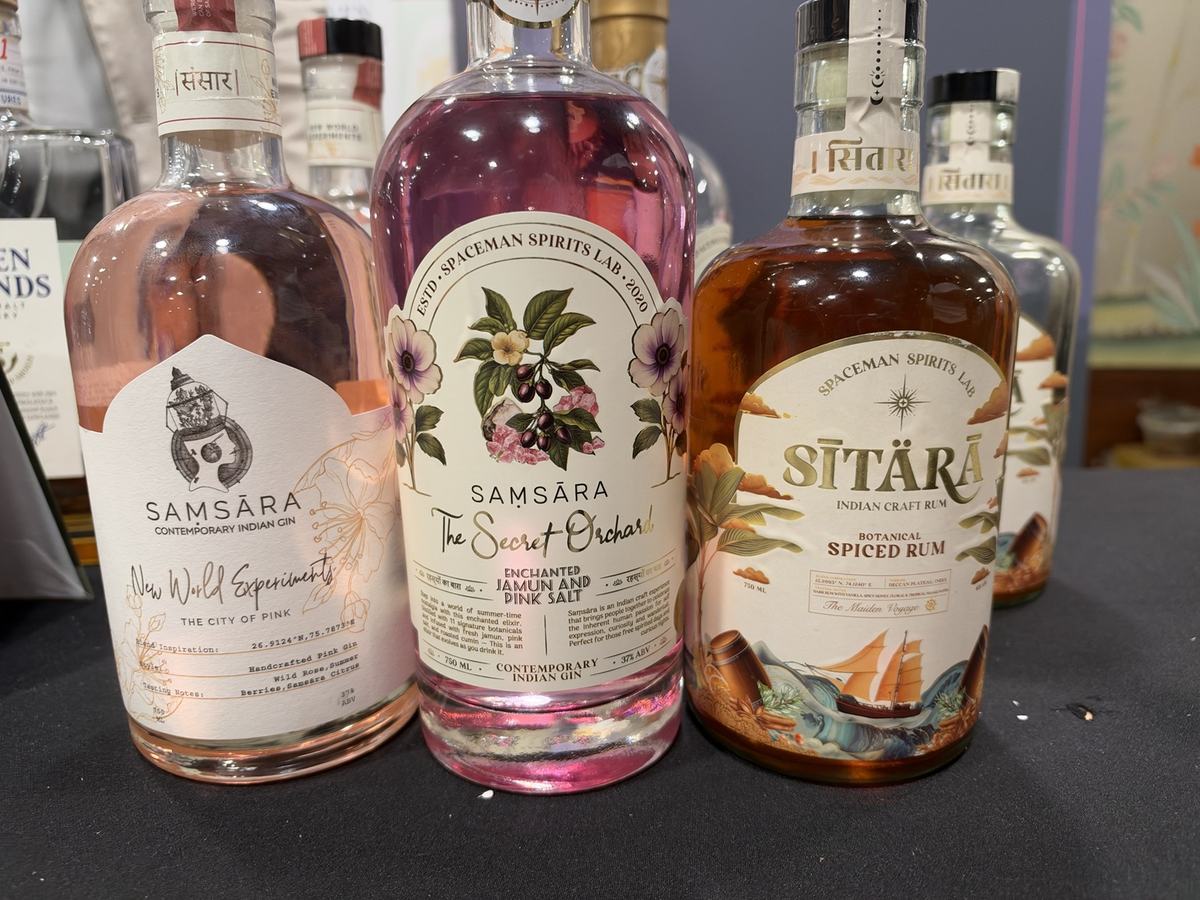
Samsara The Secret Orchard and City of Pink gins next to Sitara Spiced Rum.

Gin, malt, brandy, rum · Maharashtra

Tilaknagar Industries · House of TI

Samsara gins, Seven Islands, Monarch and Sitara, all from one Maharashtra company.

  • Samsara: 11 signature botanicals including Himalayan juniper, hemp seeds, vetiver, rose petals and cardamom. Vale of Paradise is redistilled with Kashmiri kahwa and saffron.
  • Seven Islands Pure Malt, 42.8%: four single malts, Himalayan and Vindhyan from India, Speyside and Lowland from Scotland, up to eight years in ex-wine French oak and ex-bourbon American oak.
  • Monarch Legacy Edition, 40%: 100% grape brandy from Sahyadri-slope grapes and French grape distillates, up to eight years in French oak and ex-red-wine casks.

My verdict The City of Pink first, The Secret Orchard (jamun) second. Both on the list.

The producer’s tasting notes

Seven Islands: tropical fruit, roasted nuts, warm oak and Indian spice; creamy, with gentle smoke. Monarch: rich grape, apple, nutmeg and subtle tobacco; creamy oak and dried fruit; cinnamon, peach and clove on the finish.

Thenkondar Royal Heritage Singapore Rum, signed in gold pen.

Rum · Singapore

Thenkondar Royal Heritage Singapore Rum

Indian molasses and botanicals, aged in Singapore, as it was explained at the stand.

  • 43%, 700 ml.
  • About two to three years of ageing (stand).
  • Bottles could be signed or engraved on the day, at around S$90.

My verdict Mildly sweet with a little oak. Pleasant, but IDAAYA was more compelling.

Rutland Square Chai Spiced Scottish Rum bottle.

Spiced rum · Edinburgh

Rutland Square Chai Spiced Scottish Rum

Caribbean rum with chai spices and white tea, from Summerhall Distillery in Edinburgh.

  • 41%, 700 ml.
  • Presented by a man who had lived in Scotland for years and experiments with chai and Indian herbs.

My verdict The bottle I bought (S$88). Gentle neat, very good with Sepoy tonic and ginger beer.

Loca Loka Blanco and Reposado bottles.

Tequila · Jalisco

Loca Loka

Blue agave from Mexico, Indian-owned, per the brand.

  • Blanco and Reposado, 40%.

My verdict The Reposado neat was fine. The Blanco margarita was too sweet.

Chambal and Daku gift box with Daku Gold Rum, Chambal Dry Gin and Daku Silver Rum.

Rum and gin · Madhya Pradesh

Bapuna · Daku and Chambal

“Spirited by Nature”: Daku rums, Chambal gin and The Banjara Trail.

  • Daku Silver and Daku Gold rums; Chambal Dry Gin.
  • Their Singapore debut was announced the week before the festival.
  • The brochure is mostly cocktails: see Serves below.

My verdict Chambal Dry Gin: some spice, thin on botanicals. I didn’t taste the Daku rums.

Bay Blanche Dry Gin held up in front of the participating-brands board.

Gin, rum, whisky · Octaga Green

Octaga Green · Bay Blanche

A broad portfolio: gin, rum, vodka, blended whisky, single malt and brandy.

  • Bay Blanche Classic Dry Gin: eight botanicals, distilled eight times, 42.8%.
  • Bay Blanche Petal Pink Gin: strawberry-infused.
  • Also Grenade Reserve XXX Rum (12 years) and Oaked Master’s Indian single malt (12 years, American oak).

My verdict Bay Blanche gin was only okay for me.

A bottle of TiPo Po:Ro Apong rice wine.

Rice wine · Assam

TiPo Po:Ro Apong

Traditional Mising rice wine from the Brahmaputra Valley, made with women-led self-help groups.

  • More than 60 forest botanicals, collected seasonally by women; brewmasters set the proportions.
  • Rice husk burned to ember-brown, steamed rice and an épob starter cake; solid-state fermentation in 5–7 kg batches.
  • Chief Winemaker: Ajoy Shaw, DipWSET.

My verdict The best story of the weekend, but pungent and fermented. Not for me.

The producer’s tasting notes

The brochure pitches it with chakna, tandoori and grilled food, smoked meats and pepper-forward dishes, as a palate cleanser that balances chilli heat.

Two Sepoy and Co. sodas: Yuzu Jalapeño Soda and Pink Rose Lemonade.

Mixers · India

Sepoy & Co.

Indian mixers with natural ingredients: African quinine in the tonics, Indian and African ginger in the ginger mixers.

  • Six tonics (Indian, Elderflower, Spiced Grapefruit, Mint, Cucumber, Rosemary Thyme), ginger ale and ginger beer.
  • Five sparkling lemonades, Pink Grapefruit Soda, Yuzu Jalapeño Soda, soda water and Himalayan sparkling water.

My verdict I bought the Yuzu Jalapeño Soda and the Pink Rose Lemonade, at S$2.50 each.

Four Sober 0.0 alcohol-free bottles.

Alcohol-free · 0.0%

Sober 0.0

Alcohol-free alternatives to gin, pink gin, rum and whiskey.

  • 0.0% ABV.

My verdict Mock spirits with no complexity. The texture was missing.

From the brochures, to try at home

Serves worth stealing

The recipes printed in the producers’ brochures, plus the one Anusha invented on the day.

Daku · rum

Classic Mai Tai

  • 45 ml Daku Silver Rum
  • 15 ml orange liqueur
  • 15 ml orgeat
  • 25 ml fresh lime

Shake with ice, strain over fresh ice in an Old Fashioned glass. Orange or pineapple slice and a cherry.

Daku · rum

Gold Thunder

  • 50 ml Daku Gold Rum
  • 120 ml Thums Up
  • Lime slice

Pour over ice. An Indian rum-and-cola, with India’s own cola.

Chambal · gin

Bee’s Knees

  • 60 ml Chambal Gin
  • 20 ml floral honey
  • 25 ml fresh lime

Shake with ice, strain into a Nick & Nora. Orange peel or edible flowers.

Banjara Trail · gin

Gin and tonic, trail-style

  • 50 ml gin
  • 150 ml tonic
  • Orange slice and cinnamon

Build over ice.

Sepoy & Co. · agave

Picante

  • 45 ml reposado
  • Fresh lime
  • Sepoy Yuzu Jalapeño Soda

Jalapeño or coriander to garnish. Pistola’s brochure also suggests a Picante for its Reposado. One of my two sodas is going here.

Sepoy & Co. · agave

Paloma

  • 45 ml blanco
  • Fresh lime
  • Sepoy Pink Grapefruit Soda

Grapefruit wedge. Sepoy’s recipe names tequila; Pistola suggests its Joven for a Paloma.

Anusha’s, on the day

Chai rum, long

  • Rutland Square Chai Spiced Rum
  • Sepoy tonic or ginger beer

No measures, just the stand’s mixers. The rum was modest neat and came alive with the mixers.

What came home, and what I’m still after

Bought, gifted and wanted

ItemHowPaid
Rutland Square Chai Spiced Scottish Rum, 700 mlBought, Day 2S$88
Sepoy & Co. Yuzu Jalapeño Soda and Pink Rose LemonadeBought, Day 2S$5
Rutland Square gin and rum miniaturesBought, Day 2S$7
Cazulo Cashew Feni, small bottle, and postcardsGift from Hansel Vaz—
Two day passesTicketsS$50

On the list

  1. Cazulo Cashew Feni, a full bottle, next time I’m in Goa. Coconut Feni too.
  2. IDAAYA Himalayan Sipping Rum 12, probably at an Indian airport.
  3. Samsara The City of Pink first, The Secret Orchard second. Most likely bought in India.
  4. Pistola Extra Añejo, if I can find a way to get a bottle.

If I had to recommend four things from the weekend, they’d be the Cashew Feni, the Coconut Feni, the Rutland Square rum and the IDAAYA 12.

Behind the tables, and beside me

People

Hansel Vaz

Cazulo Feni, South Goa

Set my tasting order on Saturday; gave me a small bottle of Cashew Feni and postcards on Sunday.

Rakshay Dhariwal

Founder & MD, Maya Pistola

Opened the Extra Añejo for me on Saturday and talked agave with me again on Sunday. Name from his card.

Karishma

Founder, IDAAYA

Explained the Panama-to-Himalaya journey of her rum, twice.

Anupam

Organiser, SPIRITED.

Organised the festival, and always keeps me posted on the events he runs. A friendly host with a ton of whisky knowledge. He talked me into going, sold me the second day, told me to come early on Sunday, and helped us with Samsara prices. Thank you, Anupam, for always including me.

Sunil

Friend and tasting buddy

My regular partner for events like this. We’re both in research mode: we know how to work a room of producers, and how to explore and appreciate a good whisky. Joined on Sunday from 5 pm.

Prateek

Friend

Newer to this, and now starting to appreciate quality over quantity. With Anusha and me all Sunday afternoon.

Rutland Square’s presenter

Name not caught

Years in Scotland, chai and Indian herbs, and a very generous price on the miniatures.

Day 2 company: my wife Anusha and Prateek all afternoon, Sunil and a friend from 5 pm. Vishal sent the link that started it all.

Where it all comes from

India in a glass, mostly

Origins as stated on labels, in brochures, or as explained to me at the stand.

SpiritRaw material fromMade or aged in
Cazulo FeniCashew apples and coconut toddy, GoaFamily distillery, South Goa
Paul JohnMalted barleyJohn Distilleries, Goa
Pistola agave spiritAgave from Telangana, Andhra Pradesh and Karnataka; “Deccan Plateau” (label)Distilled in Andhra Pradesh; aged in Goa’s tropical climate
IDAAYA 1212-year-old Panamanian rum plus Indian rumSal wood finish and bottling in Jammu and Kashmir
Rampur Single CaskMalted barleyRampur, India; ex-bourbon cask 2607
Samsara, Seven Islands, MonarchIndian botanicals; Indian and Scotch malts; Indian and French grape spiritTilaknagar Industries, Maharashtra
Po:Ro ApongRice and forest botanicals, AssamWomen-led Mising brewers; bottled by TiPo
ThenkondarMolasses and botanicals from IndiaAged in Singapore
Rutland Square rumCaribbean rum, chai spices and white teaSummerhall Distillery, Edinburgh
Loca LokaBlue agaveMexico; Jalisco per the brand (Indian-owned)

For the archive

The weekend ledger

Every pour I tasted, with the star ratings and verdicts from my tasting app. Filter by day or category.

DaySpiritABVScoreVerdictIn one line
1Cazulo Cashew Feni42.8%—FavouriteJackfruit-like, a little wild, subtle smoke. Clicked on the second sip.
2Cazulo Cashew Feni42.8%—BuyEven better with a clearer palate. Small bottle gifted.
2Cazulo Além40%5/5UndecidedCitrus, lemon peel, pepper, honey, dry herbal.
2Cazulo Dukshiri40%5/5UndecidedEarthy root, root spice, herbal sweetness.
2Rampur Single Cask New Vibrations55.8%5/5MaybeMalt, vanilla, honey, dry oak, long.
2Cazulo Coconut Feni40%4/5BuyTender coconut, green chilli, toddy, soft floral sweetness.
1Paul John Peated Select Cask55.5%—ExcellentGentle peat, complex, balanced. The best of the Paul Johns.
1Pistola Extra Añejo48%—Very goodOpened from the masterclass stock. Better than standard Pistola.
2Pistola Extra Añejo48%—BuyRetasted after a long talk with the founder. Still very good.
1Pistola Joven, Reposado, Añejo38–40%—TastedThe range, poured before the Extra Añejo.
1IDAAYA Himalayan Sipping Rum 1242.8%—LikedSweet, clear jaggery, pleasant aftertaste.
2IDAAYA Himalayan Sipping Rum 1242.8%—BuySweet, a little spice at the back of the throat.
2Samsara The City of Pink——BuyFloral and refreshing. First choice.
2Samsara The Secret Orchard (Jamun)——MaybeJamun, immediately.
2Rutland Square Chai Spiced Rum41%—BoughtGentle spice neat; comes alive with mixers.
2Rutland Square Chai Spiced Gin41%—Too small to judgeThe last few drops in the bottle.
2Paul John Classic Select Cask55.2%—MaybeTropical fruit, bourbon-cask finish, intense.
2Paul John Bold46%—MaybePeaty, decent; below the Peated Select Cask.
2Loca Loka Reposado40%—MaybeNeat; some oak.
2Loca Loka Blanco (margarita)40%—MaybeToo sweet; honey won.
1Thenkondar Royal Heritage43%—PassA little sweet, a touch of oak.
1Seven Islands Pure Malt42.8%—PassBeautiful bottle, forgettable liquid.
1Monarch Legacy Edition brandy40%—PassSweet grape, pleasant, average.
2Chambal Dry Gin——PassSome spice, thin on botanicals.
2Bay Blanche Dry Gin——PassOnly okay.
2Sober 0.0 gin and rum0%—PassMock spirits; no complexity.
2TiPo Po:Ro Apong——PassPungent and fermented.
1Cazulo Coconut Feni40%—Good startCoconut, a little sweet, tropical.

Sorted roughly by how much I liked them. Scores are the overall star ratings I entered; a dash means I didn’t score it. Bought: S$100 · Tickets: S$50.

Notes against my own rules

How the weekend fits my palate

  • Palate condition is a variableThe same Fenis tasted better on Sunday, once the cold had passed. Saturday’s notes are honest, but they were written with a dulled palate.
  • Strength that carries flavourThe two whiskies I rated highest, Paul John Peated Select Cask (55.5%) and the Rampur single cask (55.8%), both sit in my favourite strength range. Bold at 46% didn’t get close.
  • Can I get it again?Feni is the clearest case yet for tasting what I can’t buy here. It’s why I gave Cazulo more time than any other stand, both days.
  • Not all smoke is peatThe faint smoke on the Cashew Feni reads very differently from Islay-style peat, much as agave smoke did at earlier tastings.
  • Mixers change the verdictThe Rutland rum was modest neat and great with ginger beer; the Loca Loka margarita hid its tequila under honey. Neat and mixed deserve separate notes.
  • Story is not the glassPo:Ro Apong had the best story of the weekend and the worst glass for me. The zero-proof spirits lacked the texture that makes a spirit worth sipping.

Photo album

Every photo from the two days

All the photos from the weekend, people included, at their original proportions. Tap any photo to open it full size. Phone and account numbers are blurred.

Before the doors opened

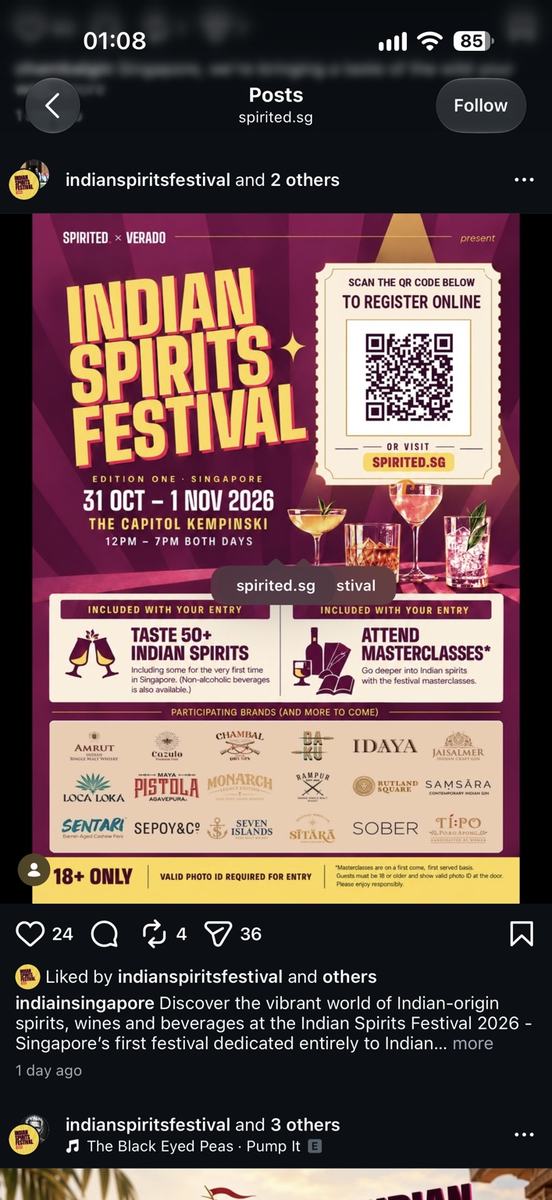
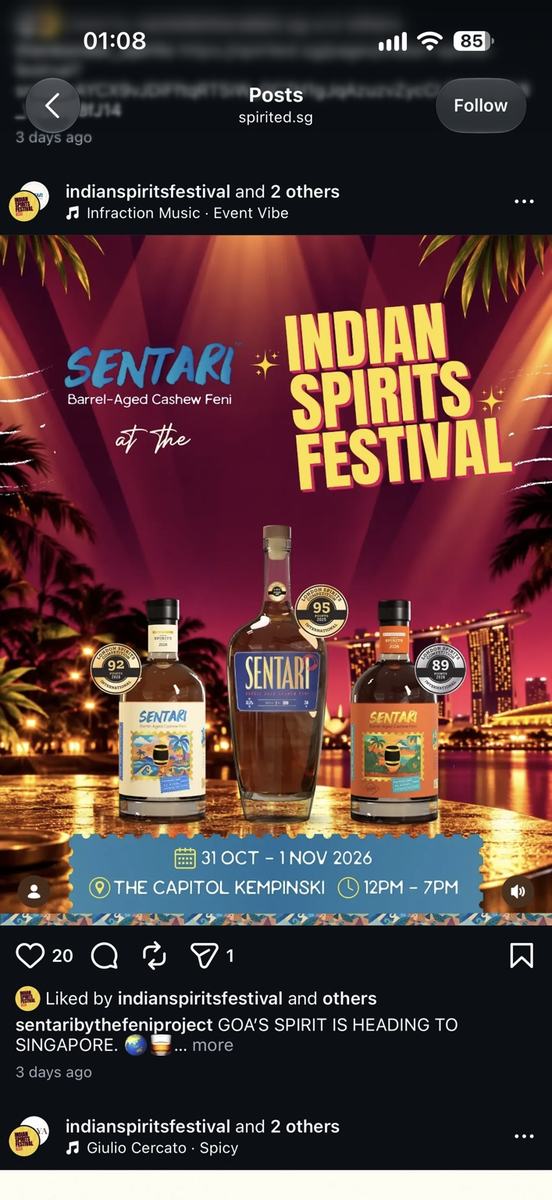
The festival poster doing the rounds on Instagram the week before.
Sentari’s barrel-aged Cashew Feni, heading to the festival.
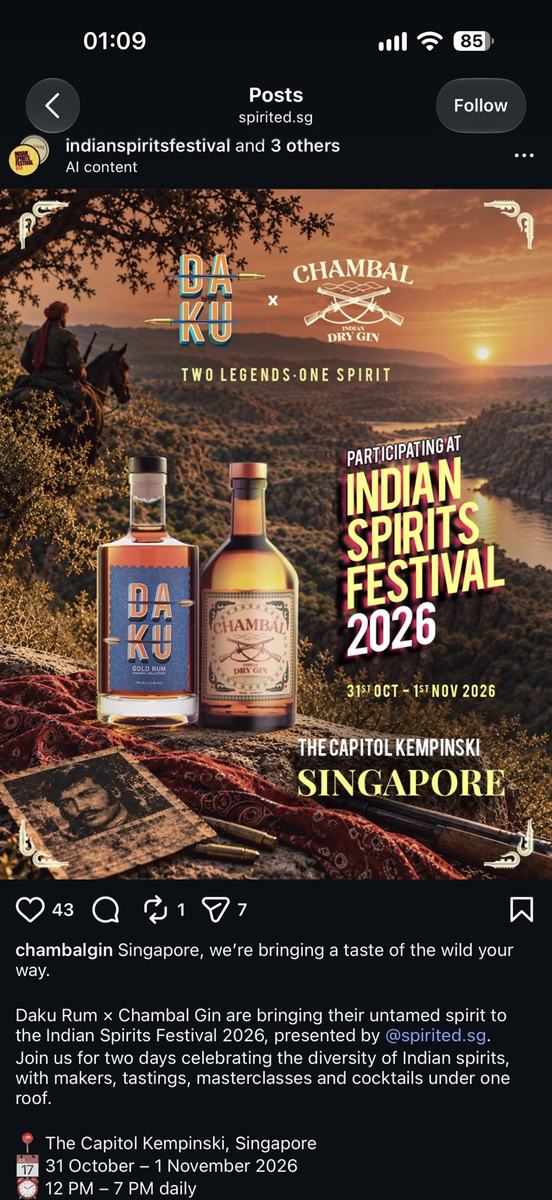
Daku Rum and Chambal Gin announcing their Singapore debut.
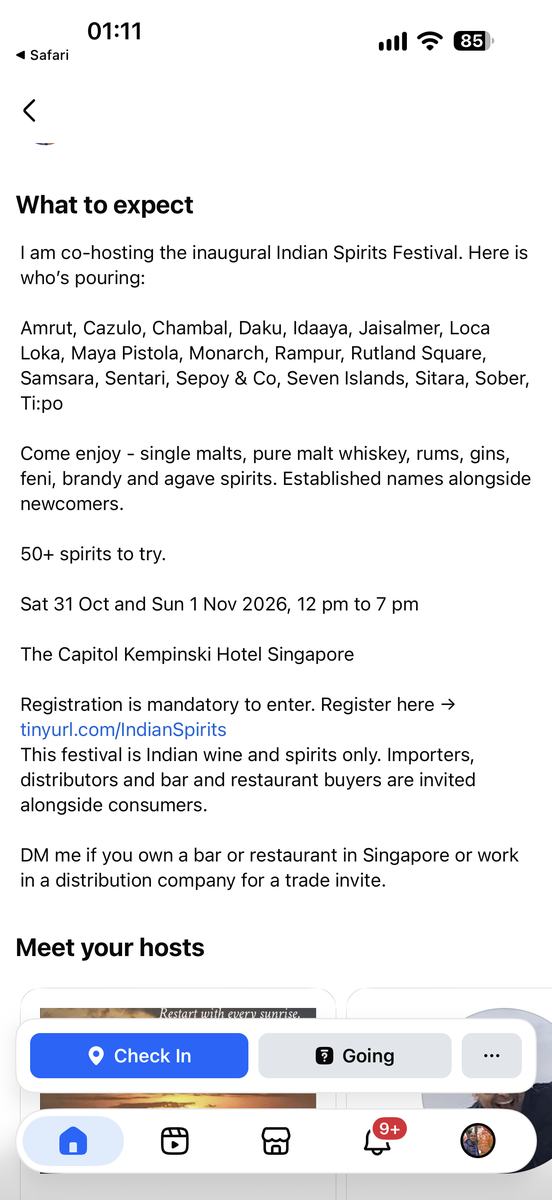
The host’s “what to expect” post, with every brand pouring.
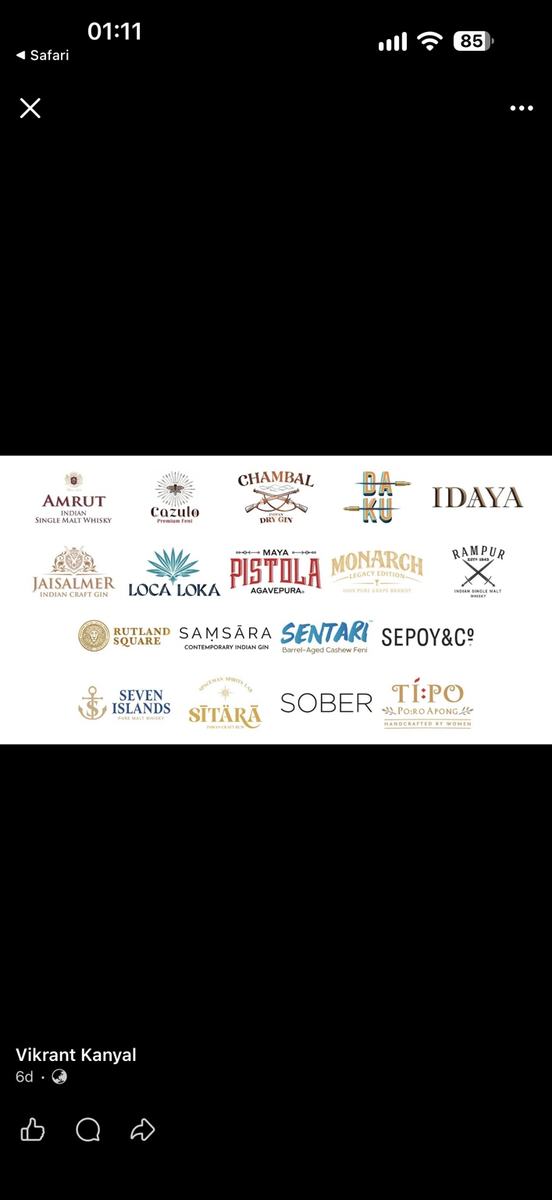
The brand line-up.
The brand line-up.
My Day 1 pass.
My Day 1 pass.

Day 1 · Saturday 31 October

The Cazulo stand: five Fenis, one house.
Me at the Cazulo stand on Day 1.
Still at Cazulo — the Cashew Feni made sense on the second pour.
One more from the Feni table.
The Pistola Extra Añejo, opened for me from the masterclass stock.
With Rakshay Dhariwal, founder of Maya Pistola.
IDAAYA 12, displayed with jaggery.
Seven Islands Pure Malt.
Monarch Legacy Edition — the decanter that reminded me of Rémy Martin.
Thenkondar Royal Heritage Singapore Rum.

Day 2 · Sunday 1 November

Back at Cazulo with Hansel Vaz on Day 2 — he handed me a Cashew Feni to take home.
Anusha and me at the Bay Blanche stand.
A cheers across the hall.
The Day 2 crew at the Tilaknagar stand.
Another round at Tilaknagar.
At Loca Loka.
At Loca Loka.
Loca Loka, with the margarita that turned out too sweet.
In front of the participating-brands wall.
Rampur Single Cask New Vibrations — the label: 55.8%, 2015–2023, cask 2607.
Rampur New Vibrations, my 5/5 of the weekend.
Amrut Triparva.
Amrut Triparva.
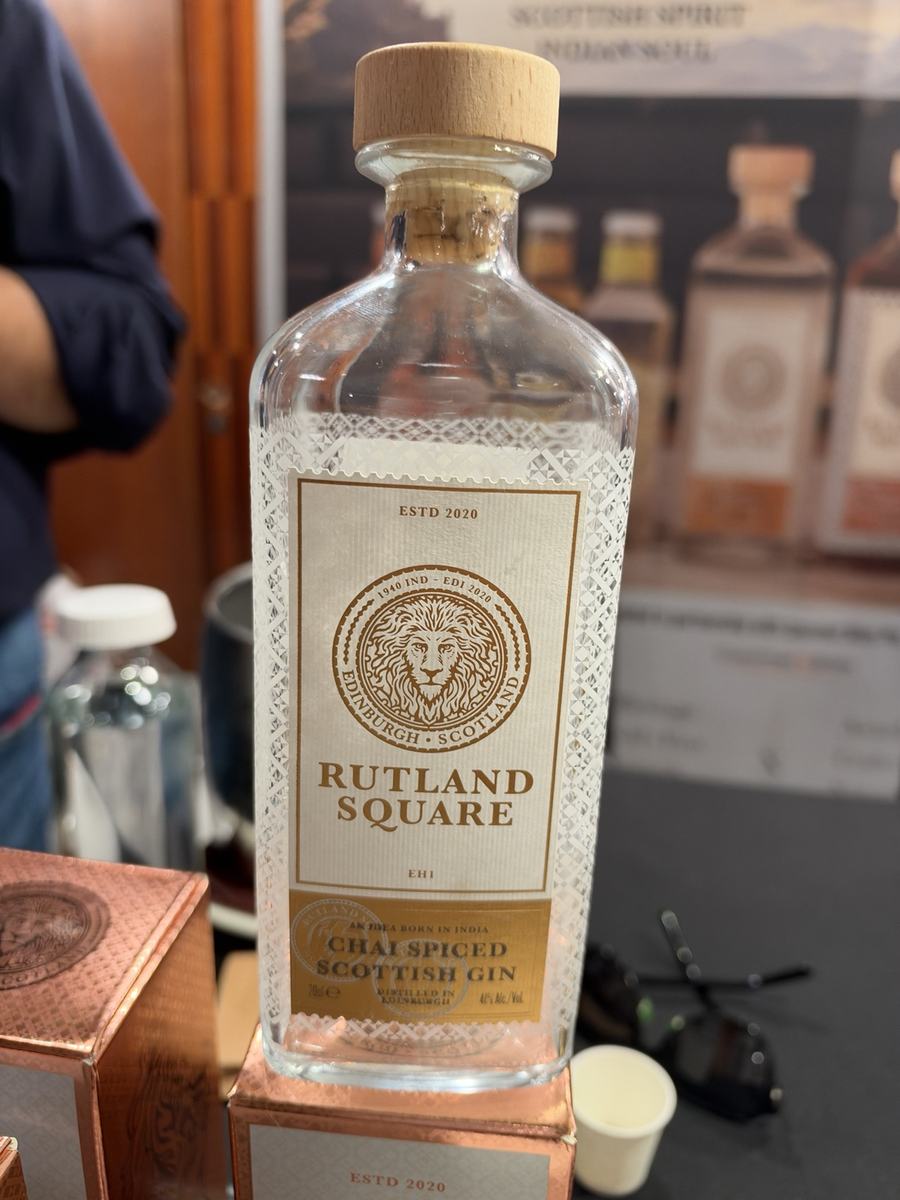
Rutland Square Chai Spiced Gin.
Rutland Square Chai Spiced Rum — the bottle I bought.
Sepoy & Co. Yuzu Jalapeño and Pink Rose Lemonade.
S$100 to Rutland Square for the rum, the sodas and the minis (numbers blurred).
Loca Loka Blanco and Reposado.
The Bapuna gift set: Daku rums, cocktail cards and whole spices.
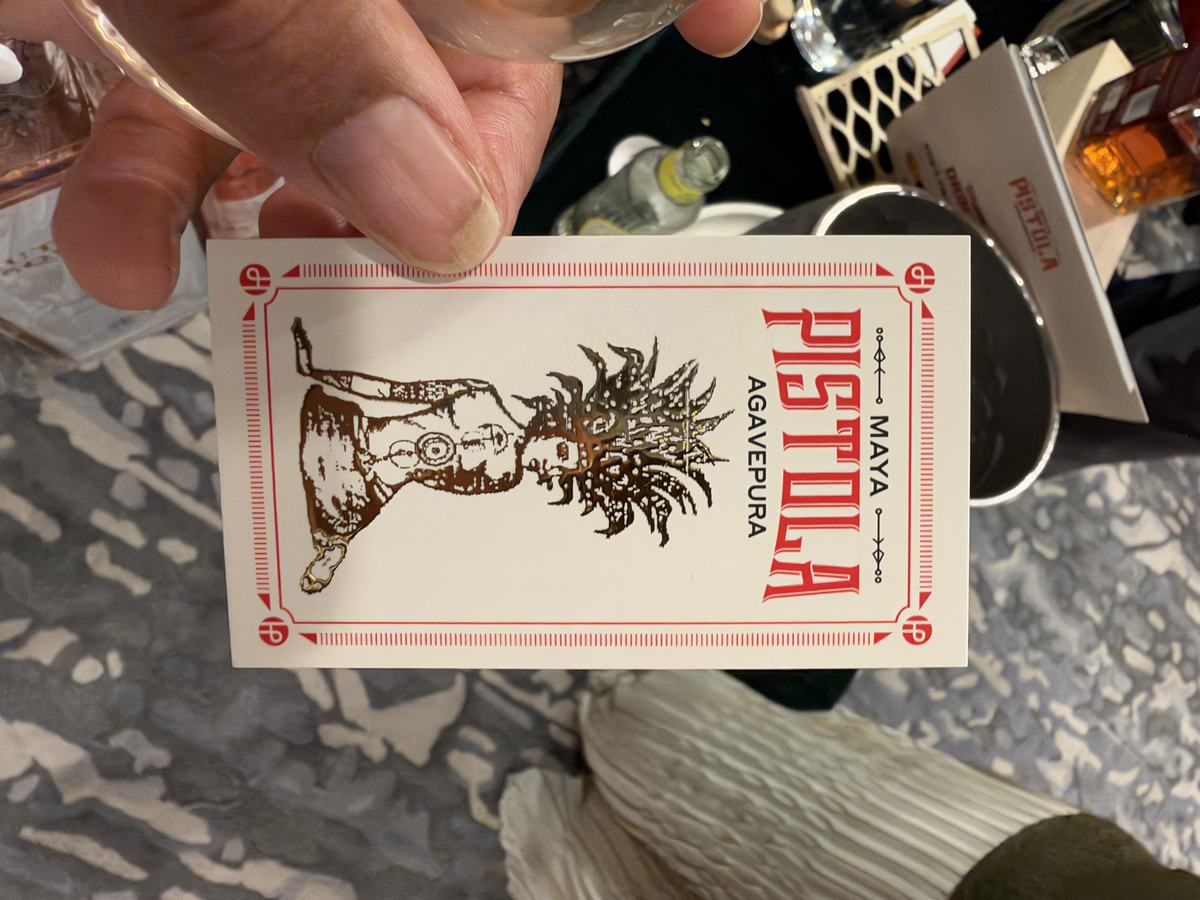
The Maya Pistola card.
Rakshay’s business card — the name I’d been spelling wrong (phone blurred).
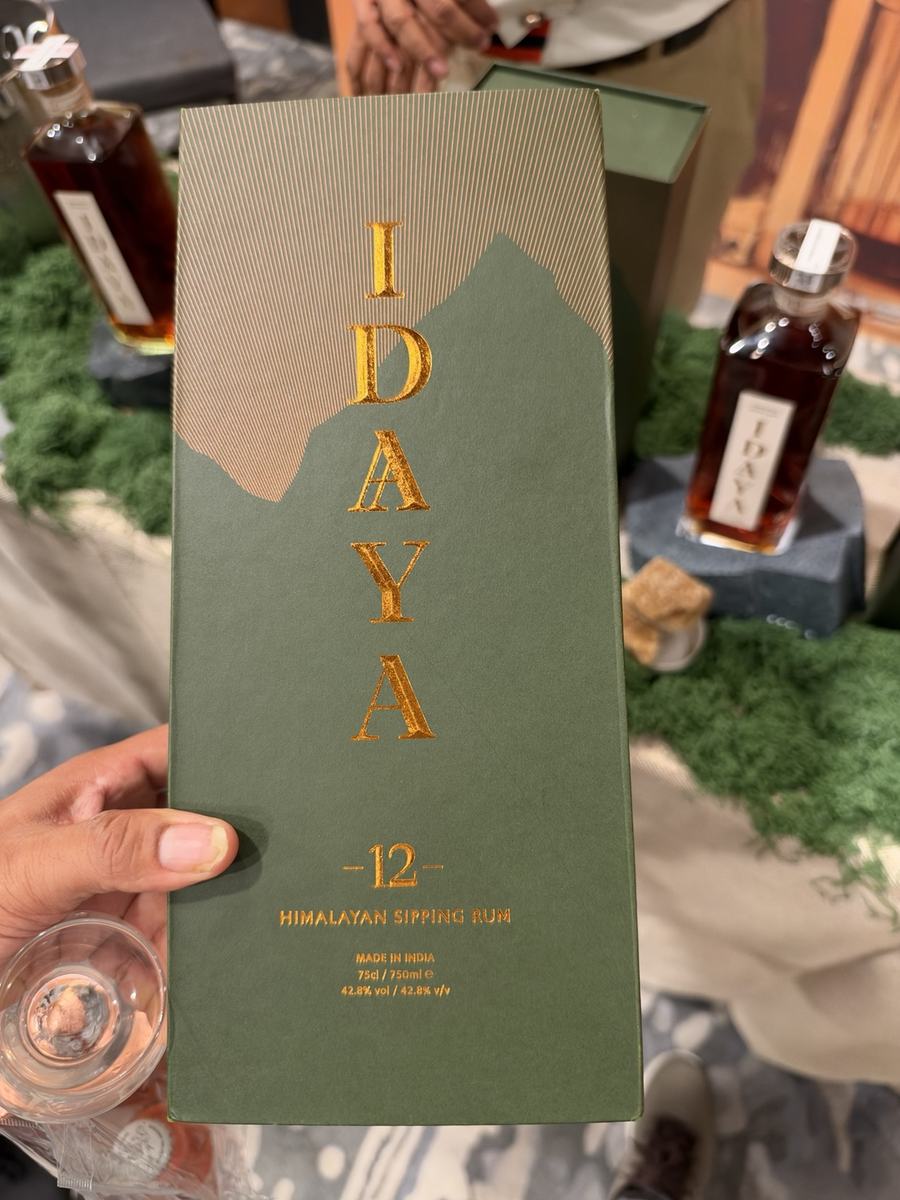
The IDAAYA 12 box.
The IDAAYA 12 box.
The back of the IDAAYA box, with the producer’s tasting notes.
Paul John Bold at S$120.99 and Classic Select Cask at about S$153.
Samsara The Secret Orchard and Sītārā.
The Samsara trio: New World Experiments (The City of Pink), The Secret Orchard and Sītārā.
Gin Bay Blanche, with Grenade behind it.
Tí:po Po:ro Apong rice wine.
The Sober 0.0 range.

Recap

Day 1 in one picture

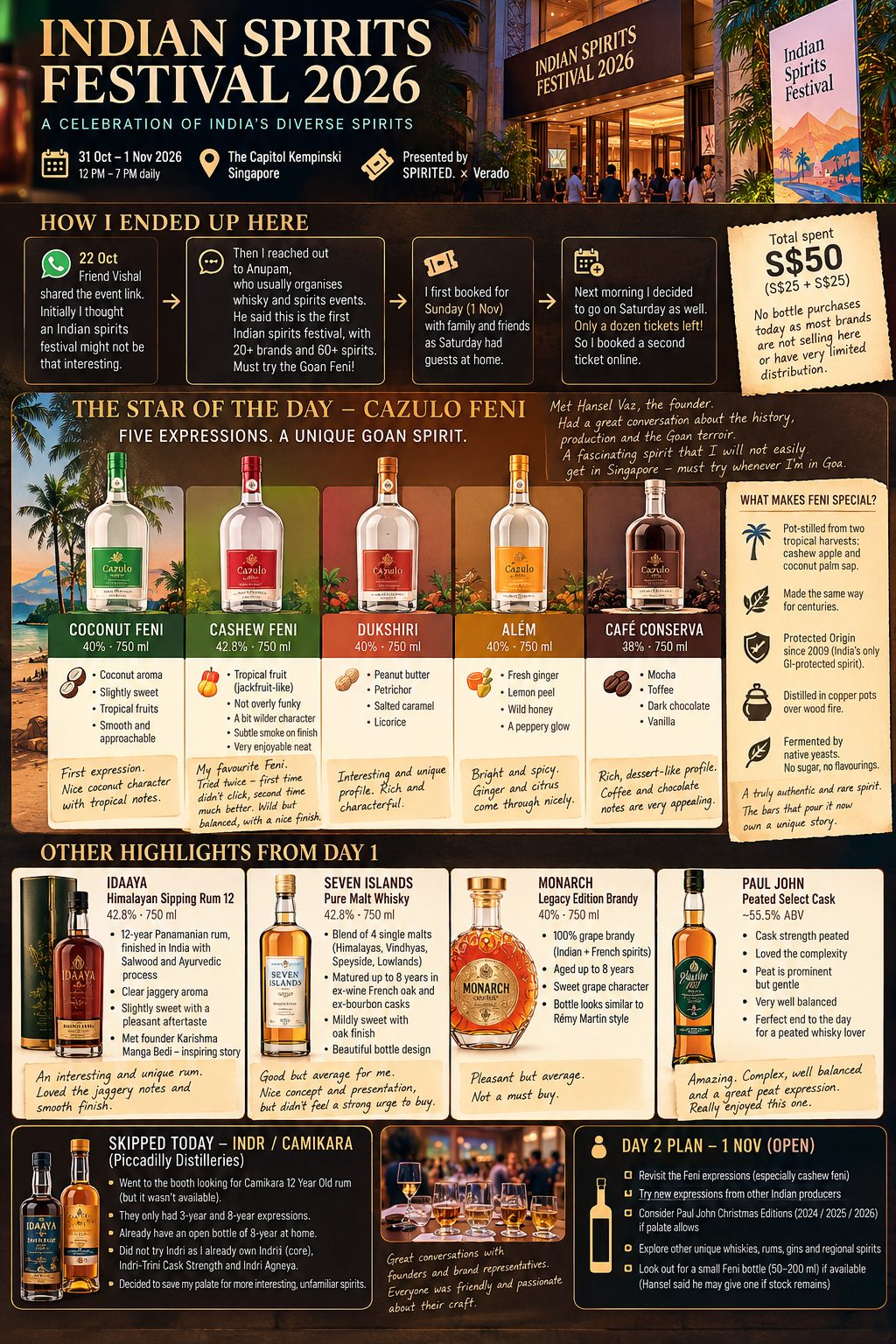
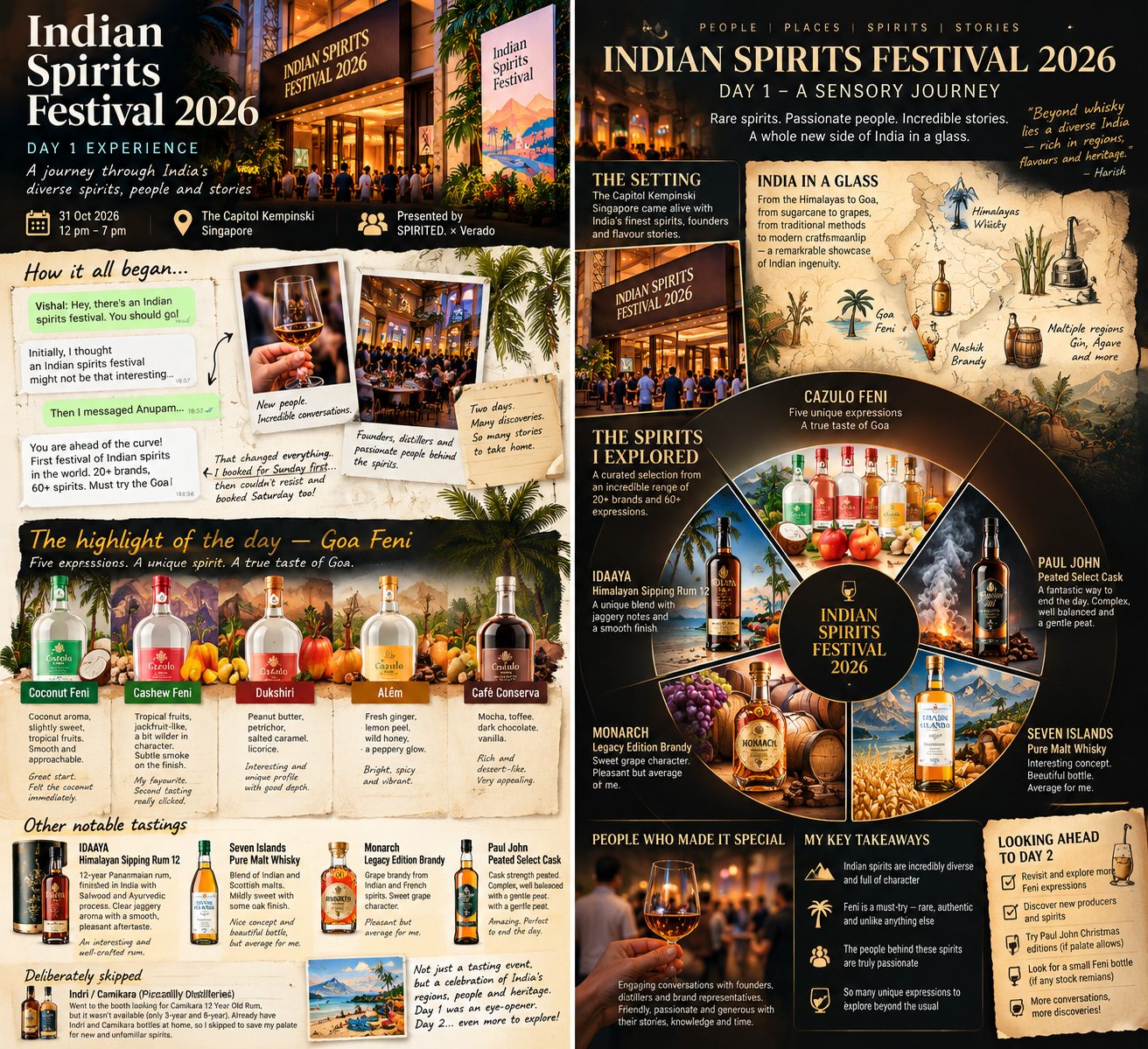
I generated these infographics with AI from my notes on Day 1. The bottles are illustrations, so their labels aren’t accurate. The real ones are in the photos above.

Infographic poster summarising Day 1.
Day 1 poster. Tap to enlarge.
Two alternative infographic layouts of Day 1.
Two alternative versions. Tap to enlarge.

What stayed with me

Takeaways

Two days was the right call. One day would have been rushed. The second day let me retest with a rested palate and share the discoveries.

The people made it. Hansel’s gift, a founder opening a reserved bottle, Karishma explaining her rum twice. The conversations changed how the liquids tasted.

Tasting something isn’t the same as being able to buy it. Many brands weren’t selling, and several are only sold in parts of India. Most of my list will be bought on a trip, not in Singapore.

India is far more than whisky. Feni, agave spirit, sal-wood rum, chai-spiced rum, jamun gin and Assamese rice wine, in one hotel ballroom. The best pour of the weekend wasn’t a whisky.

Still open

Things I want to confirm

  • Dukshiri’s strength: 40% in the brochure, but the bottle on the stand looked like 42.8%.
  • The Loca Loka Reposado’s actual ageing time.
  • The Rutland Square presenter’s name.
  • Whether I tasted Sitara Spiced Rum at all.